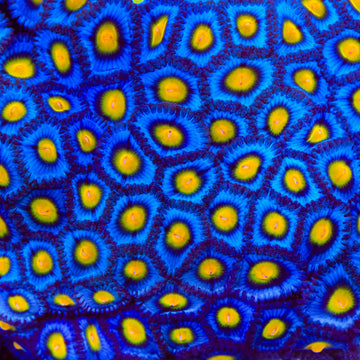
TSA Fire and Ice Zoanthids Coral
Overview
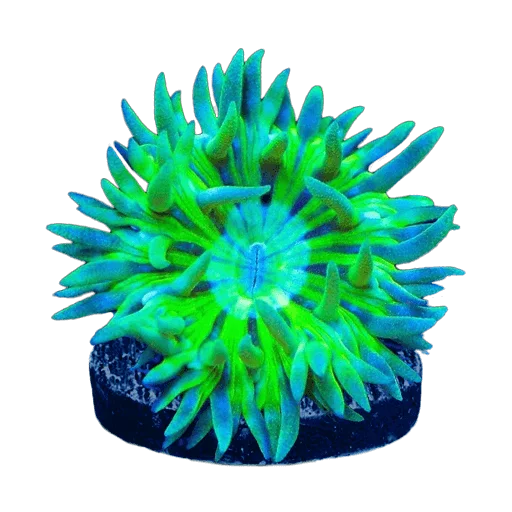
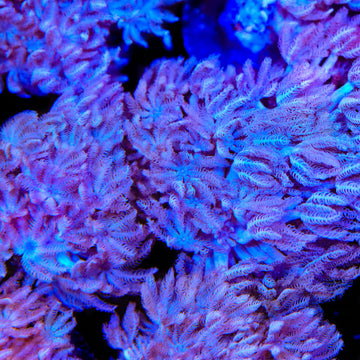
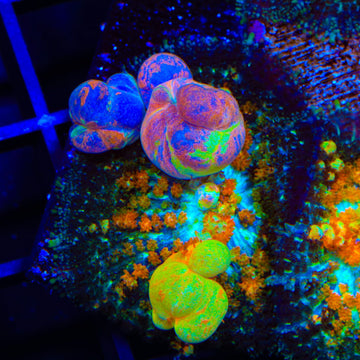
Fire and Ice Zoanthids Coral shows small button polyps with icy blue centers and bright red to orange skirts. Zoanthus sp. is a soft, mat-forming colonial polyp that thrives under moderate light and moderate, stable water flow. It is primarily photosynthetic via symbiotic algae, but occasional small particulate foods can support faster growth and maintain color. Place on isolated rock to manage spreading, and keep distance from aggressive stingers.
Quick Facts
Care
Easy
Lighting
Low–Moderate
Flow
Moderate, indirect
Placement
Low–Mid
Temperament
Semi-aggressive (2–4 inches spacing)
Recommended Parameters
Temp
76–80°F
pH
8.1–8.4
Salinity
1.025–1.026
Calcium
400–450 ppm
AlkAlkalinity
8–10 dKH
Magnesium
1250–1350 ppm
Feeding
photosynthetic (primary), microplankton, zooplankton, rotifers, cyclops, phytoplankton, marine snow, brine shrimp nauplii, finely minced mysis, coral-specific powdered foods, amino acid supplements
Care & Placement
FAQ
Frequently Asked Questions
About the TSA Fire and Ice Zoanthids Coral
-
Why do my Fire and Ice Zoanthids stretch upward and lose the crisp blue centers over time?
Stretching usually signals low PAR or uneven spectrum. Aim for moderate light (PAR ~100–150) with strong blue/violet channels (420–460 nm). Increase intensity gradually over 2–3 weeks to avoid shock. Ensure medium, random flow so skirts don’t droop. If colonies self-shade, trim outer polyps or adjust rockwork to restore light to the center. -
My colony keeps closing for days without obvious pests—what hidden factors should I check?
Look for nudibranch eggs under skirts, zoa spiders at night, or vermetid snails casting mucus. Test for alk swings (keep 8–9 dKH stable) and check for dissolved organics—zoas sulk in “dirty-clear” water. Replace or rinse carbon, increase flow to prevent detritus trapping, and perform an iodine or peroxide dip if tissue lesions appear. -
Can targeted feeding intensify color or speed growth for this morph?
These Zoanthus rely heavily on light but accept fine particulate foods. Feed sparingly (once weekly) with reef roids or pulverized mysis during low flow to prompt feeding response. Overfeeding fuels film algae that irritates skirts. You’ll see better color from stable nutrients (NO3 5–15 ppm, PO4 0.03–0.08 ppm) and strong blue spectrum rather than heavy feeding. -
Why does the colony’s center recede while the rim keeps expanding?
Rapid edge growth can shade and starve the interior. Increase cross-flow to keep the center clean, rotate the frag or elevate the base for better light penetration, and periodically prune the perimeter to open space. If the mat is lifting, check for pests beneath and secure loose edges with glue to prevent detritus buildup and necrosis.