TSA Fantasia Goniopora Coral
Overview
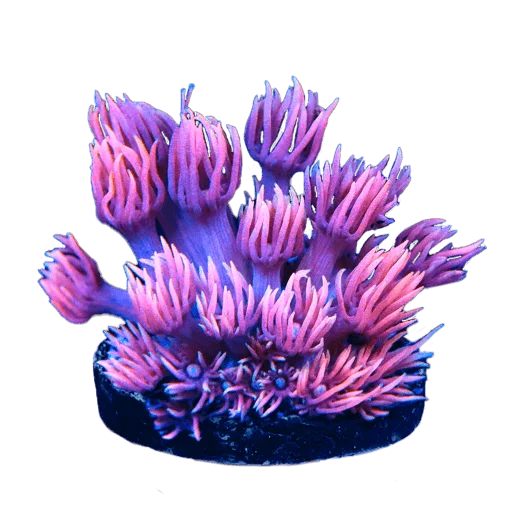
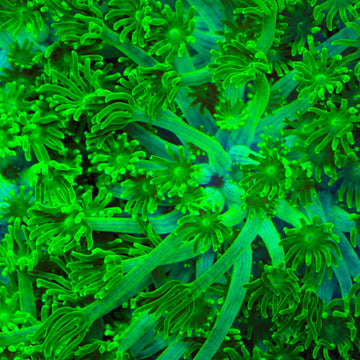
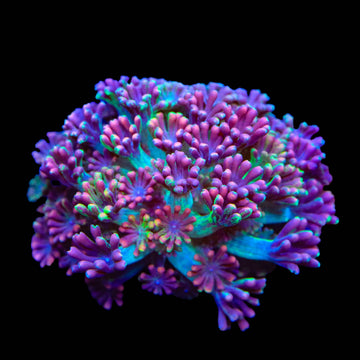
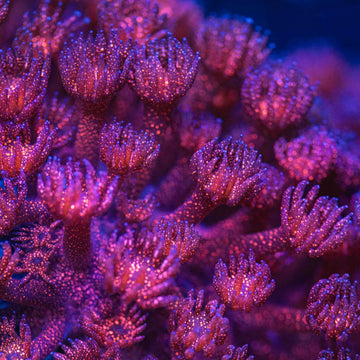
Flowerpot Coral displays long, daisy-like polyps that form a rounded bouquet from a stony base. Goniopora stokesi is a large-polyp stony coral, preferring moderate light and gentle to moderate water flow. It is photosynthetic with symbiotic algae but benefits from small particulate foods a few times per week, which can support growth and fuller polyp extension. Place it on stable substrate with space around the colony, and avoid strong flow or contact with abrasive or stinging neighbors.
Quick Facts
Care
Difficult
Lighting
Low–Moderate
Flow
Moderate, indirect
Placement
Low
Temperament
Semi-aggressive (3–6 inches spacing)
Recommended Parameters
Temp
76–80°F
pH
8.1–8.4
Salinity
1.025–1.026
Calcium
420–450 ppm
AlkAlkalinity
8–9 dKH
Magnesium
1250–1350 ppm
Feeding
photosynthetic, phytoplankton, zooplankton, rotifers, microplankton, marine snow, coral-specific powdered foods, enriched brine shrimp nauplii, finely minced mysis
Care & Placement
FAQ
Frequently Asked Questions
About the TSA Fantasia Goniopora Coral
-
Why does my Goniopora stokesi look great for months, then slowly retract and decline without obvious cause?
This species is sensitive to subtle instability. Check for low-level nutrient starvation (aim NO3 ~5–15 ppm, PO4 0.03–0.1), trace element depletion (especially iron/manganese), and creeping flow/light changes as colonies grow. Chronic vermetid irritation and microalgae films on tissue also cause slow decline. Increase gentle, alternating flow, spot-feed fine particulate foods 2–3x weekly, lightly dose iron/manganese if tested low, and keep alkalinity swings under 0.3 dKH/day. -
Is green the only “true” color for Flowerpot Coral, and does color hint at difficulty?
G. stokesi is most often vibrant green; many reds/pinks sold as “flowerpot” are other Goniopora species that tend to be hardier. If a “red stokesi” is offered, verify ID—skeletal corallite spacing and polyp length differ. Color shifts often signal nutrient or trace imbalance: pale = excessive light/lean nutrients; dull green/brown = higher nutrients or low iron. Adjust PAR to ~80–150 and fine-tune nutrients/trace to restore saturation. -
What’s the best placement and flow pattern to prevent polyp damage and tissue recession?
Start on a stable sandbed or low rock ledge with a slight pedestal to avoid detritus collecting around the base. Provide wide, oscillating flow that moves tentacles without folding them over; avoid direct jets that chafe tissue against the skeleton. Ensure the colony can expand uniformly—if one side stays collapsed, redirect flow, inspect for pests, and rotate the coral a quarter turn weekly until expansion evens out. -
How can I successfully feed G. stokesi without causing bacterial issues or brown jelly?
Target-feed very small foods (reef-specific microplankton, rotifers, enriched nauplii powders) with pumps off, letting mucus capture for 10–15 minutes before gently restoring flow. Feed smaller amounts more frequently rather than large boluses. Rinse frozen foods, keep phosphate reasonable, and maintain strong gas exchange. If tissue looks “slick” or opaque after feedings, you’re overdoing it—cut quantity by half and improve post-feeding flow.