TSA Fairly Odd Goniopora Coral
Overview
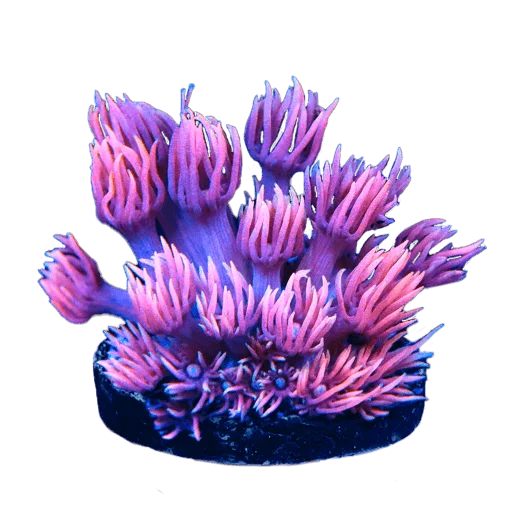
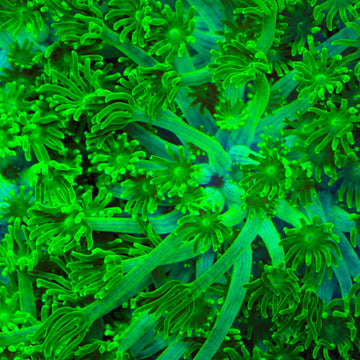
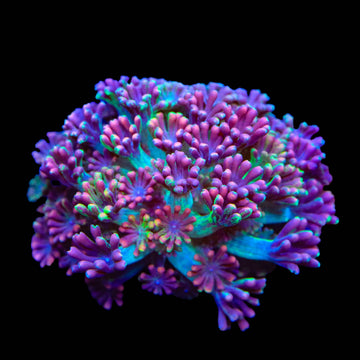
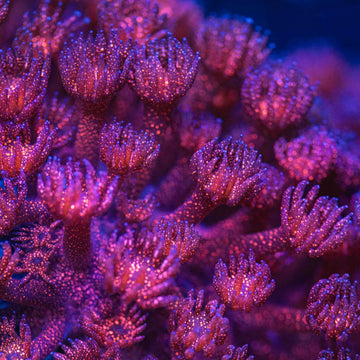
Fairly Odd Goniopora Coral features long, daisy-like polyps extending from a rounded skeleton. Goniopora sp. is a stony, polyp-extending coral that does best in moderate light and gentle to moderate, indirect water flow. It hosts symbiotic algae for photosynthesis but benefits from occasional small-particle feedings, which can support growth and fuller polyp extension. Place it with space around the colony and avoid strong, direct currents or contact with aggressive corals.
Quick Facts
Care
Difficult
Lighting
Moderate
Flow
Moderate, indirect
Placement
Low–Mid
Temperament
Semi-aggressive (3–6 inches spacing)
Recommended Parameters
Temp
76–80°F
pH
8.1–8.4
Salinity
1.025–1.026
Calcium
420–450 ppm
AlkAlkalinity
8–9 dKH
Magnesium
1250–1350 ppm
Feeding
photosynthetic, phytoplankton, zooplankton, microplankton, rotifers, copepods, baby brine shrimp (nauplii), finely minced mysis shrimp, reef-specific powdered coral foods, marine snow
Care & Placement
FAQ
Frequently Asked Questions
About the TSA Fairly Odd Goniopora Coral
-
Why is my Fairly Odd Goniopora (Goniopora sp.) staying retracted for days at a time?
Extended retraction often traces to unstable alkalinity or salinity, too much direct flow, or depleted trace metals (iron/manganese). Check for vermetid snails and shadowing from new growth above it. Keep PAR around 80–150 with gentle, alternating flow. Maintain dKH 8–9, stable salinity 1.025–1.026, and dose trace elements cautiously. If tissue looks opaque or slimy, act fast for brown jelly with a gentle iodine dip and improved aeration. -
Sand bed or rock—where should I place it for best long-term growth?
The skeleton can encrust and form buds at the base, so a small tile/plug on the sand works well—keeps sediment off the tissue while allowing easy relocation. Avoid partially burying the base; grit can irritate and cause recession. If mounting to rock, use a stable perch with room for the skirt to sway. Prevent detritus accumulation under the colony by adjusting flow patterns. -
How do I keep its colors from fading or shifting under my lights?
Reds and pinks wash out under excessive blue and ultra-low nutrients, while greens perk up with balanced trace metals. Aim for PAR 80–150 and a blue-leaning spectrum with some white channels for fuller pigment expression. Keep nitrate 5–15 ppm, phosphate 0.03–0.08 ppm. Avoid rapid light changes; ramp new intensity over 2–3 weeks. Periodic small iron/manganese doses can support greens but avoid overdoing—watch for algae cues. -
What feeding approach gets true growth instead of just polyp extension?
Offer a mix of 5–200 µm foods (rotifers, reef roids, phyto, fine mysis puree) 2–4 times weekly. Briefly pause flow, target feed lightly, then restore gentle circulation after 10–15 minutes to prevent film buildup. Pair feeding with stable alkalinity and moderate nutrients for calcification. Amino acids can help, but cut back if you see slick tissue or cyano. Night or early morning feedings often trigger stronger capture.