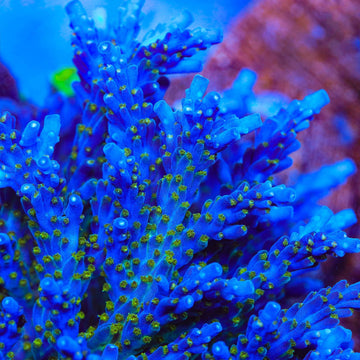
TSA Exquisita Acropora Coral
Overview
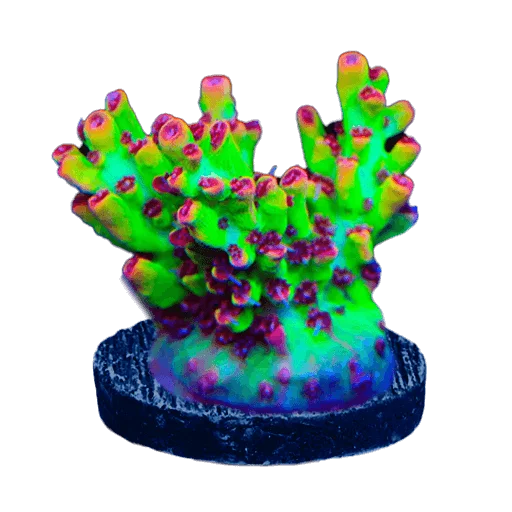
Exquisita Acropora Coral shows thin, upright branches with tight tips and fine corallites. Acropora exquisita is a small-polyp stony branching coral that prefers strong light and high, random flow. It is photosynthetic with symbiotic algae; occasional small particulate foods can support growth and help maintain color. Place high on stable rockwork with ample spacing, and keep away from aggressive stingers to avoid tissue damage.
Quick Facts
Care
Difficult
Lighting
High
Flow
High, turbulent
Placement
High
Temperament
Peaceful (3–6 inches spacing)
Recommended Parameters
Temp
76–80°F
pH
8.1–8.4
Salinity
1.025–1.026
Calcium
400–450 ppm
AlkAlkalinity
8–9 dKH
Magnesium
1280–1350 ppm
Feeding
photosynthetic (primary), microplankton, zooplankton, rotifers, copepod nauplii, reef-specific powdered coral foods (e.g., Reef-Roids), phytoplankton, amino acid supplements
Care & Placement
FAQ
Frequently Asked Questions
About the TSA Exquisita Acropora Coral
-
Why does my Exquisita Acropora lose tissue at the base while tips keep growing?
Its corymbose growth quickly shades the interior, and smooth branches trap less flow there. Base recession is often shadowing and detritus, not disease. Prune dense tips to open light paths, add cross-lighting or slightly raise PAR from the sides, and increase random, turbulent flow. Periodically rotate the colony and blast detritus with a turkey baster to keep the base clean. -
What drives the green body/blue-tip look, and how do I keep colors from washing out?
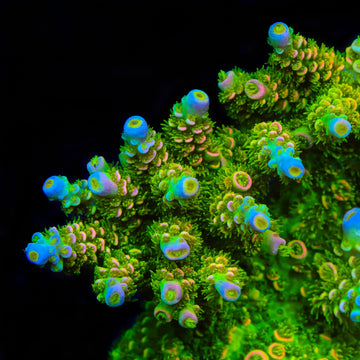
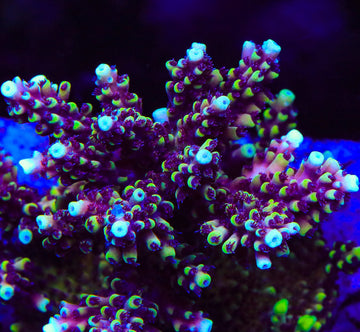
Spectrum and nutrients matter. Strong blue/violet (400–470 nm) favors blue tips; adequate overall PAR keeps the green base saturated. Keep balanced NO3/PO4; ultra-low nutrients with high light can pastel the colony, while excess nutrients brown it. Stable alkalinity avoids tip burn that saps color. Potassium and iodine at natural seawater levels support blues; test before dosing. -
Are there pests that target Exquisita more, and how can I spot them early?
Acropora-eating flatworms and red bugs are common threats. On A. exquisita, look for pale semicircle bite marks around smooth axial zones and speck-like crustaceans on polyps. Inspect with a white-light flashlight at night and use a dark dip container to spot flatworms. Quarantine, rotate dips (e.g., iodine + separate AEFW-specific treatments), and consider adding a Trapezia crab for cleaning assistance. -
My colony has dented tissue on the flow-facing side. Is this disease or flow-related?
Often flow-related. Prolonged laminar jets can bruise tissue on smooth branches, mimicking necrosis. Switch to wider, alternating pulses that create random turbulence rather than a single stream. Reposition pumps to intersect flows, reduce direct blasting, and keep polyp motion lively but not pinned. Within days, polyp extension typically improves and dents stop progressing.