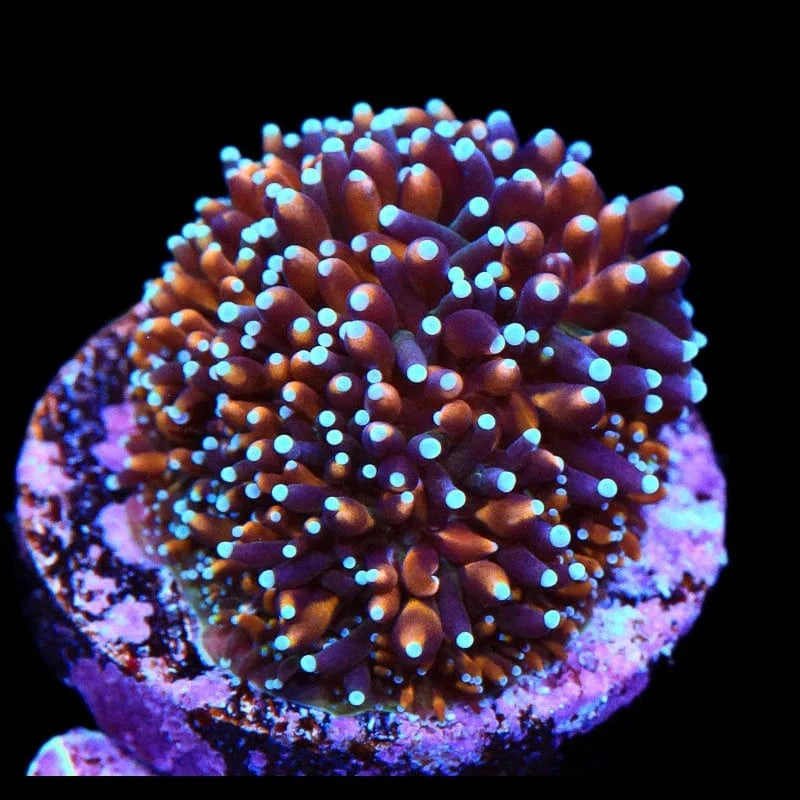
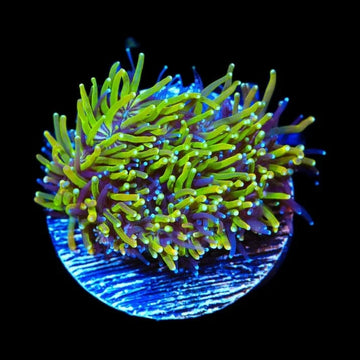
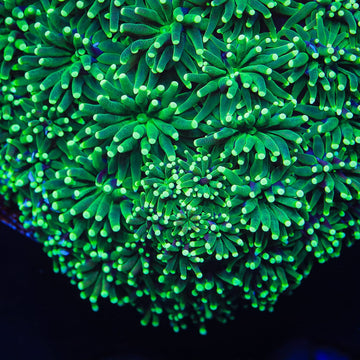
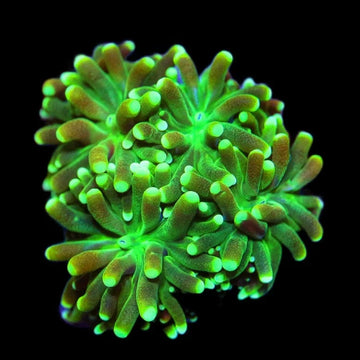
TSA Evergreen Galaxea Coral
Overview
Galaxy Coral has bright star-like polyps with long sweeper tentacles. Galaxea fascicularis is a large-polyp stony coral forming clustered skeletal ridges; it does best in moderate light and moderate, variable flow. It hosts symbiotic algae for energy but benefits from occasional small meaty feedings, which support growth and coloration. Place it with ample space from neighbors, as its sweeper tentacles extend several inches and can sting nearby corals.
Quick Facts
Care
Moderate
Lighting
Moderate
Flow
Moderate–High
Placement
Low–Mid
Temperament
Very aggressive (8–10 inches spacing)
Recommended Parameters
Temp
72–78°F
pH
8.1–8.4
Salinity
1.025–1.026
Calcium
400–450 ppm
AlkAlkalinity
8–10 dKH
Magnesium
1280–1350 ppm
Feeding
photosynthetic (primary), mysis shrimp, brine shrimp, copepods, rotifers, finely chopped marine meat, zooplankton, coral-specific foods
Care & Placement
FAQ
Frequently Asked Questions
About the TSA Evergreen Galaxea Coral
-
Why do new tips on my Galaxy Coral bleach under strong LEDs even though nutrients look fine?
Galaxea fascicularis often comes from turbid, blue-skewed habitats and can burn under abrupt, white-heavy light. Photoacclimate slowly (10–20% PAR increases weekly), target 120–200 PAR with a blue-heavy spectrum, and raise intensity after polyp extension improves. Increase flow around new growth, feed small meaty foods at night, and avoid ultra-low nutrients; aim nitrate 5–15 ppm, phosphate 0.03–0.1 ppm. -
How far do sweeper tentacles reach, and how can I manage its aggression in a mixed reef?
Night sweepers can extend 4–6 inches, occasionally more. Place on an “island” with at least 6–8 inches of space, angle flow to keep sweepers from downstream neighbors, and avoid direct blasts that trigger longer extension. Run fresh carbon to reduce allelopathy, and plan aquascape so mobile LPS/zoas don’t drift into it after lights out. -
My colony recedes from the base while the top looks fine—what’s the likely cause?
Stagnant flow and detritus accumulation at the base are common triggers, often compounded by alkalinity swings. Increase cross-flow to the lower skeleton, siphon debris, and stabilize alkalinity within a narrow daily range. Check for vermetid snails or filamentous algae abrading tissue. Night feeding can help the colony regain energy while you correct flow and chemistry. -
Can multiple Galaxy Coral colonies be placed close together, or will they fuse?
They rarely fuse unless they’re clones; most will fight, and even a single colony can sting itself where polyps meet across ridges. Keep distinct colonies well separated, maintain laminar-but-gentle flow to limit sweeper contact, and observe at night for boundary changes. If you must group them, use separate rock pedestals to control contact points and growth direction.