TSA Evergreen Duncan Coral
Overview
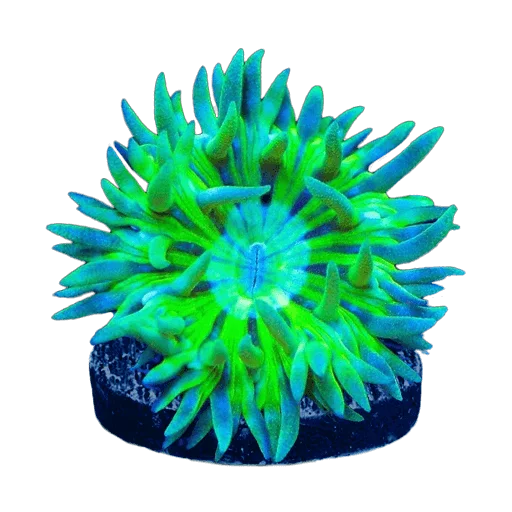
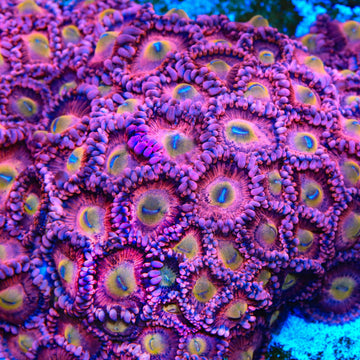
Evergreen Duncan Coral shows large, fleshy polyps with bright green centers and long tentacles. Duncanopsammia axifuga is a stony, branching LPS coral that prefers moderate lighting and gentle to moderate water flow. It hosts symbiotic algae for primary nutrition but accepts small meaty foods, which can speed growth and deepen coloration. Place on stable rockwork with space for expansion, and keep tentacle sweep clear of delicate neighbors.
Quick Facts
Care
Easy
Lighting
Low–Moderate
Flow
Moderate, indirect
Placement
Low–Mid
Temperament
Peaceful (3–6 inches spacing)
Recommended Parameters
Temp
76–80°F
pH
8.1–8.4
Salinity
1.025–1.026
Calcium
400–450 ppm
AlkAlkalinity
8–10 dKH
Magnesium
1250–1350 ppm
Feeding
photosynthetic (primary), mysis shrimp, enriched brine shrimp, finely chopped krill or shrimp, zooplankton, microplankton, coral-specific powdered foods, LPS pellets
Care & Placement
FAQ
Frequently Asked Questions
About the TSA Evergreen Duncan Coral
-
Why do some Evergreen Duncan Coral colonies grow tall, branching stalks while others form low, spreading clusters?
Morphology reflects conditions. Moderate, oscillating flow and slightly higher PAR (120–150) encourage branching; lower PAR (70–100) and gentler flow favor compact, plating clusters. Regular feeding pushes faster basal budding. Give heads room—crowding drives vertical growth. Mounting at a slight angle promotes outward sprouting rather than stacking. Stability in alkalinity and nutrients prevents “stretching” caused by chasing light/flow. -
My “evergreen” centers are dulling—how can I restore the vivid green without bleaching?
Emphasize blue spectrum (420–470 nm) and keep PAR roughly 80–150 at the polyp. Maintain nutrients: nitrate 5–15 ppm, phosphate 0.03–0.10 ppm; ultra‑low nutrients mute fluorescence. Avoid big swings in alkalinity. Activated carbon reduces tint from soft coral allelopathy that can wash color. Trace dosing (e.g., iron/iodine) can help in some tanks but test first—overdosing quickly backfires. -
What’s causing prolonged retraction despite “good” water tests?
Look for local irritants: vermetid snail webs beneath skirts, stinging from nearby LPS, or leather coral chemicals. Clip or glue vermetids shut, increase random flow, and run fresh carbon. Verify stability, not just numbers—aim for steady alk 8–9 dKH, Mg ~1300–1400 ppm. Check nighttime pH dips and temperature swings. If one head stays retracted, inspect for tissue nicks or algae on exposed skeleton. -
How should I handle sudden tissue melt that looks like brown jelly on a few heads?
Act fast: stop flow, gently siphon the slime, then perform a Lugol’s/iodine dip. Cut away affected heads 5–10 mm into clean skeleton with bone cutters or a saw. Restore flow and replace carbon. Improve oxygenation and avoid heavy feeding for several days. This often follows shipping stress or alkalinity swings, so tighten parameter stability after the intervention.