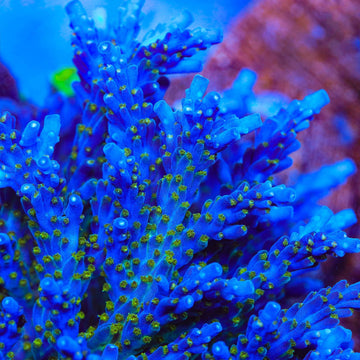
TSA Ernie Hudson Stag Acropora Coral
Overview
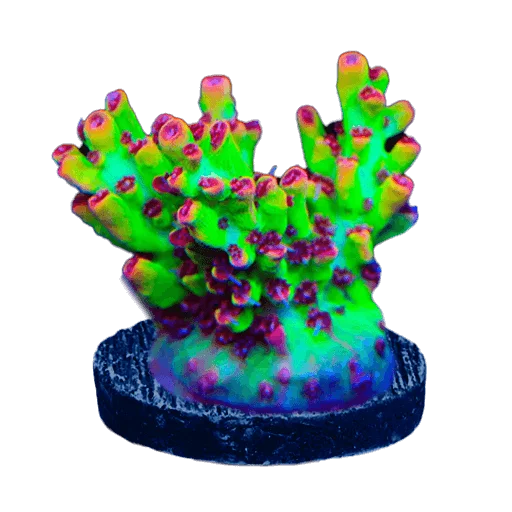
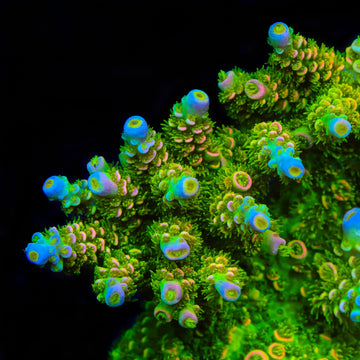
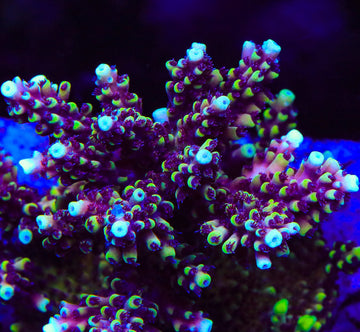
Ernie Hudson Tort Acropora Coral shows branching, tortuous spikes with contrasting tips. Acropora tortuosa is a small-polyp stony coral with upright, dense branches; it prefers strong light and high, turbulent flow. It relies mainly on symbiotic algae for energy, but occasional small-particle foods can support growth and maintain color. Place high on stable rockwork with space from aggressive neighbors, as its delicate branches can break and it needs room to grow.
Quick Facts
Care
Difficult
Lighting
High
Flow
High
Placement
High
Temperament
Semi-aggressive (3–6 inches spacing)
Recommended Parameters
Temp
76–80°F
pH
8.1–8.4
Salinity
1.025–1.026
Calcium
420–460 ppm
AlkAlkalinity
7.5–9 dKH
Magnesium
1280–1350 ppm
Feeding
photosynthetic (primary), microplankton, zooplankton (copepod nauplii), rotifers, reef roids (coral-specific powdered foods), marine snow, amino acid supplements
Care & Placement
FAQ
Frequently Asked Questions
About the TSA Ernie Hudson Stag Acropora Coral
-
Why did my Ernie Hudson Tort shift from deep blue to teal or brown?
Color swings usually reflect spectrum, PAR, and nutrient balance. This coral holds its richest blues under strong blue-heavy light (PAR ~250–400) with stable alkalinity (8–9 dKH) and low but present nutrients (nitrate 2–10 ppm, phosphate 0.02–0.08). Too white a spectrum, elevated nutrients, or unstable alk can push it toward teal or brown. Trace imbalance (excess iron) may add green. Adjust slowly. -
It’s encrusting but not branching—how do I nudge vertical growth?
A. tortuosa often plates and thickens before sending axial shoots. Provide high, chaotic flow to the colony tips, keep the base unshaded, and avoid frequent micro-fragging. Maintain high, stable PAR and ion balance (Ca 420–460, Mg 1300–1400, alk 8–9). Slightly increasing flow intensity and spacing neighboring colonies can trigger axial corallite activation and vertical branching. -
I’m seeing burnt tips or base STN—what’s the likely cause?
Burnt tips often follow high PAR combined with elevated alk and very low nutrients. Bring alk toward 8–8.5 dKH and raise nutrients gently. Base STN typically points to shading and low flow at the foot, or swings in temperature/alk. Improve cross-flow around the base, trim shadowing branches, verify stability, and inspect for pests (AEFW bite marks, red bugs). Dip and quarantine if needed. -
What flow pattern suits this coral without causing tissue recession?
Aim for strong, intersecting gyres that create random turbulence. Avoid a constant, direct jet on one face; that can erode tissue and stunt axial tips. Program pumps for alternating pulses or randomized modes, ensuring the colony sees frequent changes in direction. Revisit placement as it grows—thicker branches can create wind shadows that need pump angle tweaks.