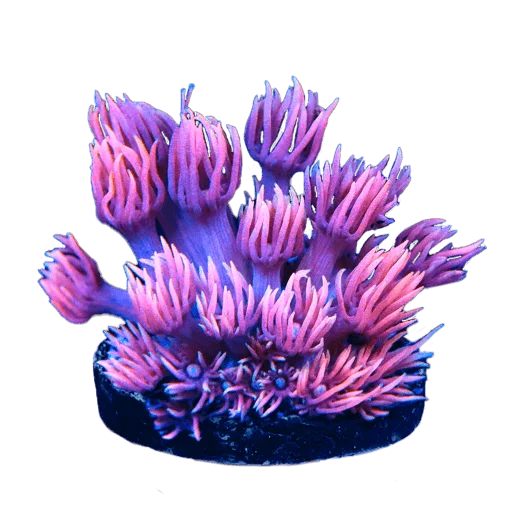
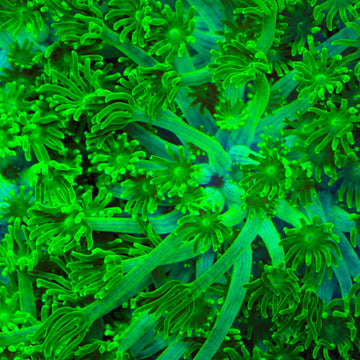
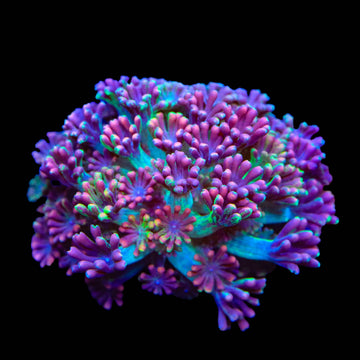
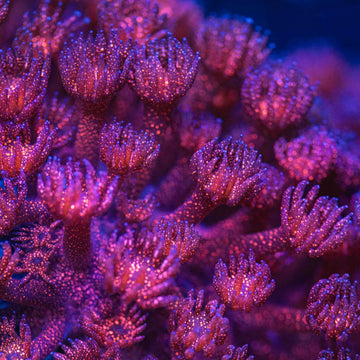
TSA Electric Scream Goniopora Coral
Overview
Flowerpot Coral has long, daisy-like polyps that extend from rounded heads. Goniopora stokesi is a stony LPS coral, often free-living on sand; it prefers moderate light and gentle, indirect water flow. It relies on symbiotic algae for energy but benefits from regular small-particle feedings, which support polyp extension and steady growth. Place it on the sandbed with space around it, avoid strong direct flow, and keep distance from stinging neighbors.
Quick Facts
Care
Difficult
Lighting
Moderate
Flow
Moderate, indirect
Placement
Mid–Low
Temperament
Semi-aggressive (6+ inches spacing)
Recommended Parameters
Temp
76–80°F
pH
8.1–8.4
Salinity
1.025–1.026
Calcium
420–450 ppm
AlkAlkalinity
8–9 dKH
Magnesium
1280–1350 ppm
Feeding
photosynthetic, phytoplankton, microplankton, zooplankton, rotifers, baby brine shrimp, cyclops/Calanus, oyster eggs, marine snow, powdered coral foods (e.g., Reef-Roids)
Care & Placement
FAQ
Frequently Asked Questions
About the TSA Electric Scream Goniopora Coral
-
Why does my Goniopora stokesi fully extend for weeks, then stay deflated for days without clear cause?
This species reacts strongly to subtle changes: alkalinity swings, sudden flow shifts, or trace element dips (iron/manganese). Check dKH stability (±0.2/day), verify gentle, random flow without direct blasts, and refresh fine particulate feeding. Inspect for vermetid snails or sand irritation on the base. A small iron/manganese supplement and 2–3 target feedings weekly often restore extension within 3–7 days. -
How can I tell if my coral is starving versus suffering light stress?
Starvation shows slow tissue thinning at the rim, shorter polyp stalks, and reduced response to food. Light stress shows bleached tips or persistent midday retraction under higher PAR. For G. stokesi, aim moderate PAR (80–150) with blue-heavy spectrum and increase microfoods (reef roids, phyto, rotifers) 2–3x/week. If color returns but tissue still thins, increase particulate variety and maintain measurable nitrate (5–15 ppm) and phosphate (0.03–0.1 ppm). -
Is it normal for polyps to detach (“bail out”) and what should I do if it happens?
Polyp bailout is a stress response from rapid parameter shifts, aggressive neighbors, or bacterial insult. Immediately stabilize alk, salinity, and temperature; increase gentle flow and siphon detritus. Dip in iodine if tissue looks slimy. Detached polyps sometimes reattach on small rubble cups with very low flow and daily microfeeding, but long-term survival is modest. Prevent recurrences by avoiding ULNS conditions and aggressive coral contact. -
Why does my Flowerpot lose color morph depth over time, especially reds turning dull?
Spectrum and nutrients drive pigment retention. Reds often fade under very high PAR white channels or ultra-clean water. Shift toward blue/UV dominance, maintain moderate PAR, and keep nutrients non-zero. Stable iron and manganese support polyp vigor; don’t overdose. Increase varied microfoods and amino acids sparingly. Color usually rebounds over several weeks once lighting and nutrient balance are corrected.