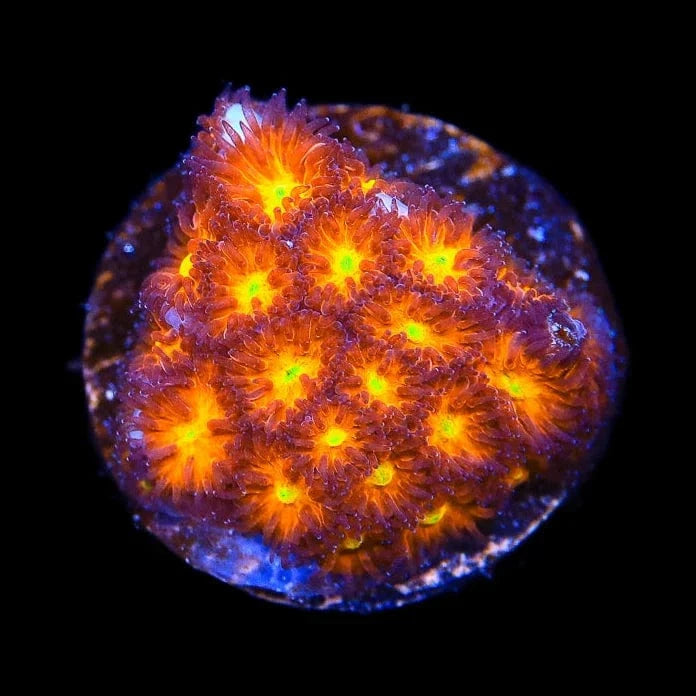
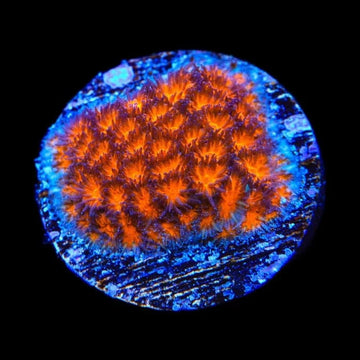
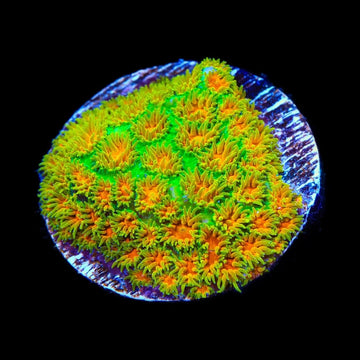
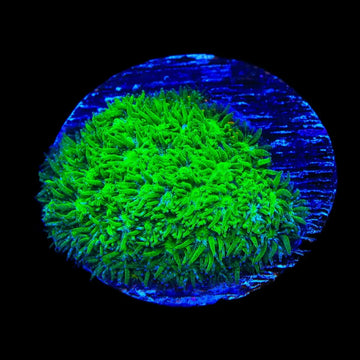
TSA Electric Daisy Leptastrea Coral
Overview
Electric Daisy Leptastrea Coral shows bright, daisy-like polyps with contrasting centers on a tightly encrusting base. Leptastrea purpurea is a small-polyp stony coral that forms encrusting mats; it prefers low to moderate light and moderate water flow. It hosts symbiotic algae for most of its nutrition, but occasional small meaty foods can support faster growth and maintain color. Place on stable rock with some space from neighbors, as it can overgrow nearby surfaces and may sting corals it contacts.
Quick Facts
Care
Easy
Lighting
Low–Moderate
Flow
Low–Moderate
Placement
Low–Mid
Temperament
Semi-aggressive (1–2 inches spacing)
Recommended Parameters
Temp
76–80°F
pH
8.1–8.4
Salinity
1.025–1.026
Calcium
400–440 ppm
AlkAlkalinity
8–9.5 dKH
Magnesium
1280–1350 ppm
Feeding
photosynthetic, microplankton, rotifers, cyclops, baby brine shrimp, finely minced mysis shrimp, coral-specific powdered foods, marine snow
Care & Placement
FAQ
Frequently Asked Questions
About the TSA Electric Daisy Leptastrea Coral
-
Why does my Electric Daisy Leptastrea look best in shaded spots when other stony corals want bright light?
L. purpurea often thrives in turbid, lower-light reef zones. Moderate PAR (70–150) preserves its neon centers and purple base, while high PAR can wash colors or cause edge recession. Try placing it on vertical faces or under an overhang with moderate, cross-flow. If color dulls, increase blue spectrum slightly rather than overall intensity, and allow 2–3 weeks for pigments to rebound. -
My colony is encrusting over the plug but stalling on the rock—what’s causing the edge to recede?
The growing rim is sensitive to detritus, film algae, and vermetid snail mucous. Increase laminar flow across the perimeter, manually brush the edge with a soft toothbrush during water changes, and eliminate vermetids. Maintain stable alkalinity (8–9 dKH). If a bacterial film forms, a targeted iodine dip can halt recession; then resume gentle, consistent flow. -
Are they aggressive like Favias, or safe near zoanthids and acans?
Leptastrea has short sweepers and low-contact aggression, so it’s generally safe a few centimeters from zoas, acans, and leptoseris. It can still encrust over slower neighbors if ignored. Avoid direct, prolonged contact with chalices and favias, which can out-sting it. Use small spacing “moats” and occasional trimming to prevent silent creep over adjacent frags. -
The coral inflates and shows better extension at night—should I adjust feeding or flow?
Yes. L. purpurea extends more after lights down. Target-feed fine meaty foods or reef roids 30–60 minutes into the dark cycle with moderate, indirect flow to keep particles suspended without blasting tissue. Daytime, maintain a gentle, randomized flow pattern. If daytime extension is poor, check for sand abrasion, vermetids, or overly intense light and correct those first.