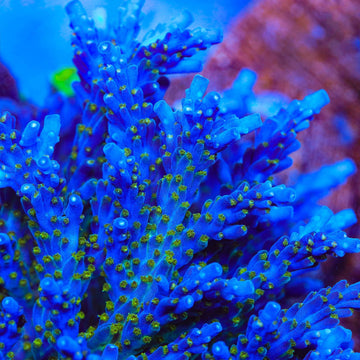
TSA Dr Mundo Acropora Coral
Overview
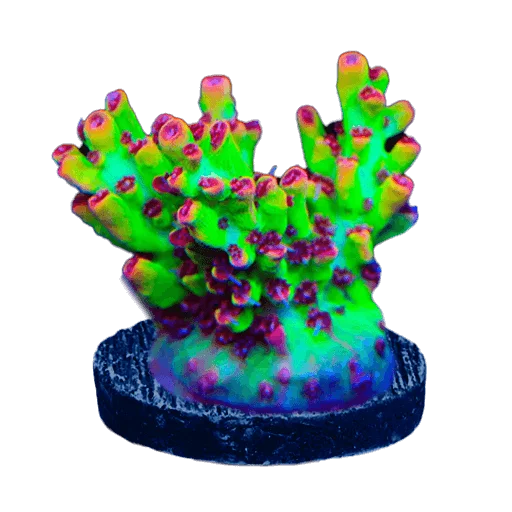
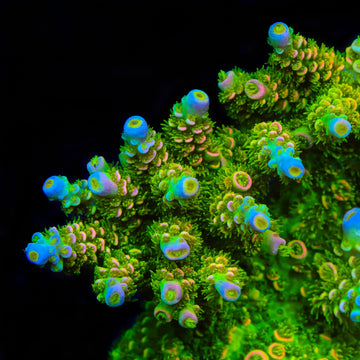
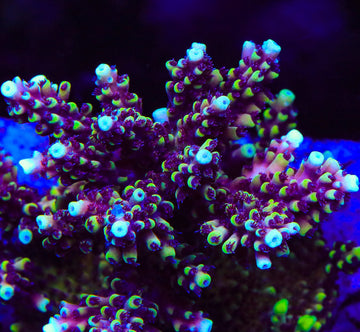
Dr Mundo Acropora Coral shows tight, upward-branching stalks with fine axial tips. Acropora tenuis is a small-polyp stony branching coral that prefers strong lighting and high, turbulent water flow. It is primarily photosynthetic via symbiotic algae, but occasional small-particle foods can support growth and color. Mount high on stable rock with space to prevent shading and contact with stinging corals.
Quick Facts
Care
Difficult
Lighting
High
Flow
High
Placement
High
Temperament
Peaceful (3–4 inches spacing)
Recommended Parameters
Temp
76–80°F
pH
8.1–8.4
Salinity
1.025–1.026
Calcium
420–450 ppm
AlkAlkalinity
7.5–9 dKH
Magnesium
1280–1350 ppm
Feeding
photosynthetic (primary), rotifers, copepod nauplii, microzooplankton, powdered coral foods (e.g., Reef-Roids), amino acid supplements, marine snow
Care & Placement
FAQ
Frequently Asked Questions
About the TSA Dr Mundo Acropora Coral
-
Why is my Dr Mundo Acropora Coral losing its rainbow tips and turning dull?
Color loss in Acropora tenuis often tracks low phosphate (near-zero), rapid alkalinity swings, and too much white light. Aim for NO3 ~5–15 ppm, PO4 ~0.03–0.08 ppm, and stable dKH 7.5–8.5. Provide PAR 300–400 with strong blue/UV (420–460 nm). Check potassium (380–420 ppm) for blues and iron/manganese traces for greens. Avoid sudden light increases; use acclimation to prevent photoinhibition. -
My colony keeps encrusting but won’t branch—what nudges vertical growth?
A. tenuis typically lays a thick base before pushing branchlets. Once the encrustment edge is vigorous, raise PAR by 10–15% over 2–3 weeks and increase chaotic flow. Keep alkalinity on the lower-stable side (7.5–8.0 dKH) with modest nutrients; overly “clean” water delays upward growth. Avoid trimming the base prematurely; stability and space around the leading edge prompt vertical shoots. -
How can I spot and handle pests that prefer Acropora tenuis?
Watch for AEFW: semicircular bite marks, tissue dulling, and daytime polyp retraction; egg clusters often sit on shaded undersides. For red bugs, look for tiny orange specks and reduced polyp extension. Respond with targeted dips (e.g., iodine-based, Bayer) outside the tank, turkey-baste to dislodge flatworms, and quarantine new pieces. A nocturnal wrasse (e.g., Melanurus) helps manage stragglers, but dips and isolation are the backbone. -
What flow pattern best matches its natural habitat for healthier growth?
A. tenuis lives on high-energy reef crests with turbulent surge. Emulate with alternating gyres or cross-flow pumps that create chaotic, high-velocity movement, not a single laminar blast. Aim for strong, random flow that sweeps detritus and refreshes the boundary layer on all sides of the colony. Re-aim pumps as the coral bulks up to prevent dead zones and shaded, stagnant pockets.