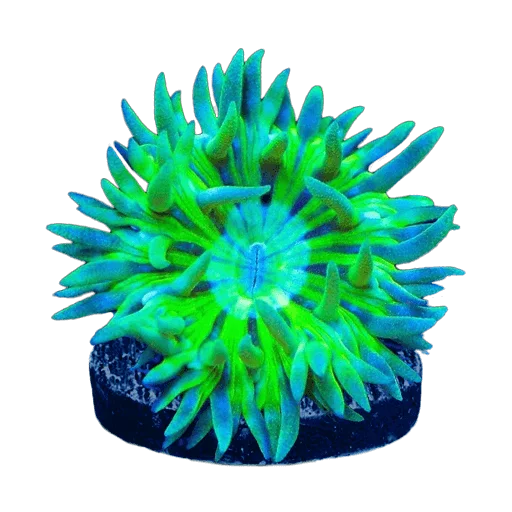
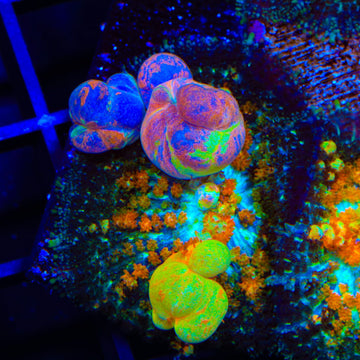
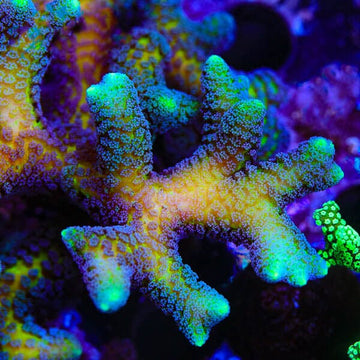
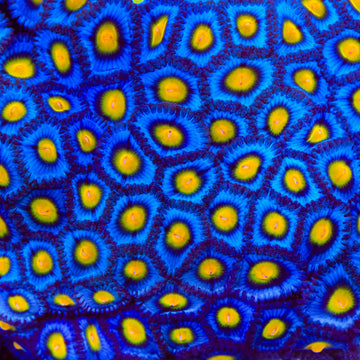
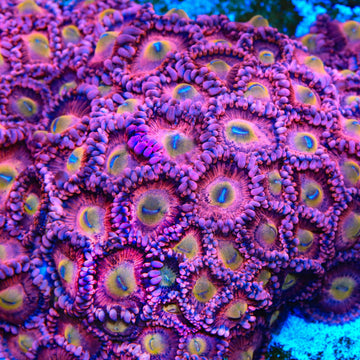
TSA Double Trouble Stylophora Coral
Overview
Double Trouble Stylophora Coral shows compact, bushy branches with blunt, clubbed tips. Stylophora pistillata is a branching small-polyp stony coral that prefers moderate to high light and moderate to strong, turbulent water movement. It is primarily photosynthetic with symbiotic algae, but benefits from occasional small particulate foods, which can support faster growth and richer coloration. Place it high on stable rockwork with good flow and leave space from stinging corals, as its short sweeper tentacles can still irritate nearby tissue.
Quick Facts
Care
Moderate
Lighting
Moderate–High
Flow
Moderate–High
Placement
Mid–High
Temperament
Semi-aggressive (3–6 inches spacing)
Recommended Parameters
Temp
76–80°F
pH
8.1–8.4
Salinity
1.025–1.026
Calcium
400–450 ppm
AlkAlkalinity
8–9 dKH
Magnesium
1280–1350 ppm
Feeding
photosynthetic, microzooplankton, rotifers, copepod nauplii, oyster eggs, coral-specific powdered foods (e.g., Reef Roids), marine snow, amino acids
Care & Placement
FAQ
Frequently Asked Questions
About the TSA Double Trouble Stylophora Coral
-
Why does my Double Trouble Stylophora switch between bushy and more open, antler-like branches?
Stylophora pistillata alters morphology based on flow and light. High, chaotic flow with strong blue-heavy light encourages tighter, bushier branching; lower, laminar flow or shaded zones produce longer, more open branches. If you want a denser look, increase random flow and reduce shadowing by pruning inner branches. Mounting slightly angled helps light reach lower tissue and prevents basal die-off. -
How can I maintain the bold, dual-tone coloration without it fading to brown or pastel?
Keep stable alkalinity (7.5–8.5 dKH) and moderate nutrients (NO3 ~5–15 ppm, PO4 ~0.03–0.1 ppm). Too “clean” water washes colors; too rich browns them. Strong blue/violet spectrum (400–470 nm) with gradual PAR changes preserves pigments. Avoid sudden trace dosing; instead, use consistent water changes. Mild feeding of fine particulate foods at night boosts saturation. -
I’m seeing slow tissue loss from the base despite good parameters—what’s the hidden cause?
Dense colonies self-shade, leading to basal recession even in stable tanks. Increase cross-flow to push detritus out of inner branches, rotate the colony occasionally, and prune a few inner nubs to open channels. Check for low pH at night and microalgae at the base. A short, targeted antibiotic coral dip can help if early bacterial invasion is suspected. -
Can two different Double Trouble morphs fuse into a single colony with streaked colors?
Sometimes. Closely related Stylophora morphs can fuse when encrusted bases meet, producing shared skeleton with mixed tissue patterns. Success is higher when both frags are healthy, similarly sized, and joined early. Maintain strong flow at the contact zone and avoid aggressive neighbors. Fusion isn’t guaranteed; keep a backup frag of each morph in case one rejects or overgrows the other.