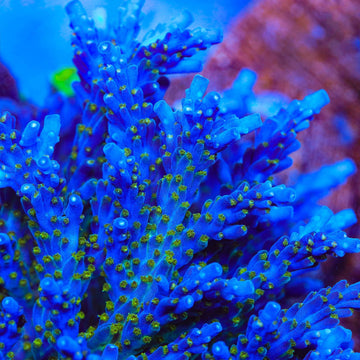
TSA Disco Fever Acropora Coral
Overview
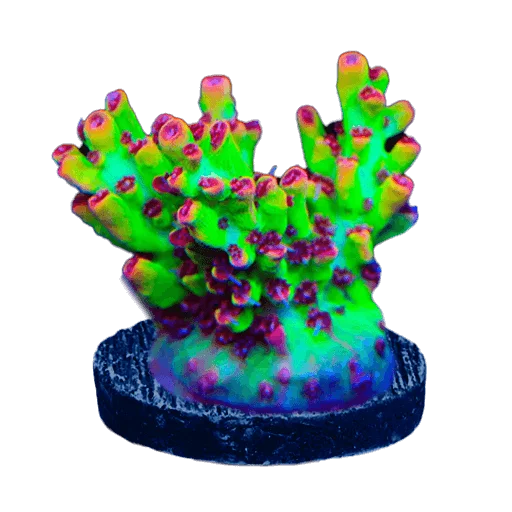
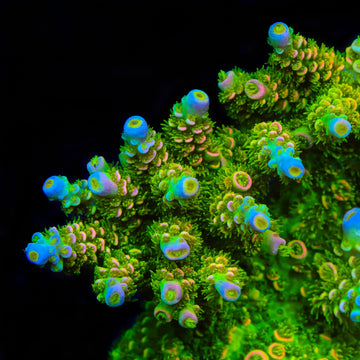
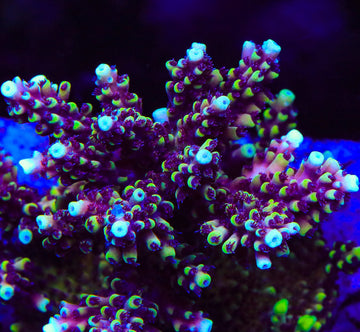
Disco Fever Acropora Coral displays tight, branching growth with contrasting polyp tips. Acropora tenuis is a small-polyp stony coral with a branching structure that prefers strong lighting and high, turbulent water flow. It relies on symbiotic algae for energy but will accept fine particulate foods; occasional feeding can support growth and color stability. Place high on stable rock with strong flow and leave space from aggressive neighbors to prevent tissue damage.
Quick Facts
Care
Difficult
Lighting
Moderate–High
Flow
High
Placement
High
Temperament
Semi-aggressive (3–6 inches spacing)
Recommended Parameters
Temp
77–80°F
pH
8.1–8.4
Salinity
1.025–1.026
Calcium
420–450 ppm
AlkAlkalinity
7.5–9 dKH
Magnesium
1280–1350 ppm
Feeding
photosynthetic (primary), microplankton, rotifers, copepod nauplii, coral-specific powdered foods, amino acid supplements, marine snow, phytoplankton (sparingly)
Care & Placement
FAQ
Frequently Asked Questions
About the TSA Disco Fever Acropora Coral
-
Why is my Disco Fever Acropora losing its neon glow while still growing?
Color in A. tenuis is highly spectrum- and nutrient-sensitive. Aim for 250–350 PAR with strong 420–460 nm blue, moderate white. Keep nitrate 5–15 ppm and phosphate 0.03–0.08 ppm; too low washes colors, too high browns tissue. Maintain alk 7.8–8.8 dKH with minimal swing. Potassium 380–420 ppm and adequate iodine/iron help pigments. Avoid high alk in ultra-low nutrients to prevent burnt tips. -
How can I shape growth for that bushy, multi-branch look instead of a sparse stick?
Mount the frag horizontally or slightly tilted so more axial sites receive light and flow, encouraging multiple leaders. Let it encrust a wide base before vertical growth by placing on a flat tile or plug rim. Provide strong, random flow (not a direct jet) to reduce shadowing and promote thicker branches. Trim dominant leaders periodically to redistribute energy to secondary branches. -
What pests target A. tenuis and how do I confirm and treat them?
Acropora-eating flatworms leave oval bite marks and pale patches; red bugs cause poor polyp extension and dulling. Inspect under white light and with a turkey baster blast; AEFW often dislodge as tan ovals. Quarantine and use targeted dips (e.g., iodine, Bayer/appropriate alternatives) in cycles to catch hatchlings. For red bugs, whole-tank treatments may be required. Add wrasses (e.g., melanurus) as biological support, not a cure. -
My tenuis started STN from the base after a small parameter swing—best rescue plan?
Stabilize first: match temp, salinity, alk, and pH; stop major changes. Increase turbulent flow around the base to prevent detritus buildup. Frag 5–10 mm into healthy tissue above the necrotic zone and remount on clean plugs. Consider an iodine bath for affected pieces. Ensure nutrients aren’t near-zero, and check for pests. Avoid heavy light increases during recovery; hold PAR steady.