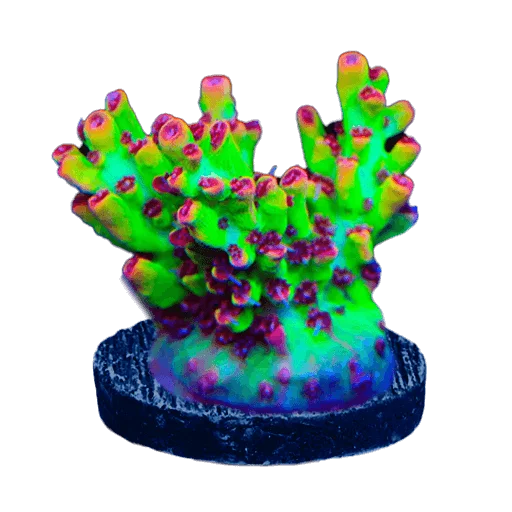
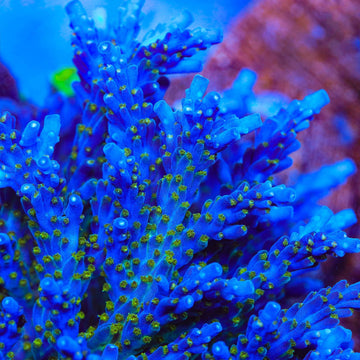
TSA Diamond Dust Tenuis Acropora Coral
Overview
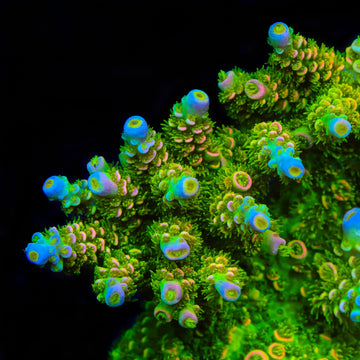
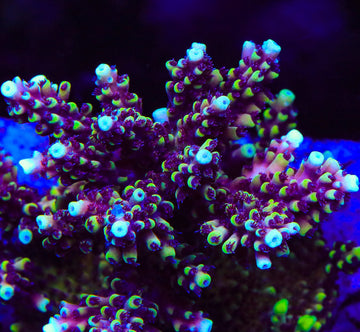
Diamond Dust Tenuis Acropora Coral shows tightly spaced, spiky branchlets with fine axial tips and a dense polyp fringe. Acropora tenuis is a small-polyp stony branching coral that prefers strong, stable lighting and moderate to high, turbulent water flow. It is primarily photosynthetic through symbiotic algae, but occasional small-particle foods can support growth and help maintain color. Place high on rockwork with room for upward and outward growth, and keep distance from aggressive or stinging neighbors.
Quick Facts
Care
Difficult
Lighting
High
Flow
High, random
Placement
High
Temperament
Peaceful (2–3 inches spacing)
Recommended Parameters
Temp
77–80°F
pH
8.1–8.4
Salinity
1.025–1.026
Calcium
420–450 ppm
AlkAlkalinity
7.5–9 dKH
Magnesium
1280–1350 ppm
Feeding
photosynthetic (primary), microplankton, rotifers, copepod nauplii, coral-specific powdered foods (e.g., Reef-Roids), oyster eggs, amino acid supplements, marine snow/bacterioplankton
Care & Placement
FAQ
Frequently Asked Questions
About the TSA Diamond Dust Tenuis Acropora Coral
-
Why does my Diamond Dust Tenuis look dull under whites but sparkle under blues?
A. tenuis shows strong fluorescence, especially from corallite lips and new axial growth under 420–470 nm. If it's dull in whites, check nutrients (NO3 5–15 ppm, PO4 0.02–0.08) and stable alkalinity (8–9 dKH). Over-skimmed, ultra-low nutrients mute pigments. Add moderate blue/UV channels gradually; avoid sudden increases that cause tip burn and washed colors. -
How can I prevent base shadowing and tissue loss as this coral branches out?
Mount the frag at a slight angle and higher on open rock to keep turbulent flow around the base. Encourage a strong encrust before vertical growth by placing the cut edge close to rock. Trim or reposition nearby colonies that cast shade. Maintain random, high flow; stagnant pockets at the base often precede slow-tissue necrosis. -
What pests specifically target this species, and how do I spot early signs?
Acropora-eating flatworms and “red bugs” favor tenuis. Look for pale bite tracks, sand-grain eggs on shaded undersides, reduced polyp extension, and patchy color on lower branches. Use a magnifier and flashlight at night. Quarantine with sequential dips (oxidative or insecticidal per label), inspect with turkey baster blasts, and repeat weekly for 3–4 weeks to break life cycles. -
My tenuis stalled after shipping—polyp retraction and filament strings. What now?
That’s common stress. Start with low PAR (150–200) and strong, random flow; increase light 10–15% weekly. Keep temp 24–26°C and avoid large alkalinity swings. Run fresh carbon to remove allelopathic compounds if housed near soft corals. Target-feed tiny amounts after lights out. If tissue recession begins, frag 2–3 mm into healthy tissue and stabilize parameters.