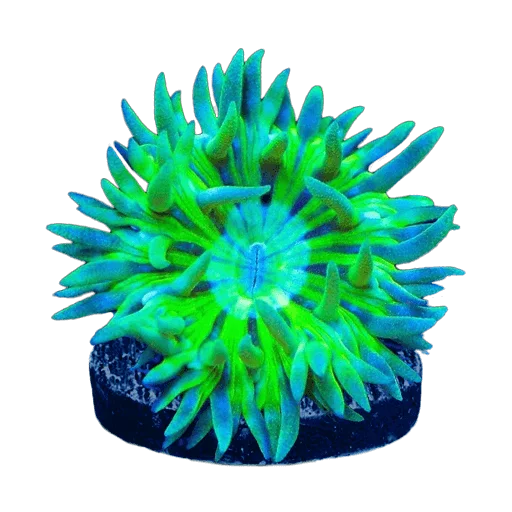
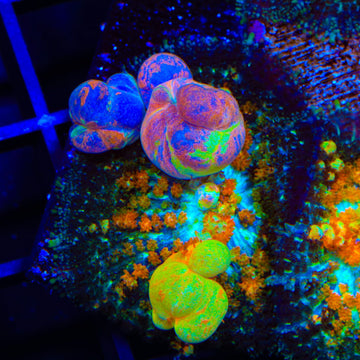
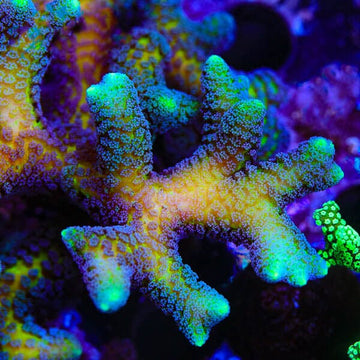
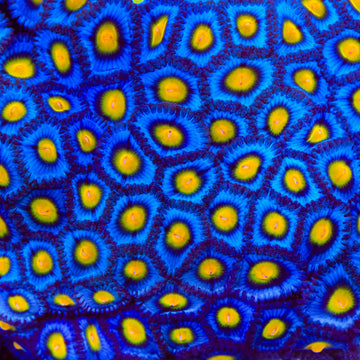
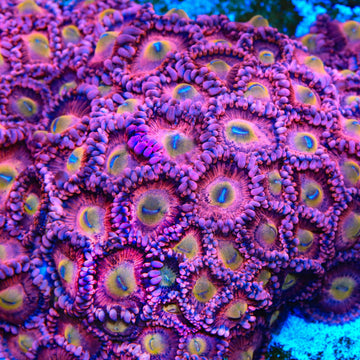
TSA Blue Sea Duncan Coral
Overview
Blue Sea Duncan Coral has fleshy, rounded polyps on branching heads with blue-green centers. Duncanopsammia axifuga is a large-polyp stony coral that prefers moderate light and low to moderate water flow. It is photosynthetic with symbiotic algae but benefits from occasional small meaty foods to support growth and color. Place on stable rock or sand with space from aggressive corals, and avoid strong direct flow that keeps polyps retracted.
Quick Facts
Care
Easy
Lighting
Low–Moderate
Flow
Moderate indirect
Placement
Low–Mid
Temperament
Peaceful (3–4 inches spacing)
Recommended Parameters
Temp
76–80°F
pH
8.1–8.4
Salinity
1.025–1.026
Calcium
400–450 ppm
AlkAlkalinity
8–9 dKH
Magnesium
1250–1350 ppm
Feeding
photosynthetic, mysis shrimp, enriched brine shrimp, copepods, rotifers, finely chopped shrimp or clam, coral-specific powdered zooplankton foods, microplankton
Care & Placement
FAQ
Frequently Asked Questions
About the TSA Blue Sea Duncan Coral
-
Why does my Blue Sea Duncan Coral open fully some days and stay tight on others?
Day-to-day expansion swings are normal, but big changes point to flow, chemistry, or harassment. Aim for gentle, oscillating flow; too direct will keep polyps tight. Keep alkalinity steady (8–9 dKH), nitrate 5–15 ppm, and avoid sudden PAR jumps. Peppermint/cleaner shrimp or nippy fish can cause retraction by stealing food. Target-feed after lights ramp up to encourage confident extension. -
How do Duncans actually grow—head splitting or new buds—and how can I speed branching?
Duncanopsammia axifuga typically buds new heads from the sides of its branching skeleton rather than splitting a single mouth. Frequent, small meaty feedings (e.g., mysis) 2–3x weekly accelerate budding. Maintain stable Ca/Alk/Mg and PAR around 80–150. Slightly higher nutrients promote tissue growth. Provide space so new branches don’t shade or press against rock. -
My Duncan’s green centers faded and the rim browned—what drives these color shifts?
Color shifts reflect light spectrum, PAR, and nutrient balance. Too little PAR or very low nutrients dull fluorescence; too much sudden light can bleach. Target PAR 80–150 with a blue-leaning spectrum, and avoid zero-nutrient conditions. Increase feeding rather than dosing trace elements blindly. Make lighting changes over 2–3 weeks. Improved polyp inflation often precedes color rebounds. -
What causes base recession or polyp bailout, and how can I save the colony?
Triggers include rapid salinity/temp swings, strong laminar flow, bacterial issues (e.g., brown jelly), or fish nips. If tissue recedes, cut above the affected skeleton to healthy heads, dip in iodine/antibacterial solution, and place in moderate, turbulent flow with reduced light for a week. Siphon any jelly promptly. Re-stabilize parameters and feed lightly once extension returns.