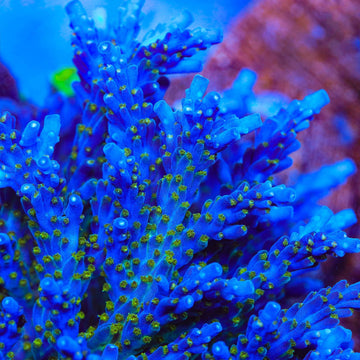
RRC Wonderland Acropora Coral
Overview
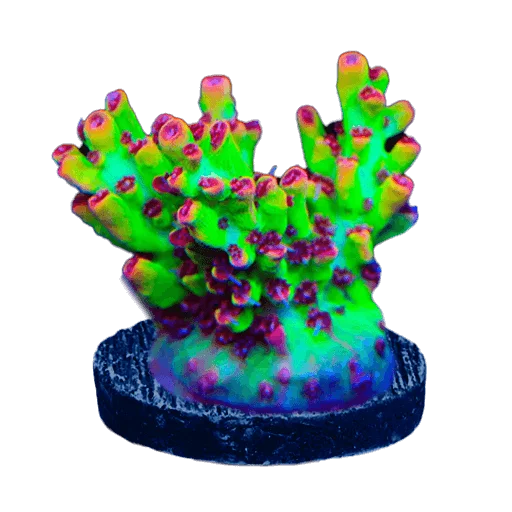
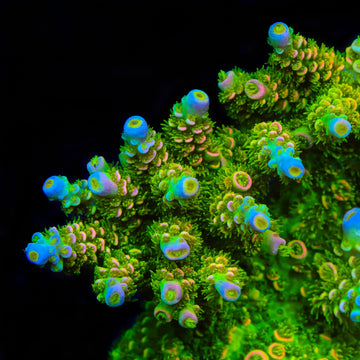
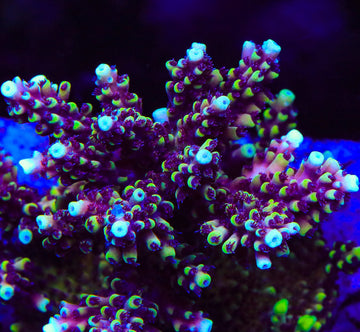
RRC Wonderland Acropora Coral displays tight, branching growth with contrasting polyp tips. Classified as Acropora sp., it is a small-polyp stony branching coral that prefers strong light and high, turbulent water flow. It relies mainly on symbiotic algae for energy but benefits from occasional feeding of fine particulate foods, which can support growth and coloration. Place high on stable rockwork with space from aggressive corals, and keep water conditions very stable.
Quick Facts
Care
Difficult
Lighting
High
Flow
High, turbulent
Placement
High
Temperament
Peaceful (2–3 inches spacing)
Recommended Parameters
Temp
76–80°F
pH
8.1–8.4
Salinity
1.025–1.026
Calcium
420–450 ppm
AlkAlkalinity
8–9 dKH
Magnesium
1250–1350 ppm
Feeding
photosynthetic, microplankton, zooplankton, rotifers, copepod nauplii, powdered SPS coral foods (e.g., Reef Roids), amino acid supplements, marine snow, phytoplankton (sparingly)
Care & Placement
FAQ
Frequently Asked Questions
About the RRC Wonderland Acropora Coral
-
How do I maintain the signature colors of RRC Wonderland Acropora under LEDs?
Target 300–450 PAR with a blue-heavy spectrum (14–20K look), and acclimate gradually to avoid washing out pigments. Keep nutrients modest, not zero (NO3 2–10 ppm, PO4 0.02–0.08), and hold alkalinity stable (7.5–8.5 dKH). Color often improves with consistent potassium, iodine, and iron; verify via ICP tests. Excess white light or rapid alk swings commonly shift it toward dull greens or browns. -
My Wonderland is paling at the base—what’s the likely cause and fix?
Often it’s self-shading plus low flow around the skeleton, leading to tissue recession. Increase random, high flow, slightly adjust angle of light, and trim overshadowing branches. Check for alk instability and bacterial stress; a targeted iodine dip can help if tissue loss is active. Keep PO4 detectable to prevent tissue thinning. Avoid drastic light increases, which can accelerate recession at shaded areas. -
What growth pattern should I expect, and how should I plan placement?
Wonderland tends to branch and plate outward, forming a canopy that shades its base and nearby corals. Mount it on a pedestal or higher rock with at least 3–4 inches of clearance for future spread. Encourage upward, open growth with cross-flow to limit detritus. Expect rapid encrustment before vertical push; give it a stable plug/rock junction so the base can thicken and resist breakage. -
Are there pests it’s especially sensitive to, and how do I catch them early?
Watch for Acropora-eating flatworms (AEFW) and red bugs. AEFW leave crescent bite marks and beige egg clusters under branches; blast with a baster and inspect at night with a flashlight. Red bugs reduce polyp extension and vibrance. Quarantine new frags, use targeted dips, and consider a pest-hunting wrasse. Maintain steady nutrients; stressed Wonderland tissues attract pests and mask early signs.