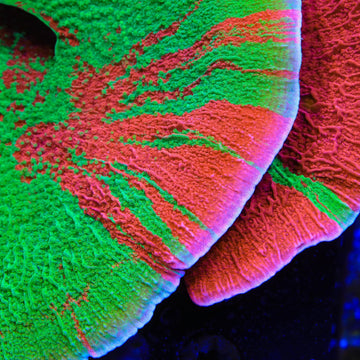
Red Montipora Cap Coral

Red Montipora Cap Coral

Montipora SPS

Overview

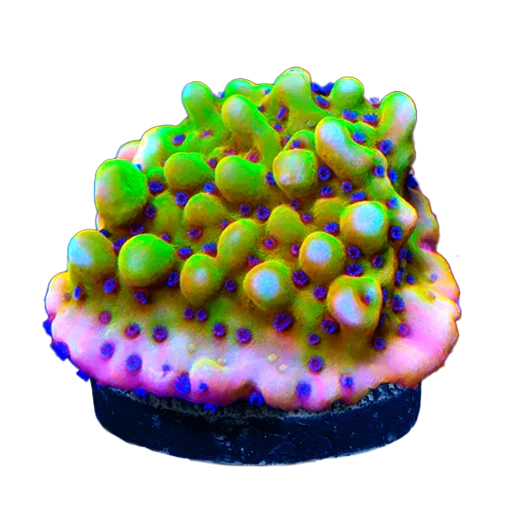
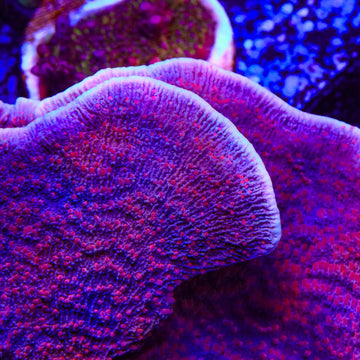
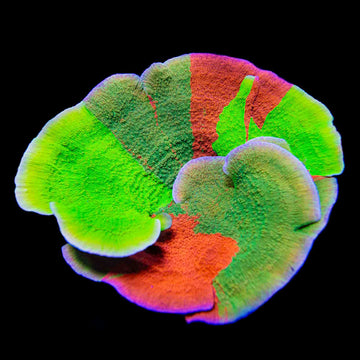
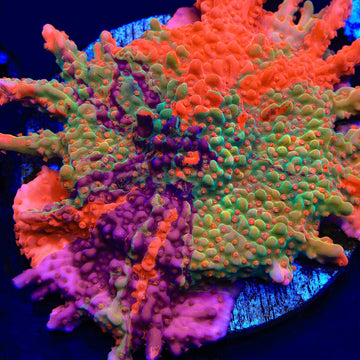
Red Montipora Cap Coral forms broad, whorled plates with a vibrant red surface. Montipora capricornis is a hard plating SPS coral that prefers moderate to strong light and moderate to high, turbulent flow. It is primarily photosynthetic through symbiotic algae but may accept fine particulate foods, which can support growth and maintain color. Place high on stable rockwork with room to expand, and avoid contact with aggressive neighbors.

Quick Facts

Care Moderate
Lighting Moderate–High
Flow Moderate–High
Placement Mid–High
Temperament Peaceful (2–3 inches spacing)

Recommended Parameters

Temp 76–80°F
pH 8.1–8.4
Salinity 1.025–1.026
Calcium 400–450 ppm
AlkAlkalinity 8–9 dKH
Magnesium 1280–1350 ppm
Feeding photosynthetic (primary), microplankton, phytoplankton, zooplankton, rotifers, copepod nauplii, marine snow, coral-specific foods (e.g., Reef Roids)

Care & Placement

Red Montipora Cap Coral (Montipora capricornis) thrives under stable, clean conditions and grows as a plating or whorled shelf, so plan for upward and outward expansion. Provide moderate–high light (PAR ~200–350); start lower and increase over 2–3 weeks to prevent bleaching. Aim for strong, random flow that keeps detritus off the surface and prevents dead spots; avoid direct, laminar jets that can erode tissue. Most nutrition comes from light, but periodic feeding of fine zooplankton, rotifers, or amino acids can improve coloration and growth. Maintain temperature 24–26°C (75–79°F), salinity 1.025–1.026, pH 8.1–8.4, alkalinity 8.0–9.5 dKH, calcium 400–450 ppm, magnesium 1250–1350 ppm, nitrate 2–10 ppm, phosphate 0.03–0.08 ppm. Use reliable test kits or probes and prioritize consistency; this coral is sensitive to rapid alkalinity and temperature swings.Place frags mid to high in the tank on stable rock where they can plate outward without shading prized neighbors. Leave 3–4 inches (or more) from other corals; avoid proximity to aggressive LPS with long sweepers. Generally peaceful, but it can overgrow and cast shade. Acclimate by dipping for pests (watch for Montipora-eating nudibranchs), then light-acclimate with reduced intensity or mesh screens. Secure mounts firmly to prevent falls. Watch for pale tissue (too much light or too little nutrients) or recession at the rim (alk swings, low flow, pests). Improve flow, stabilize parameters, and consider targeted feeding if growth stalls. Regular fragging can manage size and maintain healthy edges.

FAQ

Frequently Asked Questions

About the Red Montipora Cap Coral

  • Why is my Red Montipora Cap growing upward in cupped shelves instead of flat plates?
    Shape is driven by light gradient, flow, and starting angle. In low, laminar flow it tends to form flat plates; in strong, turbulent flow with angled mounting it scrolls upward to capture light and shed detritus. Mount frags vertically with space around edges, provide random, high flow, and keep consistent PAR (200–350). Avoid nearby rock that directs flow in one direction, which can distort growth.
  • My Red Monti Cap is turning pink/orange or brown—what’s the likely cause?
    Pale/pink often points to too-low nutrients or low potassium; brown suggests high nutrients or low light. Test NO3 (5–15 ppm), PO4 (0.03–0.08 ppm), and potassium (380–420 ppm). Maintain stable alkalinity (7.5–8.5 dKH). Aim for blue-heavy spectrum and 200–350 PAR. Correct slowly—sudden changes can shock tissue. Color usually rebounds over weeks as zooxanthellae balance and trace levels normalize.
  • The base is receding (STN/RTN). How can I stop loss on Montipora capricornis?
    Most cases trace back to alkalinity or temperature swings, or chemical allelopathy. Immediately stabilize parameters, add fresh carbon, and increase oxygenation/flow. Frag healthy margins 5–10 mm into clean tissue and remount away from aggressive neighbors. A short iodine dip can help with opportunistic microbes. Review recent changes (new GFO, major lighting tweaks) and reverse abruptly implemented adjustments; return to stability before re-scaling intensity or media.
  • How do I confirm and eradicate Montipora-eating nudibranchs on a Monti cap?
    Look at night along undersides for white, scalloped bite marks and tiny white nudibranchs; egg spirals appear as fuzzy white coils. Manually remove adults, siphon eggs, and use targeted dips (iodine or insecticide-based coral dips) on removable pieces. Repeat every few days to break the life cycle. A diligent wrasse (sixline, melanurus) can help with stragglers. Quarantine all new Montipora and inspect plates’ undersides rigorously.