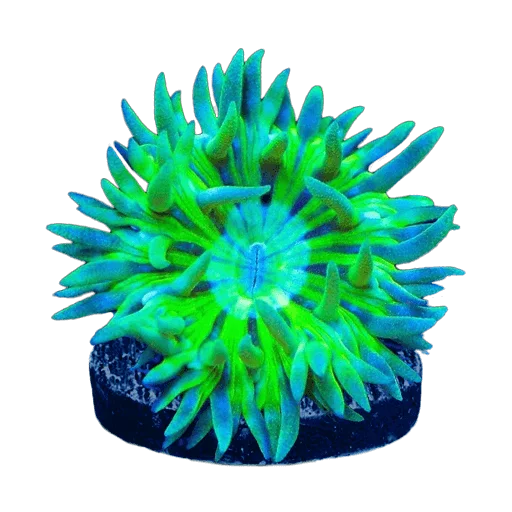
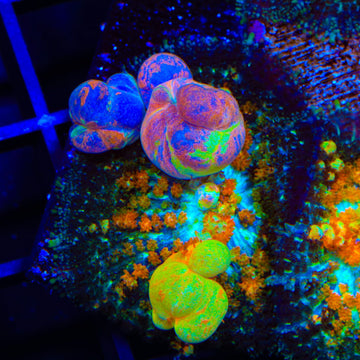
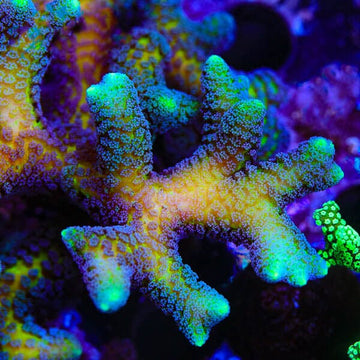
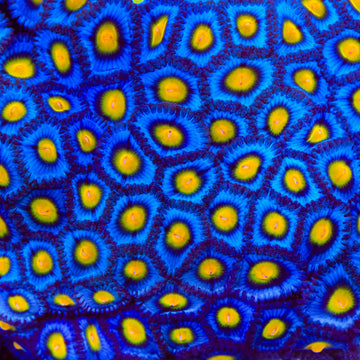
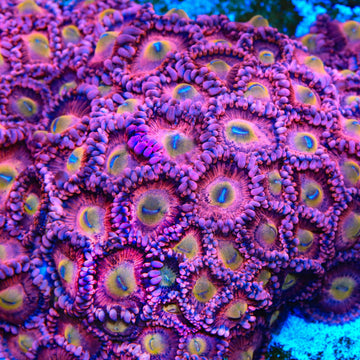
Vargas Cespitularia Coral
Overview
Vargas Cespitularia Coral displays slender, upright stalks with feathery star-shaped polyps that sway in the current. Cespitularia sp. Coral is a soft, branching coral that prefers moderate to high light and moderate, turbulent water flow. It is primarily photosynthetic via symbiotic algae, but occasional small plankton or coral foods can support faster growth and richer coloration. Place it on its own rock or away from other corals, as it can spread quickly and may be irritated by aggressive neighbors.
Quick Facts
Care
Moderate
Lighting
Moderate–High
Flow
Moderate, indirect
Placement
Mid–High
Temperament
Peaceful, fast-growing (allow several inches of space)
Recommended Parameters
Temp
76–80°F
pH
8.1–8.4
Salinity
1.025–1.026
Calcium
400–450 ppm
AlkAlkalinity
8–10 dKH
Magnesium
1250–1350 ppm
Feeding
photosynthetic (primary), phytoplankton, microplankton, marine snow, dissolved organic matter, fine particulate coral foods
Care & Placement
FAQ
Frequently Asked Questions
About the Vargas Cespitularia Coral
-
Why does my Vargas Cespitularia Coral suddenly “melt” after doing well for weeks?
Cespitularia sp. can crash from rapid parameter swings, low/random flow, or bacterial base rot after shipping. Stabilize alk, temp, and salinity; aim for gentle, turbulent flow that keeps the stalk clean. Run fresh carbon to reduce soft-coral toxins. A brief iodine-based dip can help; if the base is deteriorating, frag healthy tips above the necrosis and remount. -
How do I keep the signature blue sheen on my Vargas Cespitularia Coral?
Provide moderate PAR (about 80–150) with strong blue spectrum. Too much white light washes color; too little light browns it. Avoid ultra-low nutrients—keep nitrate detectable and phosphate non-zero. Good flow prevents films that dull the surface. Don’t blindly dose trace elements; only supplement what you test for to prevent swings that cause color loss. -
What’s the most reliable way to propagate Cespitularia sp. without losing frags?
Cut above a branch node with a clean scalpel and avoid crushing the stalk. Place cuttings in a rubble cup or basket and secure with bridal veil, toothpicks, or loose mesh—glue often fails on slimy tissue. Keep moderate flow and lower light for the first week. After 5–10 days, the frag usually attaches and can be placed normally. -
Can Vargas Cespitularia coexist with Xenia, Sinularia, or leathers without issues?
It can, but soft-corals release allelochemicals that may cause deflation, stalled growth, or color shifts. Give extra space and strong crossflow, run quality carbon and change it regularly, and keep up with water changes. If the Cespitularia stays closed near a neighbor, relocate or adjust flow and increase chemical filtration until recovery is evident.