TSA Blazing Sun Cycloseris Aquacultured Plate Coral
Overview
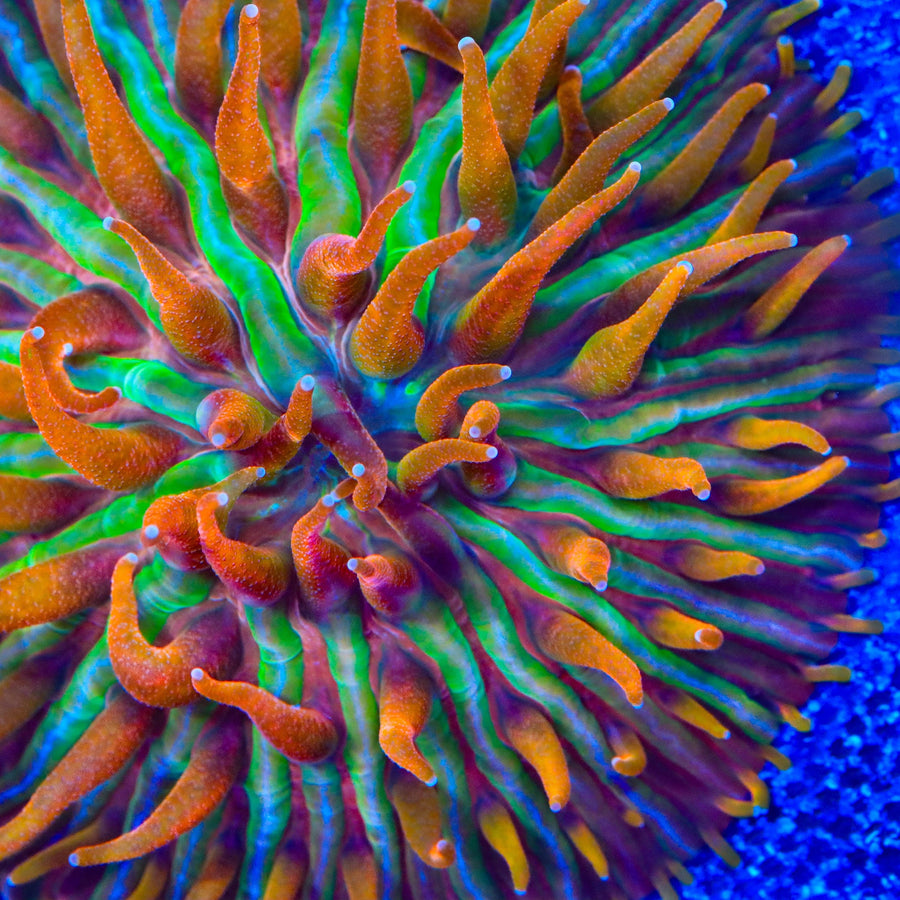
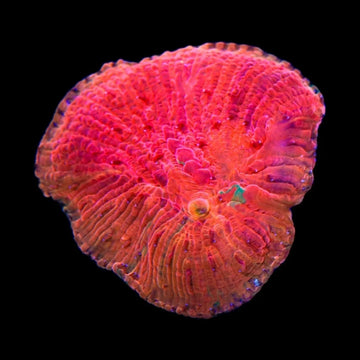
Blazing Sun Cycloseris Coral shows a flat, round disk with radiating ridges and a bright orange to yellow surface. Classified as Cycloseris sp., it is a solitary free-living large-polyp stony coral; provide moderate light and low to moderate, gentle water flow. It hosts symbiotic algae for photosynthesis but accepts small meaty foods, which can support faster growth and deeper coloration. Place on the sandbed with space around it, as its tissue is delicate and can be damaged by sharp rock and nearby stingers.
Quick Facts
Care
Moderate
Lighting
Low–Moderate
Flow
Low–Moderate
Placement
Low
Temperament
Semi-aggressive (3–6 inches spacing)
Recommended Parameters
Temp
76–82°F
pH
8.1–8.4
Salinity
1.025–1.026
Calcium
400–450 ppm
AlkAlkalinity
8–10 dKH
Magnesium
1280–1350 ppm
Feeding
photosynthetic, mysis shrimp, enriched brine shrimp, finely chopped shrimp or clam, zooplankton, microplankton, coral-specific powdered foods, marine snow
Care & Placement
FAQ
Frequently Asked Questions
About the TSA Blazing Sun Cycloseris Aquacultured Plate Coral
-
Why does my Blazing Sun Cycloseris inflate and deflate dramatically, even moving a bit on the sand?
Cycloseris sp. are free-living plates that inflate their tissue to shed sand and detritus or to reposition away from irritation or light that’s too intense. Brief “ballooning” is normal. If it’s frequent, reduce flow slightly, shield from direct blast, and lower light by 10–20%. Check nearby sand-sifters that may be burying it. -
My coral is paling near the mouth but still expands—what’s the likely cause?
Central paling often points to excess light or underfeeding rather than disease. Shift it to lower PAR (moderate, indirect), extend the blue photoperiod, and target-feed small meaty foods 2–3 times weekly. If tissue thins, try an iodine dip and improve stability (alk/cal/mg). Avoid aggressive peroxide or long-duration dips. -
How do I keep sand and grit from irritating it on the substrate?
Use fine, clean sand and set the coral on a shallow ceramic tile or “coral cradle” slightly proud of the bed. Tune flow so it’s gentle, cross-current rather than direct. Keep burrowing gobies and pistol shrimp from its zone, and gently baster-blow debris off weekly. The coral can expel some grit, but chronic burial stresses it. -
My coral browned out after increased feeding—did I overdo nutrients?
Likely a combo of higher nutrients and lower light at the tissue. Reduce particulate foods, keep target portions small, and boost export (skimming, refugium, weekly 10–15% changes). Gradually raise PAR 10–15% over two weeks and favor a blue-heavy spectrum. Once stabilized, resume light feedings; color typically improves in 2–4 weeks.