TSA Battletoads Aquacultured Plate Coral
Overview
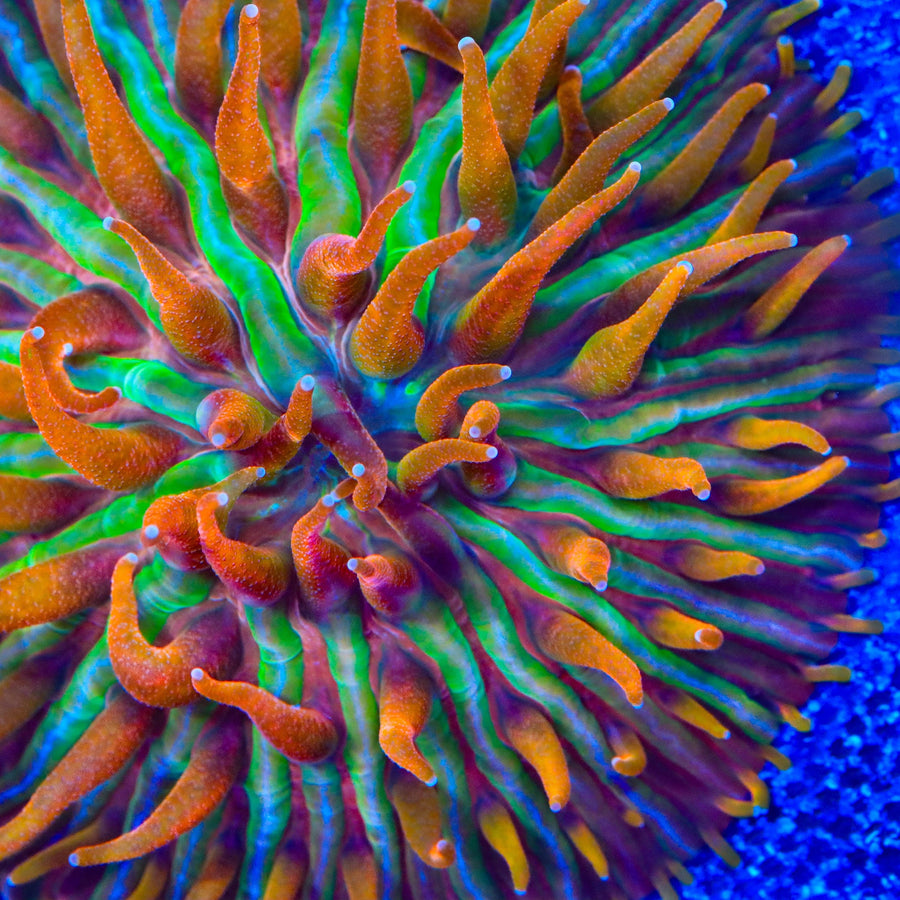
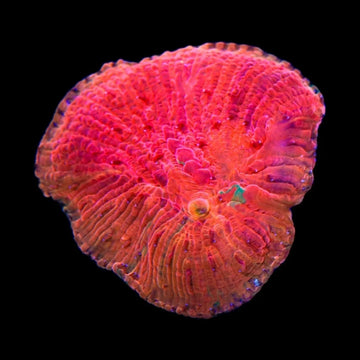
Battletoads Plate Coral shows a flat, round disk with short radiating ridges and a central mouth. Cycloseris sp. is a solitary, free-living hard plating coral that prefers moderate light and gentle to moderate water flow. It relies on symbiotic algae for most nutrition but accepts small meaty foods, which can support growth and color. Place on sand or a stable bare area away from aggressive neighbors, and keep debris off the tissue.
Quick Facts
Care
Moderate
Lighting
Moderate
Flow
Low–Moderate
Placement
Low
Temperament
Semi-aggressive (3–6 inches spacing)
Recommended Parameters
Temp
76–80°F
pH
8.1–8.4
Salinity
1.025–1.026
Calcium
400–450 ppm
AlkAlkalinity
8–9 dKH
Magnesium
1280–1350 ppm
Feeding
photosynthetic, mysis shrimp, enriched brine shrimp, finely chopped marine seafood, zooplankton, microplankton, marine snow, powdered coral foods (e.g., Reef Roids), small LPS pellets
Care & Placement
FAQ
Frequently Asked Questions
About the TSA Battletoads Aquacultured Plate Coral
-
Why does my Battletoads Plate Coral (Cycloseris sp.) inflate and “walk” across the sand, and should I let it?
Cycloseris can inflate to self-right and subtly “walk” to find better flow or light. Allow movement as long as it’s not drifting under rock ledges or into high-sting neighbors. If it repeatedly moves, reassess placement: slightly higher laminar flow to keep it clean and moderate light. Use a smooth sandbed; coarse grains can abrade tissue and trigger recession. -
My coral’s mouth looks gaping after a meal. Is that a problem with Cycloseris?
A temporarily gaping oral opening post-feeding is normal. Issues arise when large food tears the mouth or detritus lodges there, leading to rot. Feed smaller items (mysis, small pellets) and gently baste away leftovers after 15–20 minutes. If mucus accumulates or tissue recedes from the mouth, consider an iodine-based dip and reduce feeding size/frequency. -
Does Cycloseris prefer intense light like some plate corals, or will that bleach it?
Many Cycloseris color morphs prefer moderate PAR with strong blue spectrum but can bleach under sudden high intensity. Acclimate over 2–3 weeks using lower photoperiod or screen. Color often deepens under stable blue-heavy lighting with modest nutrients (not ULNS). If fading, slightly reduce white channels, increase targeted feeding, and verify nitrate/phosphate aren’t bottoming out. -
How do I prevent sand-related tissue loss on the underside and ridges?
Keep a clean, fine-grain substrate and provide enough flow to lift silt without flipping the coral. Avoid burrowing fish nearby. A low-profile acrylic ring or ceramic “riser” under the disc prevents edge abrasion and detritus trapping in ribs. Turkey-baste weekly. If recession starts, move to cleaner flow, perform an antiseptic dip, and avoid handling the tissue directly.