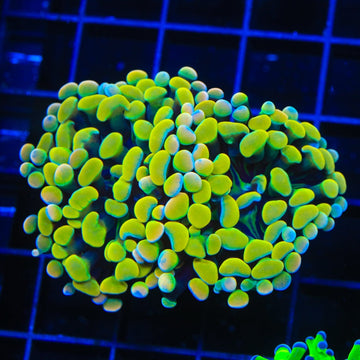
TSA Banana Boat Torch Coral
Overview
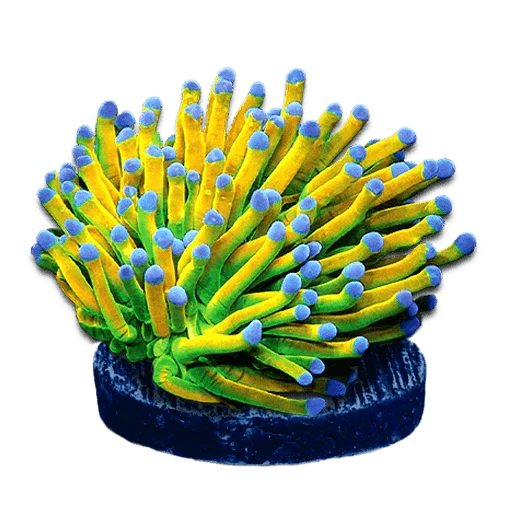
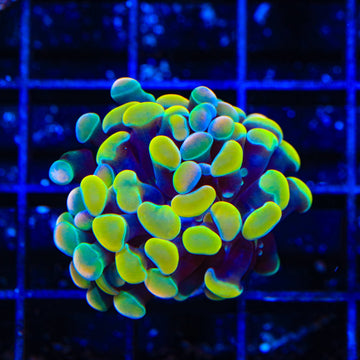
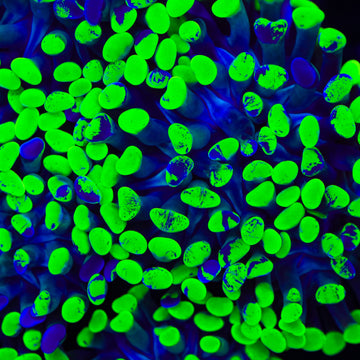
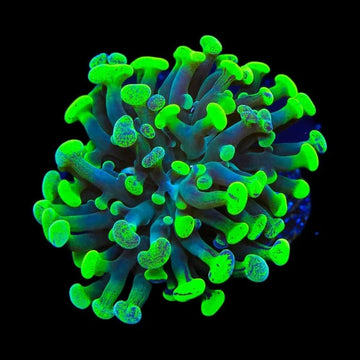
Banana Boat Torch Coral shows long, waving tentacles with contrasting tips. Euphyllia glabrescens is a large-polyp stony coral with branching heads; it prefers moderate lighting and moderate, indirect water flow. It relies on symbiotic algae for most nutrition but benefits from occasional small meaty foods, which can support faster growth and fuller polyp extension. Place it where the tentacles cannot reach neighbors, as it has long sweeper tentacles that can sting other corals.
Quick Facts
Care
Moderate
Lighting
Moderate
Flow
Moderate, indirect
Placement
Mid–Low
Temperament
Aggressive (6–10 inches spacing)
Recommended Parameters
Temp
76–80°F
pH
8.1–8.4
Salinity
1.025–1.026
Calcium
400–450 ppm
AlkAlkalinity
8–10 dKH
Magnesium
1280–1380 ppm
Feeding
photosynthetic (primary), mysis shrimp, enriched brine shrimp, finely chopped seafood, zooplankton, microplankton, LPS coral pellets
Care & Placement
FAQ
Frequently Asked Questions
About the TSA Banana Boat Torch Coral
-
My Banana Boat Torch’s tentacles are getting short and stubby. What’s causing this?
Direct, laminar flow or excessive PAR can cause retraction and stubby tips. Aim for random, moderate flow that keeps the polyps swaying without whipping. Check for irritants like vermetid snails, flatworms, or nearby stinging corals. Keep alk stable (8–9 dKH) and nutrients non-zero (NO3 5–15 ppm, PO4 0.03–0.1). Gradually adjust light over 1–2 weeks to avoid light shock. -
How do I keep the yellow tones on a Banana Boat Torch from washing out?
Yellow morphs often dull under ultra-low nutrients or heavy white lighting. Prioritize a blue-heavy spectrum (peaks around 420–460 nm), keep nutrients modest but present, and avoid aggressive carbon dosing that strips color. Maintain stable trace levels via regular water changes; inconsistent iodine/iron can affect fluorescence. Avoid abrupt PAR increases; target 150–250 PAR with slow acclimation. -
Is it safe to let clownfish host a Banana Boat Torch?
Sometimes, but it’s risky. Persistent rubbing can tear tissue, invite infection, and cause recession. Large, energetic clowns are more problematic. If hosting begins, increase random flow slightly to discourage lingering, provide alternative soft corals or anemone substitutes, and monitor for torn edges. At the first sign of damage, consider a mesh guard temporarily or rehome the clowns. -
How should I respond to early brown jelly on a torch head?
Act fast. Siphon the jelly, remove the affected head, and cut at clean, healthy skeleton. Follow with an iodine or broad-spectrum coral dip. Increase random flow to limit stagnation, run fresh carbon, and consider a brief antibacterial bath if available. Disinfect tools, and monitor remaining heads closely. Stable parameters and reduced detritus help prevent recurrence.