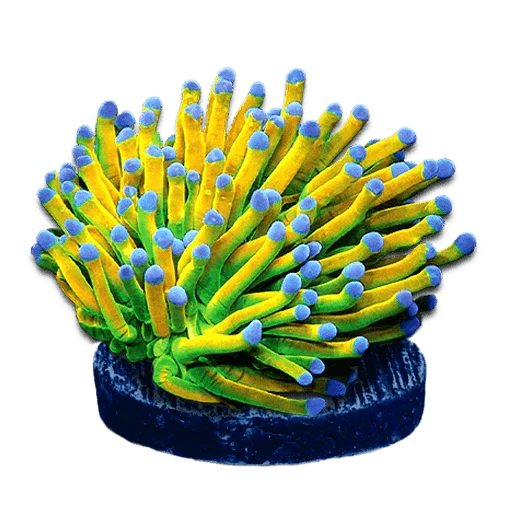
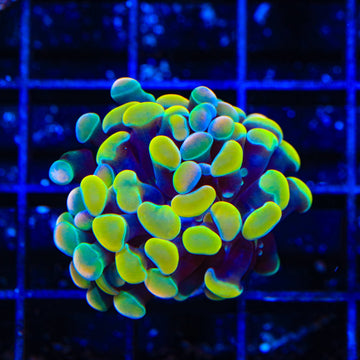
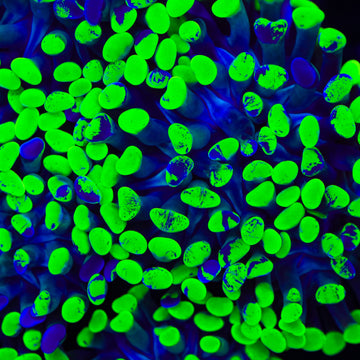
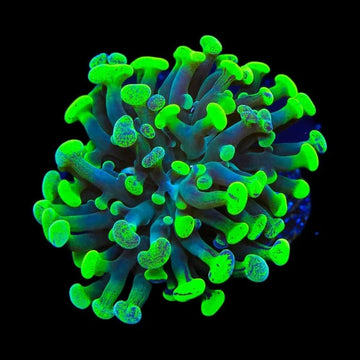
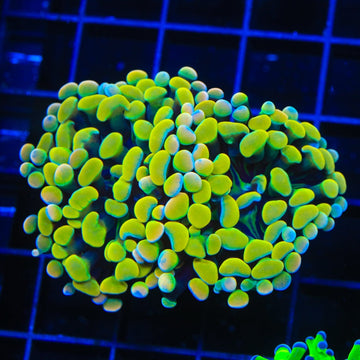
TSA Baby Grail Torch Coral
Overview
Baby Grail Torch Coral has long, waving tentacles with bright tips. Euphyllia glabrescens is a large-polyp stony coral with a branching skeleton; it prefers moderate light and moderate, steady water flow. It is primarily photosynthetic with help from symbiotic algae but will accept small meaty foods, which can support growth and maintain color. Provide ample space for long sweeper tentacles and keep it away from other corals to prevent stings.
Quick Facts
Care
Moderate
Lighting
Moderate–High
Flow
Moderate indirect
Placement
Mid–Low
Temperament
Aggressive (6–8 inches spacing)
Recommended Parameters
Temp
76–80°F
pH
8.1–8.4
Salinity
1.025–1.026
Calcium
400–450 ppm
AlkAlkalinity
8–10 dKH
Magnesium
1280–1350 ppm
Feeding
photosynthetic, mysis shrimp, enriched brine shrimp, finely chopped marine meats (krill, shrimp), zooplankton, microplankton, coral-specific powdered foods
Care & Placement
FAQ
Frequently Asked Questions
About the TSA Baby Grail Torch Coral
-
How do I keep the “Baby Grail” gold coloration from fading or browning?
Maintain moderate PAR (150–250) with a spectrum rich in blue/violet (420–470 nm). Avoid ultra-low nutrients; target nitrate 5–15 ppm and phosphate 0.03–0.1 ppm. Stable alkalinity (8–9 dKH), calcium 420–450 ppm, and magnesium 1300–1400 ppm support tip formation. Trace elements like iron and iodine at natural seawater levels help, but dose only if you can test. Sudden light changes often dull color—acclimate slowly. -
What flow pattern brings out its best extension without causing tissue damage?
Use strong, indirect, alternating flow that sways tentacles broadly without folding them over the skeleton. Constant laminar jets cause tip fraying and receding mouths. If the torch retracts during flow pulses or the flesh rubs on septa, dial back. Dead spots under the head invite detritus and bacterial issues—angle flow to gently flush the base while keeping the polyp comfortably extended. -
My torch shows early tissue recession at the base—how can I stop it?
Act quickly: increase gentle cross-flow around the skeleton, siphon detritus, and stabilize alkalinity. Perform a coral dip (iodine-based or broad-spectrum) and inspect for vermetids or nudibranchs. Trim any sharp skeleton where flesh contacts. If tissue turns gelatinous with odor, isolate and run fresh carbon, raise skimming, and consider a targeted antibiotic bath per reef-safe protocols. Prevent by avoiding sand abrasion and sudden temperature swings. -
Can I keep this torch alongside other Euphyllia without conflict?
Torches are notably aggressive and often sting hammers and frogspawn despite being related. Even different torches can fight via long sweepers and chemical cues. Provide 6–10 inches of spacing, strong carbon filtration, and regular water changes after any allelopathic events. Nighttime tentacle extension increases reach—plan for it. If contact is unavoidable, prioritize flow that prevents tentacle entanglement rather than increasing speed.