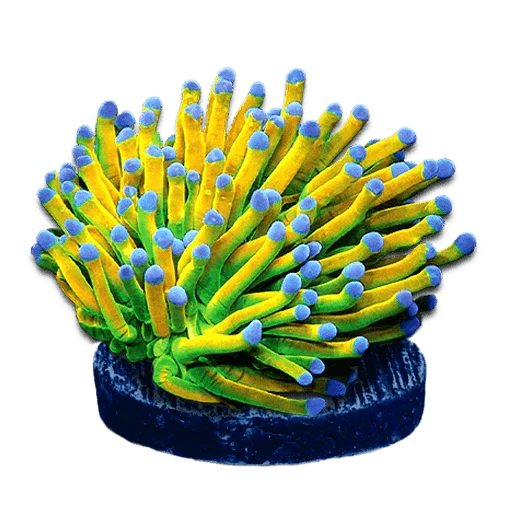
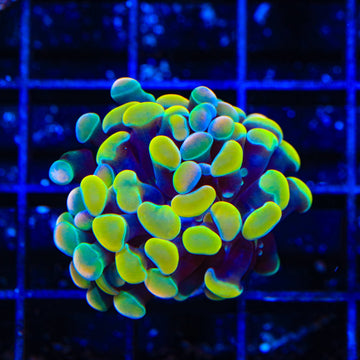
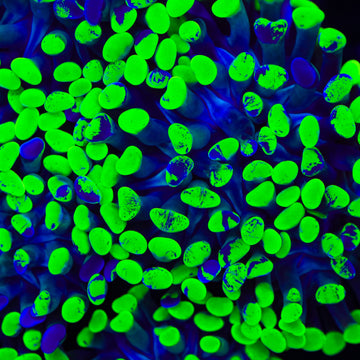
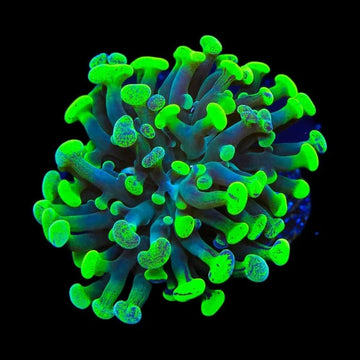
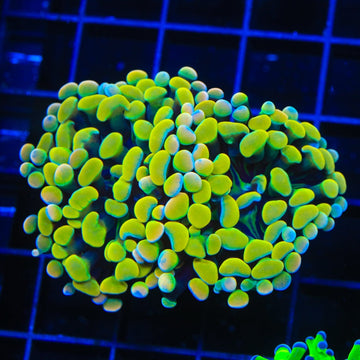
Pot of Gold Torch Coral
Overview
Pot of Gold Torch Coral shows long, waving tentacles with gold to green tips. Euphyllia glabrescens is a large-polyp stony coral with a branching skeleton; it does best under moderate light and gentle to moderate, indirect flow. It relies on symbiotic algae for most nutrition but accepts small meaty foods, which can improve growth and color. Place it securely and leave ample space, as its sweeper tentacles can sting nearby corals.
Quick Facts
Care
Moderate
Lighting
Moderate
Flow
Moderate, indirect
Placement
Mid–Low
Temperament
Aggressive (6–10 inches spacing)
Recommended Parameters
Temp
76–80°F
pH
8.1–8.4
Salinity
1.025–1.026
Calcium
400–450 ppm
AlkAlkalinity
8–9.5 dKH
Magnesium
1280–1350 ppm
Feeding
photosynthetic, mysis shrimp, enriched brine shrimp, finely chopped marine meats (shrimp, clam), zooplankton/microplankton, coral-specific powdered foods (e.g., Reef Roids), marine snow
Care & Placement
FAQ
Frequently Asked Questions
About the Pot of Gold Torch Coral
-
Why does my Pot of Gold Torch shift from rich gold to green or pale tips over time?
Color shifts often follow light spectrum, PAR, and nutrient balance. Aim for moderate PAR (150–250) with strong blue/violet channels; intense white can wash gold to green. Avoid ultra-low nutrients—keep detectable nitrate (5–15 ppm) and phosphate (0.03–0.08 ppm). Stable trace levels help; abrupt carbon dosing or heavy iron can push greener hues. Gradual light changes and consistent feeding support golden fluorescence. -
How can I tune flow for longer, fuller sweeps without causing tissue recession?
Provide moderate, random flow that makes tentacles sway, not bend continuously. Laminar jets crush tissue and expose the skeleton, while weak flow traps detritus at the base. Use alternating gyre or pulsing modes and angle outputs above the colony. If you see retracted tips, torn mouths, or exposed septa, reduce direct velocity and widen the flow pattern. -
What’s the best response to early brown jelly on a Pot of Gold Torch head?
Act fast: shut pumps, gently siphon the mucus, and remove the affected head for an iodine or antibacterial dip. If the skeleton branches, cut well into healthy tissue to isolate. Increase aeration and flow after treatment, and run fresh carbon. Check for low alkalinity, temperature swings, or detritus buildup—common triggers. Quarantine new Euphyllia to limit recurrence. -
My clownfish keeps “hosting” the torch and it’s receding—what can I do?
Persistent hosting can abrade tissue and inhibit polyp extension. Provide alternative shelters (large Euphyllia-free zone, faux anemone, fluffy soft coral stand-in) and use an acclimation box to retrain the fish. Increase feeding to the coral during recovery and ensure flow isn’t blasting the stressed head. If needed, relocate the torch to a protected, mid-flow area.