Neon Tip Frogspawn Coral
Overview
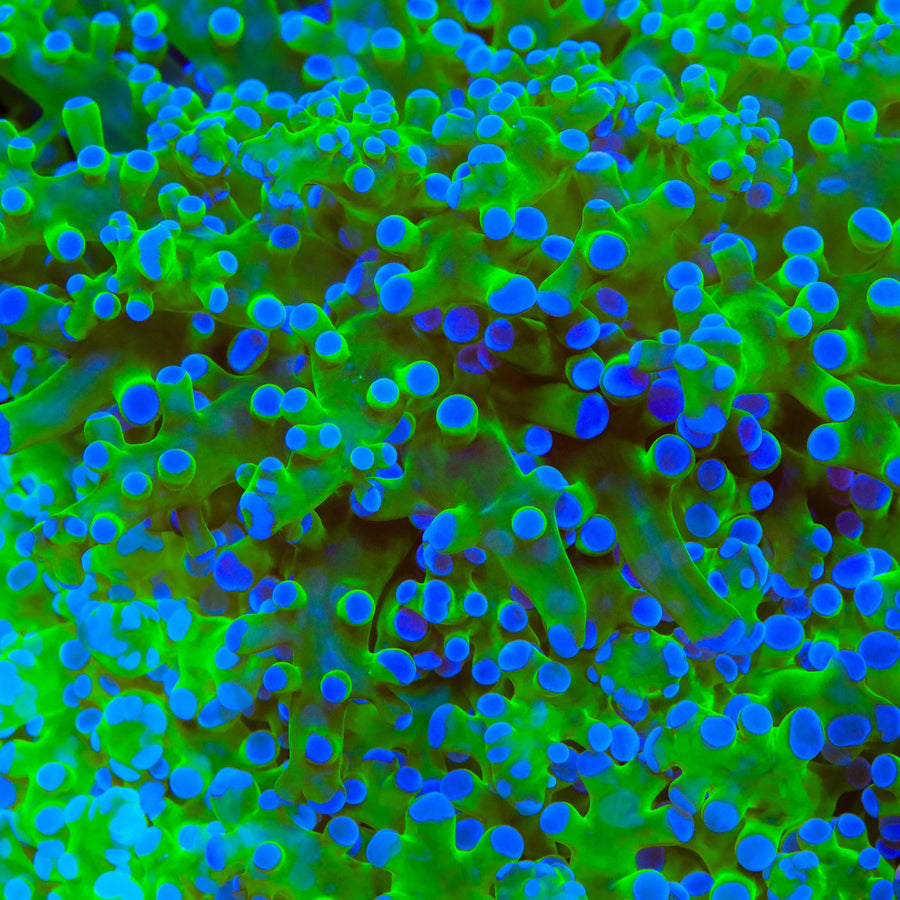
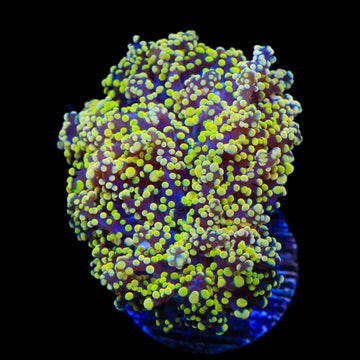
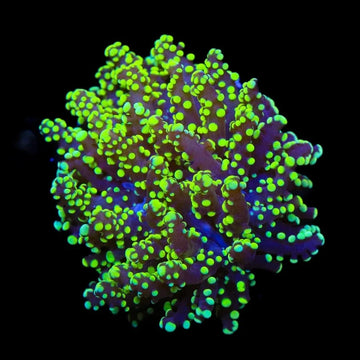
Neon Tip Frogspawn Coral shows branching heads with fleshy tentacles ending in bright neon tips. Fimbriaphyllia paradivisa is a branching large-polyp stony coral; it does well under moderate light and gentle to moderate water flow. It relies on symbiotic algae for energy but accepts small meaty foods, which can boost growth and maintain color. Place it where its sweeper tentacles cannot reach other corals and provide a stable, secure base to avoid breakage.
Quick Facts
Care
Moderate
Lighting
Moderate
Flow
Moderate indirect
Placement
Mid–Low
Temperament
Semi-aggressive (sweeper tentacles—leave 6–8 inches of space)
Recommended Parameters
Temp
76–80°F
pH
8.1–8.4
Salinity
1.025–1.026
Calcium
400–450 ppm
AlkAlkalinity
8–10 dKH
Magnesium
1280–1350 ppm
Feeding
photosynthetic, mysis shrimp, enriched brine shrimp, finely chopped krill or clam, zooplankton, coral-specific powdered foods
Care & Placement
FAQ
Frequently Asked Questions
About the Neon Tip Frogspawn Coral
-
How do I keep the neon tips vivid on Neon Tip Frogspawn Coral without risking bleach?
Aim for moderate PAR (80–150) with strong blue spectrum (420–460 nm). Keep nutrients measurable (nitrate 5–15 ppm, phosphate 0.03–0.1 ppm) rather than ultra-low. Stable alkalinity and temperature matter more than chasing intensity. Occasional trace element support (iron/iodine within normal reef ranges) can help fluorescence, but avoid aggressive dosing. If tips dull, try small spectrum adjustments before raising PAR. -
One head retracted and released brown, stringy mucus—what’s the fastest safe response?
That’s likely brown jelly. Immediately increase flow around the colony to prevent stagnation, siphon the jelly, then perform an iodine or broad-spectrum coral dip. If a branch is clearly infected, cut it off above healthy skeleton and discard. Boost aeration, run fresh carbon, and reduce heavy feeding for a week. Check for detritus buildup and vermetid snails that can irritate tissue and invite infection. -
Can clownfish host in Fimbriaphyllia paradivisa without harming it?
Possible, but constant rubbing can cause recession on new or small colonies. Encourage clowns to use alternatives (large hairy mushroom, faux anemone) while the coral settles. Provide moderate, indirect flow so the coral flexes gently—this discourages persistent nesting. If you see tissue thinning at the branch base, temporarily cage the coral with a light grid or move it slightly higher where clowns visit less. -
Why are branch bases thinning or heads detaching (polyp bailout), and how do I stop it?
Common triggers include direct, high-velocity flow, sudden alkalinity swings, or bacterial stress. Reduce point-source flow, keep dKH stable (around 8–9), and maintain moderate nutrients. Inspect for irritation from vermetid snails or bristleworms. If bailout begins, move the coral to gentler flow, run carbon, and perform an iodine dip. Secure any bailed polyp in a low-flow cup with rubble; occasionally they reattach under stable conditions.