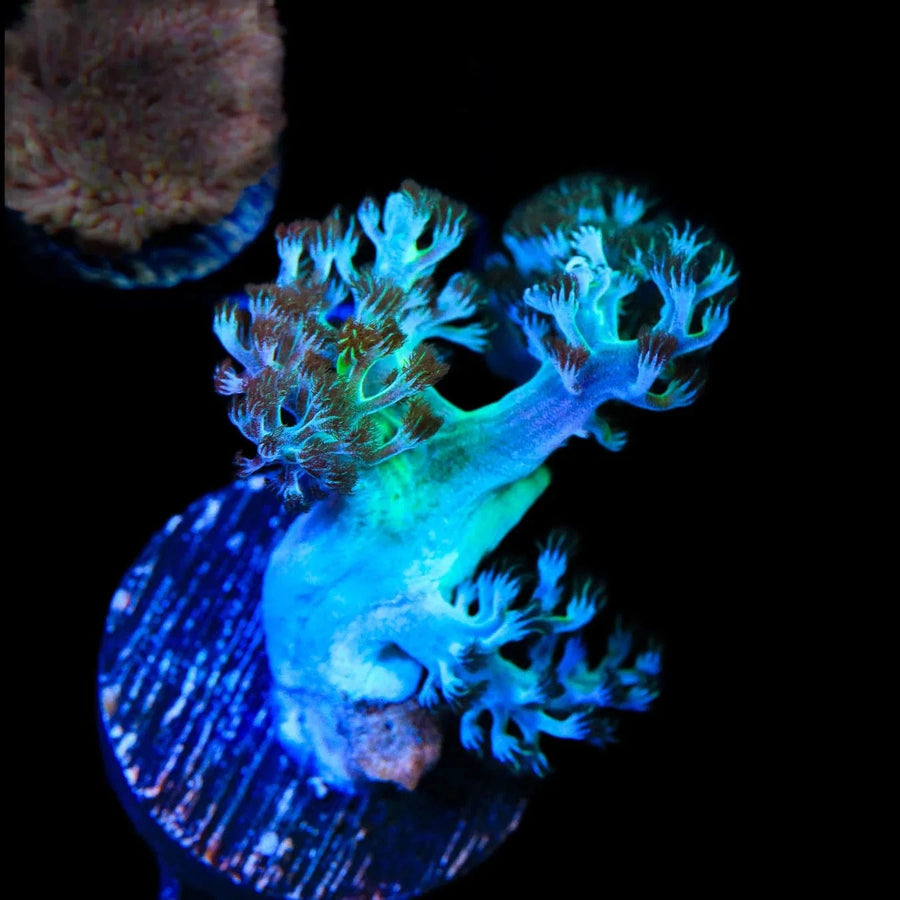
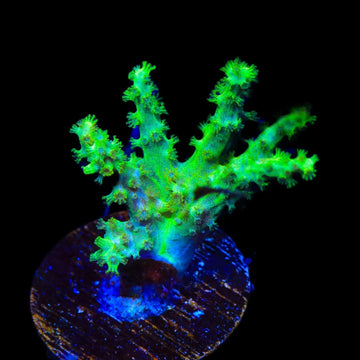
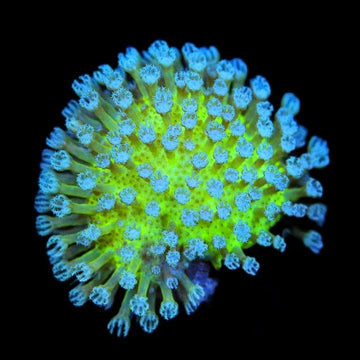
Neon Polyp Toadstool Leather Coral
Overview
Neon Polyp Toadstool Leather Coral has a smooth, mushroom-like cap and a thick stalk topped with bright green polyps. Sarcophyton sp. is a soft leather coral with a toadstool structure that prefers moderate lighting and moderate to strong, variable water flow. It is photosynthetic with symbiotic algae and can take occasional fine particulate foods, supporting growth and polyp extension. Provide space around it and avoid direct contact or placing delicate corals downcurrent, as it can shed and release compounds that irritate neighbors.
Quick Facts
Care
Easy
Lighting
Moderate–High
Flow
Moderate, indirect
Placement
Mid–High
Temperament
Semi-aggressive (allelopathy; 6–8 inches spacing)
Recommended Parameters
Temp
76–82°F
pH
8.1–8.4
Salinity
1.025–1.026
Calcium
380–430 ppm
AlkAlkalinity
8–10 dKH
Magnesium
1250–1350 ppm
Feeding
photosynthetic (primary), phytoplankton, marine snow, microplankton, bacterioplankton, fine powdered coral foods
Care & Placement
FAQ
Frequently Asked Questions
About the Neon Polyp Toadstool Leather Coral
-
Why do my Neon Polyp Toadstool’s polyps stay retracted for days after looking great?
Sarcophyton periodically sheds a waxy film to slough off algae and biofouling; during this, polyps close. Ensure strong, alternating flow to help the film release. If retraction exceeds 10–14 days, check for low alkalinity, persistently low flow, chemical aggression from nearby corals, or clownfish irritation. A small iodine dip can help if there’s a bacterial sheen or damaged tissue. -
How can I maintain the neon polyp glow without bleaching the cap?
Aim for moderate PAR (150–250) with blue-heavy spectrum (around 420–470 nm) to bring out fluorescence. Avoid sudden jumps in intensity; ramp LEDs slowly over weeks. Maintain stable nutrients (nitrate 5–15 ppm, phosphate 0.03–0.1) to prevent washed-out tissue. If polyps stay bright while the cap pales, reduce peak intensity and increase flow to improve gas exchange. -
My SPS are declining after adding this leather—could chemicals be the cause?
Sarcophyton releases terpenoid compounds that can stress SPS. Run fresh activated carbon, change it regularly, and ensure vigorous skimming and water changes. Provide generous spacing and flow paths that don’t carry its mucus directly onto sensitive colonies. Observe for polyp recession in downstream acros; if seen, increase carbon and consider relocating the leather or adjusting flow. -
The stalk is stretching and the cap is cupping—what does this indicate?
Stalk elongation and cupped morphology often point to insufficient light or flow. Increase flow to a gentle, oscillating pattern that ruffles polyps but doesn’t bend the stalk continuously. Gradually raise light intensity or move the coral higher. Check for shading from fast-growing caps; periodic rotation can prevent self-shading. Verify alkalinity and magnesium stability to support firm tissue.