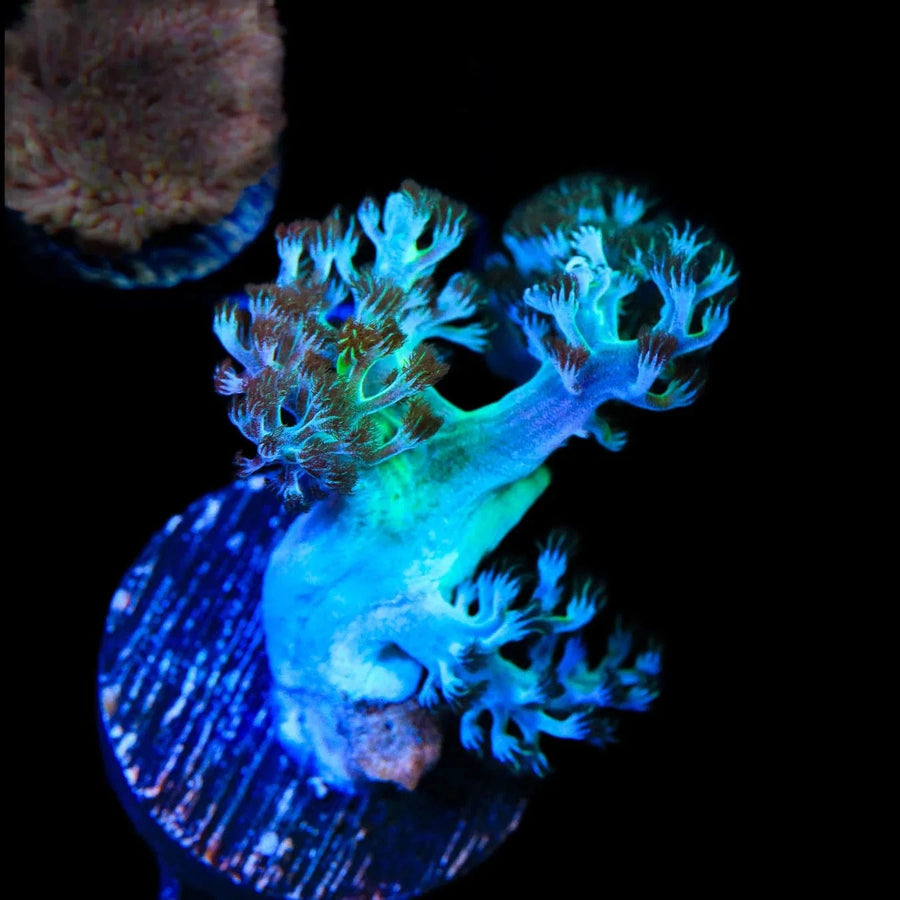
Beginner Corals

467 Hardy beginner corals, from easy soft corals and zoanthids to forgiving LPS for first reef tanks
Shop beginner corals selected for hardy growth and straightforward care in new reef tanks. Start with colorful soft corals such as zoanthids, mushrooms, Green Star Polyps, Xenia, and Kenya Tree, then compare forgiving LPS corals like Duncans and candy canes... Read more Show less

Shop beginner corals selected for hardy growth and straightforward care in new reef tanks. Start with colorful soft corals such as zoanthids, mushrooms, Green Star Polyps, Xenia, and Kenya Tree, then compare forgiving LPS corals like Duncans and candy canes. These easy corals still need a cycled aquarium, stable salinity and temperature, appropriate reef lighting, and room to grow. Browse healthy beginner corals for sale and choose a first coral that matches your tank’s light, flow, placement, and maintenance routine.

Skip to results list
Filters
467 items
Column grid
Column grid
Filter

Active filters:

  • TSA Firework Clove Polyp Coral

    TSA Firework Clove Polyp Coral

    Sale price  $89.99 Regular price $99.99

    Almost WYSIWYG

    Care Level Easy
    Lighting Moderate
    Flow Moderate, indirect
    Placement Low–Mid
  • TSA Gold Pocillopora Coral

    TSA Gold Pocillopora Coral

    Sale price  $49.99 Regular price $59.99

    Signature Coral

    Care Level Moderate
    Lighting Moderate–High
    Flow Moderate–High
    Placement Mid–High
  • TSA Fuzzy Birdsnest Coral

    TSA Fuzzy Birdsnest Coral

    Sale price  $29.99 Regular price $44.99

    Almost WYSIWYG

    Care Level Moderate
    Lighting Moderate–High
    Flow Moderate–High
    Placement High
  • TSA Frozen Apple Zoanthids Coral

    TSA Frozen Apple Zoanthids Coral

    Sale price  $49.99 Regular price $89.99

    Almost WYSIWYG

    Care Level Easy
    Lighting Low–Moderate
    Flow Moderate
    Placement Mid–Low
  • TSA Green Implosion Palythoa Coral

    TSA Green Implosion Palythoa Coral

    Sale price  $44.99 Regular price $64.99

    Signature Coral

    Care Level Easy
    Lighting Low–Moderate
    Flow Moderate
    Placement Low–Mid
  • TSA Booberry Duncan Coral

    TSA Booberry Duncan Coral

    Sale price  $39.99 Regular price $49.99

    Almost WYSIWYG

    Care Level Easy
    Lighting Moderate
    Flow Moderate
    Placement Low–Mid
  • Little Shop of Horror Zoanthids Coral

    Little Shop of Horror Zoanthids Coral

    Sale price  $289.99 Regular price $349.99

    Signature Coral

    Care Level Easy
    Lighting Low–Moderate
    Flow Moderate indirect
    Placement Low–Mid
  • JF Silver Bullet Montipora Coral

    JF Silver Bullet Montipora Coral

    Sale price  $39.99 Regular price $79.99

    Signature Coral

    Care Level Moderate
    Lighting Moderate–High
    Flow Moderate–High
    Placement Mid–High
  • Sunfire Premium Grafted Montipora Cap Coral

    Sunfire Premium Grafted Montipora Cap Coral

    Sale price  $99.99 Regular price $109.99

    Signature Coral

  • TSA Bowsers Revenge Zoanthids Coral

    TSA Bowsers Revenge Zoanthids Coral

    Sale price  $149.99 Regular price $179.99

    Signature Coral

    Care Level Easy
    Lighting Low–Moderate
    Flow Moderate
    Placement Low–Mid
  • TSA Kaleidoscope Zoanthids Coral

    TSA Kaleidoscope Zoanthids Coral

    Sale price  $84.99 Regular price $119.99

    Signature Coral

    Care Level Easy
    Lighting Low–Moderate
    Flow Moderate
    Placement Low–Mid

Popular live coral picks

Compare Top Beginner Corals

Compare our most popular live corals by care level, lighting, flow, growth, placement, and temperament — from beginner-friendly softies to advanced SPS.

Answers

Beginner Coral Care FAQ

What are the best corals for beginners starting a reef tank?

The best beginner corals are hardy, aquacultured species that tolerate a range of light, flow, and small parameter swings. Popular first choices include zoanthids, mushroom corals, Green Star Polyps, Xenia, and Kenya Tree among soft corals, plus Duncans and candy cane corals for an easy start with LPS. Choose the ones that match your aquarium’s actual light, flow, and open space, and give fast spreaders like Green Star Polyps and Xenia a rock of their own. Start with one or two healthy frags, place them low with moderate flow, and adjust only after watching how they respond.

What corals should a beginner avoid?

New reef keepers should postpone corals that demand intense light, specialized feeding, exceptionally stable chemistry, or expert pest management. Many Acropora and non-photosynthetic corals fall into this group. Also plan carefully for aggressive corals with long sweeper tentacles and fast spreaders such as Xenia or Green Star Polyps, which are often easiest to control on isolated rock.

Are zoanthids beginner friendly?

Many aquacultured zoanthids are hardy, colorful, and adaptable, which makes them popular beginner soft corals. Give them moderate light and flow, stable salinity, and space to form a colony. Some zoanthids and palythoas can contain palytoxin: wear eye protection and gloves, never boil or scrub them with hot water, and keep hands away from your face while handling.

How much light and flow do beginner corals need?

Needs vary by species, so “beginner” does not always mean low light. Many soft corals and LPS begin well under low-to-moderate light with gentle-to-moderate, indirect flow. Use the care guidance for the exact coral, acclimate it gradually, and watch for stretching, bleaching, tissue recession, or failure to open before changing placement.

When is a reef tank ready for its first coral?

Add a first coral after the aquarium is fully cycled and temperature, salinity, alkalinity, nutrients, and other relevant parameters remain stable. There is no universal number of days: stability and a repeatable maintenance routine matter more than age alone. Confirm that lighting and flow are suitable, then add one or a few hardy frags rather than stocking the tank all at once.

What are the best corals for a nano reef aquarium?

In a nano reef, usually a tank under 30 gallons, choose hardy corals that stay compact and won’t sting or smother their neighbors. Zoanthids, Ricordea and other mushrooms, Duncans, candy cane corals, and Blastomussa are all good fits, and they do well under moderate light with gentle to moderate flow. Skip fast spreaders such as Green Star Polyps, Xenia, and Kenya Tree, which can overrun a small aquascape, and pass on torches and other aggressive LPS unless you can give their sweeper tentacles room. A small water volume swings faster in temperature and salinity, so steady parameters matter more than any coral list. Starting with small frags, typically ¾ to 1 inch, leaves room to grow.

Live coral buying guide

Best beginner corals for a first reef tank

The best beginner corals are hardy, aquacultured choices that suit the aquarium you already have. Explore all live corals for sale, or begin with adaptable soft corals such as mushrooms, zoanthids, Kenya Tree, Xenia, and Green Star Polyps. Easy care does not mean no care: every coral benefits from a cycled tank, stable salinity and temperature, and patient acclimation.

Soft, LPS, and easier SPS corals compared

Zoanthids and mushroom corals are common first soft corals because many varieties tolerate moderate conditions and form colorful colonies. Forgiving LPS corals such as Duncans and candy canes add larger polyps and movement but need room from neighboring corals. Birdsnest, Stylophora, and Montipora can be approachable first SPS only after the reef is mature and chemistry is consistently stable.

Match each coral to light, flow, and placement

“Beginner coral” is a care category, not one universal set of requirements. Check the guidance for the exact species, compare your reef lighting, and verify salinity, alkalinity, calcium, magnesium, and nutrients with dependable water testing equipment. Start low when acclimating to stronger light, provide indirect flow that moves tissue without blasting it, and change one variable at a time.

Plan for growth and coral compatibility

Fast-growing corals can be forgiving while still needing boundaries. Place Xenia and Green Star Polyps on isolated rocks if you want to limit spread. Leave space around LPS sweepers, research chemical competition among soft corals, and never assume every fish or invertebrate is reef safe. Gloves, eye protection, clean tools, and careful handling are especially important with zoanthids and palythoas.

Build a simple beginner reef

A smaller nano aquarium can support beginner corals when temperature and salinity are kept stable, while a larger system often changes more slowly. Add livestock gradually, keep a repeatable testing and water-change schedule, and choose variety by care needs instead of color alone. For a coordinated starting mix, compare coral frag packs after confirming that every included coral fits your system.