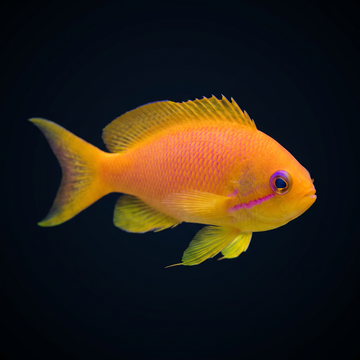
Stocky Anthias (Male) saltwater fish care guide

Overview:
The Stocky Anthias (Pseudanthias hypselosoma) is a vibrant marine fish known for its striking colors and active behavior. They thrive in well-established reef aquariums with plenty of live rock for hiding and grazing. Ideal conditions include a tank size of at least 125 gallons to accommodate their active swimming nature. Water parameters should be stable, with a temperature range of 72-78°F, pH between 8.1-8.4, and specific gravity of 1.020-1.025. Strong water movement and efficient filtration are essential to mimic their natural reef environment and maintain water quality.

Compatibility:
Stocky Anthias are generally peaceful but can be territorial towards their own kind. It's best to keep them in groups of one male with multiple females to reduce aggression. They coexist well with other non-aggressive fish species, such as tangs, gobies, and clownfish. Avoid housing them with overly aggressive or predatory fish, as this can cause stress and potential harm. Provide ample hiding spots and swimming space to reduce territorial disputes and promote a harmonious tank environment.

Health and Quarantine:
Maintaining the health of Stocky Anthias requires regular monitoring of water quality and prompt attention to any signs of illness. Common health issues include marine ich and bacterial infections, often resulting from stress or poor water conditions. Quarantine new additions for at least 2-4 weeks before introducing them to the main tank to prevent the spread of disease. During quarantine, observe for any signs of illness and treat as necessary. Regular water changes, a balanced diet, and a stress-free environment are key to preventing health problems and ensuring the longevity of Stocky Anthias in captivity.

Pellets Mysis Finely Chopped Seafood
Male Stocky Anthias exhibit active swimming habits, often seen darting around mid-water. They display strong social behavior, forming harems with one dominant male and several females. Territoriality is evident as males defend their group aggressively against intruders. Generally compatible with non-aggressive species, they thrive in community tanks with ample hiding spots. However, they may become aggressive towards other males or similar-sized fish, particularly during breeding periods. Regular feeding and stable water conditions support their vibrant coloration and social dynamics.

FAQ

Frequently Asked Questions

About the Stocky Anthias (Male)

  • How can I maintain the intense pink and yellow coloration of a male Stocky Anthias in my home aquarium?
    Stable, high water quality and proper nutrition are the keys. Keep parameters at roughly 1.025–1.026 salinity, 76–80°F (24–27°C), pH 8.1–8.4, nitrate under ~10 ppm, and phosphate very low. Provide subdued lighting with some shaded overhangs; very harsh, direct light can cause them to hang back and appear washed out. Feed small portions 2–4 times daily with a variety of foods: enriched mysis shrimp, finely chopped marine flesh, high‑quality marine pellets, and especially color‑supporting frozen diets containing carotenoids (krill, shrimp, cyclops, and quality anthias blends). Soak foods occasionally in vitamins and HUFA supplements. A low‑stress environment with plenty of rockwork, stable tankmates, and no harassment helps the male display fully and show his brightest colors.
  • What tank size and rockwork layout does a single male Stocky Anthias need to behave naturally without hiding constantly?
    For a single male, aim for at least a 4‑foot long tank (75 gallons or larger). This species likes open mid‑water space to hover, but also needs a complex rock structure with caves, archways, and ledges where it can retreat. Build the aquascape so there are multiple “routes” through the rock and at least one shaded cave near moderate flow. Avoid super sparse “scapes” with only one rock pile; the fish will feel exposed and may stay in one corner. Moderate, turbulent flow across and around the rock structure (not blasting directly at the fish) encourages natural hovering behavior in the water column.
  • How do I manage aggression when keeping a male Stocky Anthias with other anthias species or fairy wrasses in a mixed community reef?
    Male Stocky Anthias can be assertive, especially if the tank is small or there are competing planktivores in the same water level. Introduce the Stocky Anthias after more timid anthias and wrasses are already settled, or use an acclimation box to observe behavior for a few days. Provide multiple feeding stations to reduce competition at the surface or in mid‑water. Choose tankmates that occupy slightly different niches: bottom‑oriented gobies, tangs that graze rock, or fairy/flasher wrasses that dart in higher water levels. Avoid housing it with larger, very dominant anthias males (like big Lyretails) in smaller tanks. If the male repeatedly chases a particular fish into hiding, rearrange some rockwork to break line‑of‑sight and re‑establish territories.
  • What specific feeding strategy keeps a male Stocky Anthias active and plump without polluting the water in a reef tank?
    Use a “little but often” schedule, not big dumps of food. Offer very small, neutrally buoyant foods that stay suspended, such as finely chopped mysis, enriched brine (as a treat only), copepod‑based frozen foods, and small pellets designed for mid‑water planktivores. Feed 3–4 times a day if possible, but keep each feeding tiny so very little hits the sand. An auto‑feeder with tiny pellets set to 2–3 small feedings plus 1–2 manual frozen feedings works well. Run a good skimmer and moderate mechanical filtration, and consider a refugium or algae scrubber to handle the added nutrient load. Watch the male’s belly: slightly rounded after feeding and not “pinched” along the midline means you’re close to ideal without overfeeding.
  • Can a male Stocky Anthias be kept alone, or does it need a harem, and how does that change its behavior?
    A single male can be kept alone and often does well in a community reef, especially in tanks under about 125 gallons where managing a group is harder. Solo males may be slightly less active than those in groups but will still patrol the mid‑water column and display to reflections or other mid‑water fish. If you keep a harem (1 male with 3–6 females), you’ll see more natural social behavior: the male herds and courts the females and shows more intense display colors. However, a harem needs a larger, well‑structured tank (typically 5–6 feet long) with plenty of vertical and horizontal space. If kept as a solo fish, make sure it has compatible mid‑water tankmates so it isn’t the only fish in that zone, which can otherwise make it seem shy or reclusive.