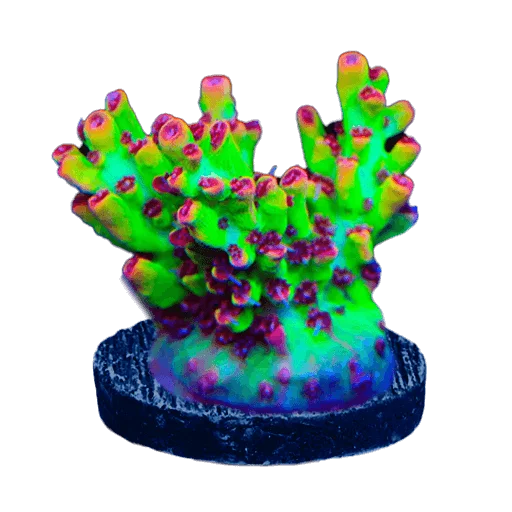
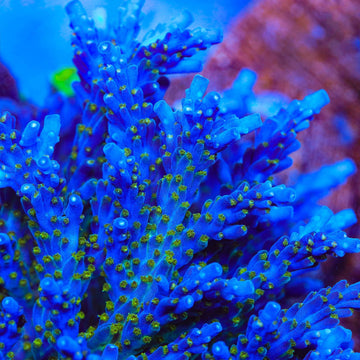
TSA El Scorcho Acropora Coral
Overview
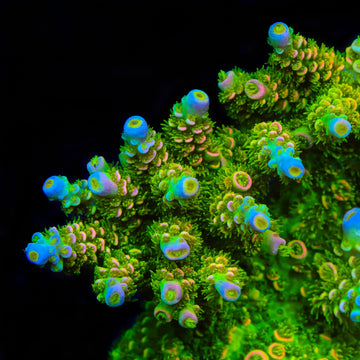
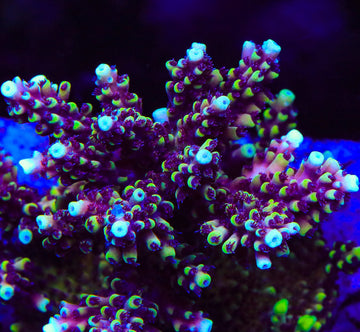
El Scorcho Acropora Coral shows tight, upward-branching clusters with small axial tips. Acropora tenuis is a branching small-polyp stony coral; keep it under strong light and strong, turbulent flow. It is primarily photosynthetic via symbiotic algae but benefits from occasional micro-plankton feeds, which can support faster growth and improved color. Place high with plenty of space from other corals, as fast-growing branches can shade neighbors and are sensitive to stings.
Quick Facts
Care
Difficult
Lighting
High
Flow
High, turbulent
Placement
High
Temperament
Peaceful (2–3 inches spacing)
Recommended Parameters
Temp
76–80°F
pH
8.1–8.4
Salinity
1.025–1.026
Calcium
420–450 ppm
AlkAlkalinity
7–9 dKH
Magnesium
1280–1350 ppm
Feeding
photosynthetic, microplankton, rotifers, copepod nauplii, oyster eggs, coral-specific microfoods (e.g., reef roids), amino acids, dissolved organics
Care & Placement
FAQ
Frequently Asked Questions
About the TSA El Scorcho Acropora Coral
-
Why does my El Scorcho Acropora Coral encrust for weeks before sending up branches?
Acropora tenuis often builds a wide, stable base to anchor in strong flow before vertical growth. This is normal and a good sign of health. Once the base reaches stable light and flow exposure, axial corallites at the tips accelerate. If encrusting stalls, check for low PAR (<250), laminar flow, or unstable alk—these slow tissue expansion. -
My tips look “burnt” while lower tissue stays fine. What’s causing this?
Tip necrosis in A. tenuis commonly stems from high alk with ultra-low nutrients under intense light. Aim for alk 7.5–8.5 dKH, nitrate 5–15 ppm, phosphate 0.03–0.1 ppm, and 250–350 PAR. Reduce sudden light increases and keep flow random. Stabilize parameters first; trimming only masks the issue. -
How can I keep El Scorcho’s colors from dulling or browning with growth?
A. tenuis is sensitive to shading from its own bushy branches. Increase cross-flow to reduce detritus and improve gas exchange, and consider periodic pruning to open the colony. Maintain strong blue/violet spectrum (400–470 nm) with good nutrient balance. Ensure adequate potassium and trace elements via regular water changes or careful dosing. -
I’m seeing slow tissue loss at the base after a move—what should I check first?
Base recession after shipping or tank changes often points to flow or stability stress. Increase random flow around the base, verify 0 TDS top-off, and hold alk swings to <0.3 dKH/day. Inspect for pests at night with a flashlight. If loss progresses, frag healthy tips above the recession line and stabilize parameters before re-introduction.