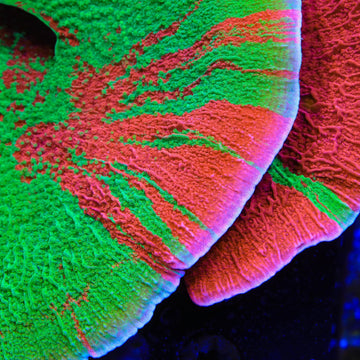
TSA Death Spiral Montipora Coral
Overview
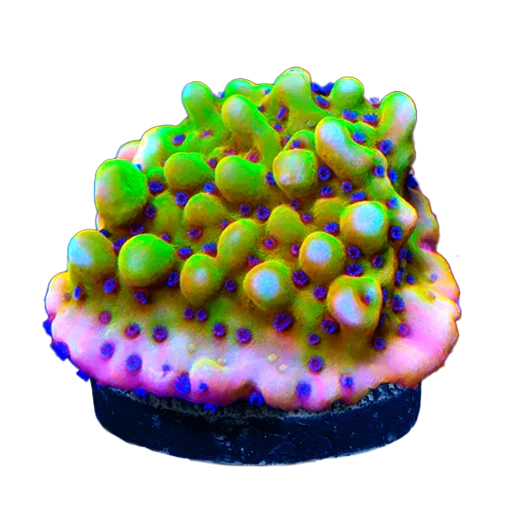
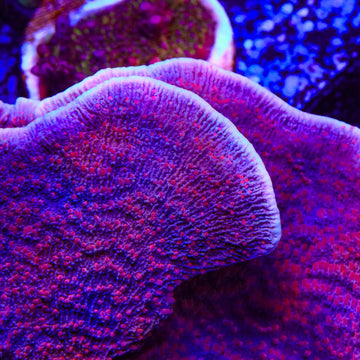
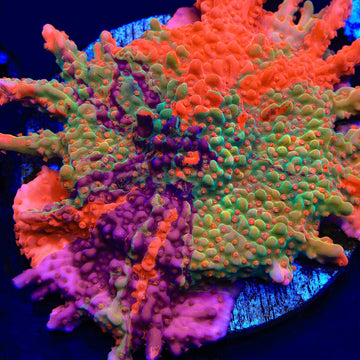
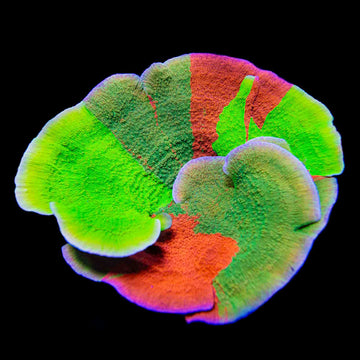
Death Spiral Montipora Coral shows whorled, scroll-like plates with fine, bumpy polyps. Montipora capricornis is a hard plating SPS coral that prefers moderate to strong light and moderate, steady water flow. It is primarily photosynthetic via symbiotic algae but can benefit from occasional small particulate foods, which may support growth and coloration. Place on a stable rock ledge with room to expand, and keep distance from aggressive or stinging neighbors.
Quick Facts
Care
Moderate
Lighting
Moderate–High
Flow
Moderate–High
Placement
Mid–High
Temperament
Peaceful (2–3 inches spacing)
Recommended Parameters
Temp
76–80°F
pH
8.1–8.4
Salinity
1.025–1.026
Calcium
400–450 ppm
AlkAlkalinity
8–9.5 dKH
Magnesium
1250–1350 ppm
Feeding
photosynthetic, phytoplankton, micro-zooplankton, rotifers, bacterioplankton, marine snow, coral-specific powdered foods
Care & Placement
FAQ
Frequently Asked Questions
About the TSA Death Spiral Montipora Coral
-
Why is my Death Spiral Montipora growing into flat shelves instead of a tight spiral?
Growth form depends on mounting orientation, light gradient, and flow. Mount frags vertically or on an edge to encourage whorls. Provide moderate–strong, varied flow to prevent detritus and promote curling. Create a slight light gradient (not uniform PAR) so the colony “reaches,” which tightens the spiral. Avoid shading the base; rotate the colony monthly to balance growth. -
The coral’s bright reds/greens have dulled—what’s the likely cause beyond “lighting”?
Color shifts often reflect nutrient and trace balance. Ultra-low nutrients pale capricornis; aim for detectable NO3 (5–15 ppm) and PO4 (0.03–0.08 ppm). Maintain stable alkalinity (7.5–8.5 dKH). Potassium supports reds/pinks; iron benefits greens—test before dosing. Spectrum matters: blue-heavy boosts fluorescence, but ensure sufficient overall PAR for growth. Correct stability first, then fine-tune spectrum and traces. -
What are early signs of Montipora-eating nudibranchs on this species, and how do I respond?
Look for small, irregular white patches at plate edges and nocturnal, frilly white nudibranchs; egg spirals appear on the underside. Act quickly: remove affected plates, manual pick adults/eggs, and perform repeated dips (every 3–4 days for 2–3 weeks). Quarantine new frags. Increase flow under the plates to reduce hiding spots, and consider a temporary wrasse guardian, though predation is inconsistent. -
My colony shades itself and the underside is dying—can I prevent this without heavy pruning?
Encourage upward curl by mounting at an angle and supplying cross-flow so plates arc rather than stack. Periodically rotate the colony to spread light exposure. Slightly increase overall PAR while maintaining a gradient. Use targeted flow beneath the plates to keep tissue clean and oxygenated. If necrosis appears, trim only the most shaded sections to reopen light paths.