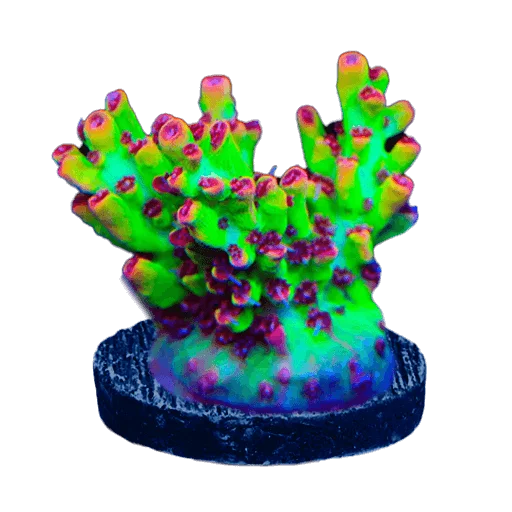
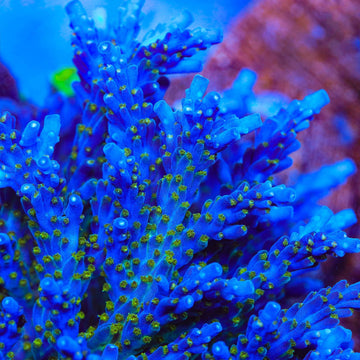
TSA Death Grimace Tenuis Acropora Coral
Overview
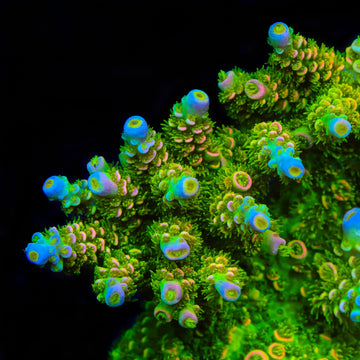
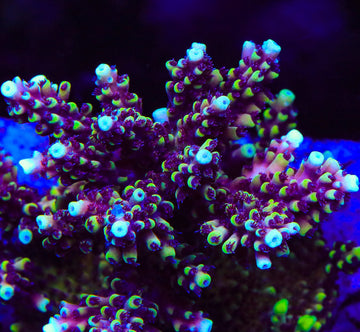
Death Grimace Tenuis Acropora Coral shows compact corymbose branches with fine axial tips and contrasting polyp coloration. Acropora tenuis is a small-polyp stony branching coral that prefers strong light and moderate to high, alternating flow. It is primarily photosynthetic via symbiotic algae but benefits from occasional small-particle foods, which can support growth and color. Place high on stable rockwork with ample space from aggressive neighbors, and keep alkalinity and other parameters stable to prevent stress.
Quick Facts
Care
Difficult
Lighting
High
Flow
High
Placement
High
Temperament
Semi-aggressive (3–6 inches spacing)
Recommended Parameters
Temp
76–80°F
pH
8.1–8.4
Salinity
1.025–1.026
Calcium
400–450 ppm
AlkAlkalinity
7.5–9 dKH
Magnesium
1280–1350 ppm
Feeding
photosynthetic, microplankton, rotifers, copepod nauplii, coral-specific powdered foods, amino acids
Care & Placement
FAQ
Frequently Asked Questions
About the TSA Death Grimace Tenuis Acropora Coral
-
Why does Death Grimace Tenuis change color under different lights, and how can I lock in the vivid hues?
Acropora tenuis pigments respond strongly to spectrum, PAR, and nutrients. Blues/violets (420–460 nm) with PAR ~300–400 tend to deepen blues and purples; moderate whites keep contrast. Keep nitrate 2–10 ppm and phosphate 0.02–0.08 to avoid pastels or browning. Stable alkalinity 8–9 dKH and steady salinity are key. Trace balance helps: potassium for pinks, iodine/iron for blues/greens—dose only after ICP confirmation. -
My tenuis encrusts, then the base slowly recedes while tips look fine. What’s causing this “shadow STN”?
It’s often micro-shadowing plus detritus accumulation. As branches thicken, the base gets less light and flow, encouraging bacterial irritation. Raise the frag to reduce shading, add cross-flow from multiple directions, and ensure 250+ PAR reaches the base. Siphon detritus weekly. Verify low but present nutrients; starvation worsens recession. Consider a short course of increased turbulence rather than more intensity. -
Are there pests this species is especially vulnerable to, and how do I catch them early?
Acropora-eating flatworms and red bugs favor tenuis. Look for crescent bite marks, sand-like eggs on the underside, and reduced daytime polyp extension. Inspect with a white flashlight and turkey baster—AEFW dislodge as oval, translucent flakes. Quarantine new pieces, perform sequential dips a week apart to target hatch cycles, and use a magnifier weekly. Polyp extension returning after lights out is a good early recovery sign. -
Can I place this coral near soft corals or torches without issues?
Keep generous spacing. Euphyllia sweeper tentacles can burn tenuis tissue quickly. Soft corals, especially leathers, release terpenes that suppress polyp extension and growth. Run fresh activated carbon, maintain strong export, and aim alternating flow so allelochemicals don’t stagnate around the colony. If color dulls after adding softies, swap carbon more frequently and increase water changes until response improves.