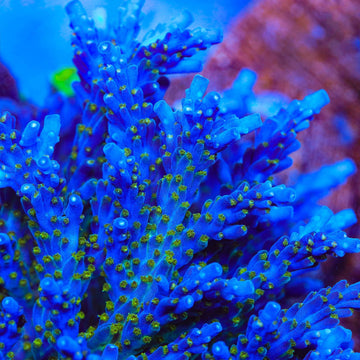
TSA Daydream Acropora Coral
Overview
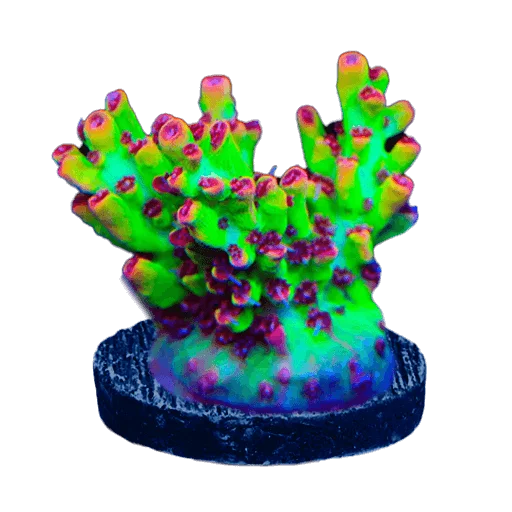
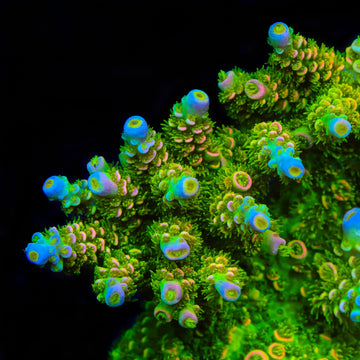
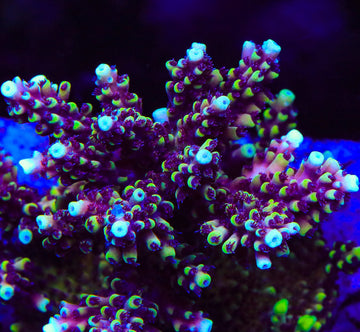
Daydream Acropora Coral shows tightly spaced, upward-branching tips with fine axial corallites. Acropora tenuis is a small-polyp stony branching coral that prefers strong light and moderate to high, turbulent water flow. It relies mainly on symbiotic algae for energy, with occasional fine particulate foods supporting growth and color. Place high on stable rockwork with space from aggressive neighbors, and keep water parameters stable to avoid stress.
Quick Facts
Care
Difficult
Lighting
High
Flow
High
Placement
High
Temperament
Peaceful (3–4 inches spacing)
Recommended Parameters
Temp
77–80°F
pH
8.1–8.4
Salinity
1.025–1.026
Calcium
420–450 ppm
AlkAlkalinity
8–9 dKH
Magnesium
1280–1350 ppm
Feeding
photosynthetic (primary), microplankton, rotifers, copepod nauplii, coral-specific microfoods (e.g., Reef Roids), oyster eggs, amino acids
Care & Placement
FAQ
Frequently Asked Questions
About the TSA Daydream Acropora Coral
-
Why does my Daydream Acropora (Acropora tenuis) fade from neon to pastel or brown?
Color swings are usually light–nutrient balance and trace levels. Too much PAR in ultra-low nutrients washes pigments; increase NO3 to ~2–10 ppm, PO4 to 0.02–0.08, or slightly reduce light. Brown-out points to higher nutrients or low PAR—increase blue/UV spectrum and flow. Persistent pallor can signal low potassium or iron; verify with ICP and correct slowly. Maintain stable alk 7–8.5 dKH. -
How can I shape this coral’s growth for fuller branching?
Mounting orientation and flow matter. Horizontal frags promote multiple axial tips and corymbose plates; vertical mounts push upward, fewer branches. Provide strong, alternating flow to keep tissues clean and encourage dense corallites; avoid laminar blasts that strip tissue. Allow a wide base to encrust before pushing PAR higher (target 250–400) to prevent tip burn and improve branch density. -
I’m seeing white, burnt tips while the base is fine—what’s the likely cause?
Tip burn often stems from high PAR combined with elevated or swinging alkalinity, especially in low-nutrient systems. Confirm alk stability (daily swing <0.2 dKH) and keep 7–8.5 dKH when PAR >300. Check nighttime pH drops and sudden trace additions. If recent light increases occurred, step back 10–20% and ramp over 2–3 weeks. Ensure strong, random flow around tips to reduce oxidative stress. -
What pests target A. tenuis, and how do I catch them early?
Watch for Acropora-eating flatworms (AEFW) and red bugs. Signs include oval bite marks, faded patches, and reduced polyp extension. Inspect undersides and shaded bases; turkey-baste to dislodge flatworms. Dips knock back adults but not eggs—quarantine 4–6 weeks with repeated dips or a monitored in-tank treatment plan. For red bugs, magnify polyps; if present, consider veterinary-prescribed interceptor under guidance.