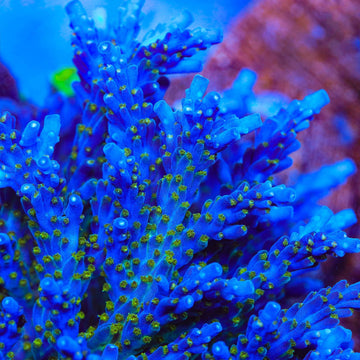
TSA Dantes Inferno Acropora Coral
Overview
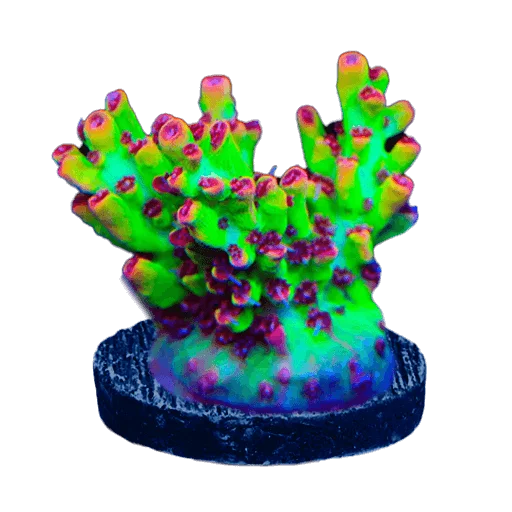
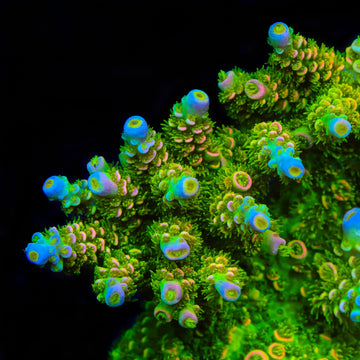
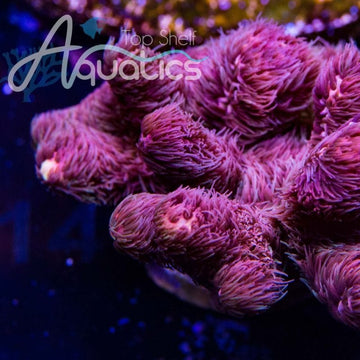
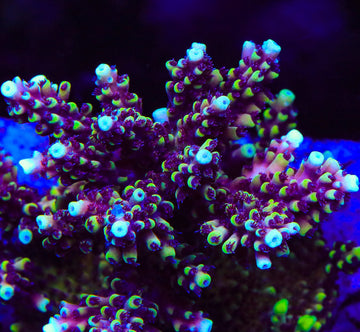
Dante's Inferno Acropora Coral shows short, bushy branches with fuzzy, extended polyps. Acropora millepora is a branching SPS stony coral that prefers high light and strong, variable water flow. It is primarily photosynthetic via symbiotic algae, but occasional fine particulate foods can support growth and coloration. Place high on stable rock with space from aggressive corals, and avoid shading.
Quick Facts
Care
Difficult
Lighting
High
Flow
High
Placement
High
Temperament
Peaceful (short sweepers; allow 2–3 inches spacing)
Recommended Parameters
Temp
76–80°F
pH
8.1–8.4
Salinity
1.025–1.026
Calcium
420–450 ppm
AlkAlkalinity
7.5–9 dKH
Magnesium
1300–1400 ppm
Feeding
photosynthetic, microplankton, zooplankton, rotifers, copepod nauplii, powdered coral foods, amino acids
Care & Placement
FAQ
Frequently Asked Questions
About the TSA Dantes Inferno Acropora Coral
-
Why does my Dante's Inferno Acropora Coral lose its fiery colors and turn brown or green?
Color shifts often track light spectrum and nutrient balance. Millepora shows best reds/pinks under strong blue-violet with some UV, PAR ~250–400, and low-but-present nutrients (NO3 2–10 ppm, PO4 0.02–0.07). Excess phosphate or very low nutrients can mute pigments. Stable alkalinity (7.5–8.5 dKH) and adequate potassium/iron help reds. Acclimate slowly to higher light and avoid shading from nearby colonies to prevent browning or tip burn. -
What placement and flow pattern suits Acropora millepora’s bushy growth?
Mount it high with strong, random turbulent flow rather than a single laminar blast. Millepora forms dense, hairy branches; stagnant pockets cause detritus buildup and bacterial issues, while a fixed jet can burn tips. Angle frags so flow sweeps across polyp tufts and leaves room for radial branches to expand. Expect a period of encrusting before vertical push—don’t move it during this “base-building” phase or it will reset that progress. -
My millepora’s “fuzz” vanished overnight. What should I check first?
Sudden polyp retraction points to predators or flow/chemistry stress. Inspect for AEFW bite marks (pale rings) and red bugs; use a flashlight at night. Verify random flow is adequate after any equipment change. Confirm alkalinity and temperature haven’t swung. If pests are suspected, isolate and dip (e.g., Bayer/iodine per label), then increase observation. If water is ultra-clean, a small bump in nutrients often restores polyp extension within days. -
How can I respond to rapid or slow tissue loss on Dante’s Inferno?
For RTN, frag 5–10 mm into healthy tissue immediately, remount in high flow, and stabilize alk/temp; dips won’t halt true RTN but can help post-frag. For STN, correct underlying stress: recent alkalinity drift, excessive light, or low nutrients are common. Consider an antibiotic bath only as a last resort. Run fresh carbon to reduce chemical aggression, improve gas exchange, and avoid handling the colony while it stabilizes.