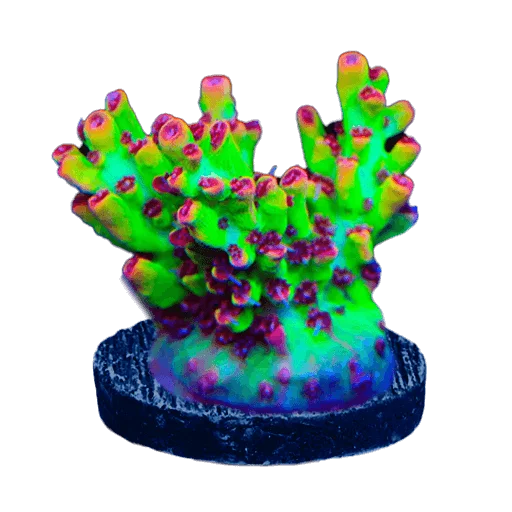
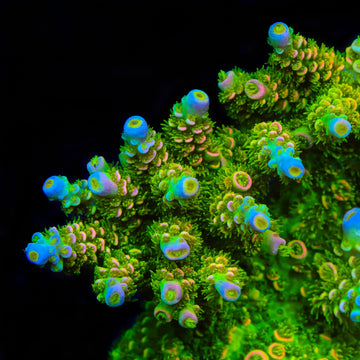
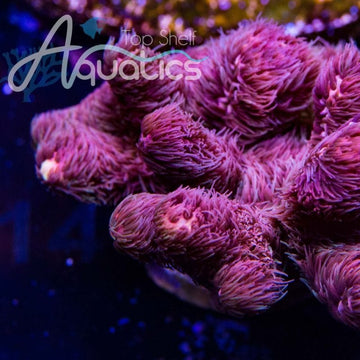
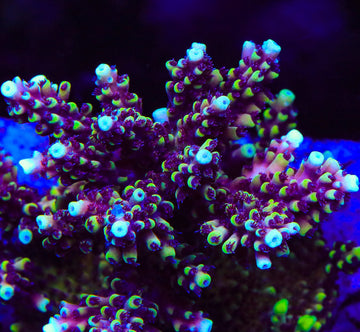
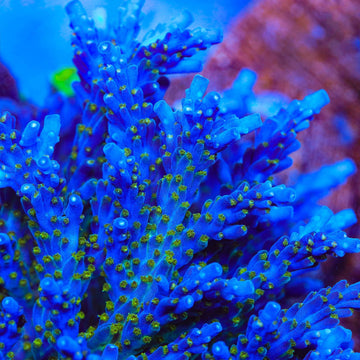
TSA Dan Aykroyd Acropora Coral
Overview
Dan Aykroyd Acropora Coral shows compact, upward-branching colonies with thick tips and contrasting polyp color. Acropora tenuis is a small-polyp stony branching coral that prefers strong light and brisk, chaotic water flow. It is primarily photosynthetic via symbiotic algae, with occasional small particulate foods supporting faster growth and richer color. Place high on stable rockwork with room to grow, and keep clear of aggressive corals to prevent tissue damage.
Quick Facts
Care
Difficult
Lighting
High
Flow
High
Placement
High
Temperament
Peaceful (2–4 inches spacing)
Recommended Parameters
Temp
76–80°F
pH
8.1–8.4
Salinity
1.025–1.026
Calcium
420–450 ppm
AlkAlkalinity
7–9 dKH
Magnesium
1280–1350 ppm
Feeding
photosynthetic (primary), microplankton, rotifers, copepod nauplii, bacterioplankton, coral-specific powdered foods, amino acids
Care & Placement
FAQ
Frequently Asked Questions
About the TSA Dan Aykroyd Acropora Coral
-
Why does my Dan Aykroyd Acropora Coral glow under blue LEDs but look flat under whiter light?
Acropora tenuis expresses strong fluorescent proteins that peak under 400–460 nm, so blues/UV pop colors while heavy white can wash them. Aim for a blue-leaning spectrum with adequate PAR (250–350 at the colony top) and avoid sudden jumps. Keep nutrients detectable (NO3 5–15 ppm, PO4 0.03–0.08 ppm); ultra-low nutrients plus high PAR can bleach tenuis. A weekly photo-period of balanced whites supports calcification without dulling color. -
How can I get bushier, multi-branch growth instead of long sparse spears?
Provide high, chaotic flow from multiple directions so polyp tufts don’t align in one stream. Mount the frag horizontally or at a slight angle to create more axial points and side branches. Trim a few fast-growing tips; loss of an axial often triggers multi-tip regrowth. Keep PAR strong but even, minimizing shadow lines. Stable alkalinity around 7.5–8.5 dKH reduces tip burn that can stall lateral budding. -
The base is receding while the tips look fine—what’s causing that?
That pattern usually points to self-shading, low side flow, or pests. Raise or tilt the colony, add side lighting, and increase random flow to the lower skeleton. Verify nutrients aren’t near zero; tenuis bases starve under ULNS. Inspect for AEFW bite marks and red bugs; dip and quarantine if found. Check for minor alkalinity spikes after large water changes. Trimming dense upper branches can reopen light and flow to the base. -
How do I stop sudden tissue loss (RTN/STN) in this species?
First stabilize: confirm temp, salinity, and alkalinity haven’t swung. Reduce light intensity 15–20% temporarily and boost chaotic flow. Frag a margin 5–10 mm into healthy tissue and remount separate from the colony. Perform an iodine or broad-spectrum coral dip, and run fresh activated carbon to mitigate toxins from neighbors. Avoid big corrections; use small, frequent adjustments. Once recession halts, slowly restore light and resume normal feeding and export.