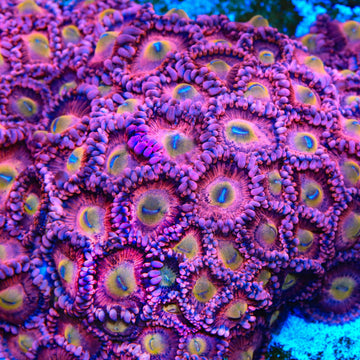
TSA Cursed Candy Cane Coral
Overview
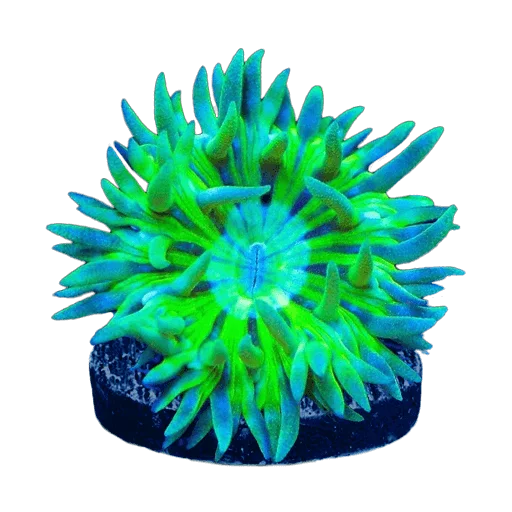
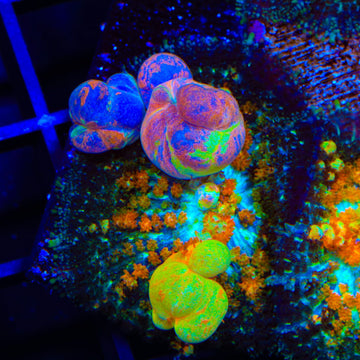
Candy Cane Coral has fleshy, puffed polyps with contrasting banded heads on branching skeletons. Caulastrea furcata is a stony, branching LPS coral that prefers moderate light and low to moderate water flow. It is photosynthetic via symbiotic algae but benefits from occasional small meaty foods, which can boost growth and deepen coloration. Place with space around it; nighttime sweeper tentacles can sting nearby corals.
Quick Facts
Care
Easy
Lighting
Low–Moderate
Flow
Moderate, indirect
Placement
Low–Mid
Temperament
Semi-aggressive (3–6 inches spacing)
Recommended Parameters
Temp
76–80°F
pH
8.1–8.4
Salinity
1.025–1.026
Calcium
400–450 ppm
AlkAlkalinity
8–10 dKH
Magnesium
1280–1350 ppm
Feeding
photosynthetic, mysis shrimp, enriched brine shrimp, finely chopped krill, chopped shrimp or clam, zooplankton, microplankton, powdered coral foods (e.g., Reef Roids), marine snow, fish eggs
Care & Placement
FAQ
Frequently Asked Questions
About the TSA Cursed Candy Cane Coral
-
Why do my Candy Cane Coral heads swell and shrink through the day, and when should I feed?
Caulastrea furcata polyps often deflate under higher light and re-inflate toward evening. Their feeding tentacles extend most after lights out. Target-feed small meaty foods (e.g., mysis, finely chopped shrimp) 30–60 minutes after dusk when feeders are visible. If they stay retracted at night, reduce flow slightly and try a drop of amino or food scent to cue extension. -
My green Candy Cane turned pale mint under brighter LEDs. Is this light shock or nutrients?
Often both spectrum and nutrient balance drive color. This species comes from turbid, nutrient-bearing lagoons and prefers moderate PAR. Intense blue-heavy light can wash greens if nitrates/phosphates are near-zero. Aim for moderate PAR, stable alkalinity, and modest nutrients (e.g., NO3 5–15 ppm, PO4 0.03–0.1). Gradually re-acclimate to light; avoid large white-channel jumps. -
How can I spot and stop early tissue recession on a single head?
Look for a thin, receding ring exposing new white skeleton around the septa—often tied to alkalinity swings or physical abrasion. Stabilize alk/cal/mag, soften flow so tissue isn’t whipping on skeleton, and feed lightly at night. If brown, stringy decay forms (brown jelly), frag off the affected branch below healthy tissue and use a brief iodine dip; improve aeration and flow. -
Do Candy Canes have long sweepers, and how close can I place them to other LPS?
Their sweepers are modest (typically under 2 inches) but can still sting neighbors overnight. Give a couple inches of space from Acanthastrea, Favites, or soft corals that may encroach. Avoid placing beneath aggressive Euphyllia directionally “downwind.” Watch for vermetid snails or bristleworms irritating tissue at the base; relocating or removing the irritant often stops localized recession.