TSA Cotton Candy Goniopora Coral
Overview
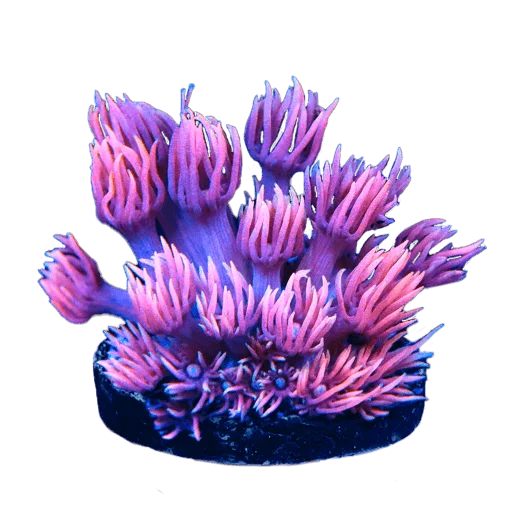
Cotton Candy Goniopora Coral shows long, daisy-like pink polyps extending from a stony base. Goniopora sp. is a large-polyp stony coral that prefers moderate light and gentle to moderate, indirect water flow. It is photosynthetic through symbiotic algae but benefits from occasional fine particulate foods, supporting growth, polyp extension, and color retention. Place with ample space away from other corals and avoid high-traffic spots where extended polyps could be damaged.
Quick Facts
Care
Moderate
Lighting
Moderate
Flow
Moderate indirect
Placement
Low–Mid
Temperament
Semi-aggressive (2–4 inches spacing)
Recommended Parameters
Temp
76–82°F
pH
8.1–8.4
Salinity
1.025–1.026
Calcium
400–450 ppm
AlkAlkalinity
8–9 dKH
Magnesium
1280–1350 ppm
Feeding
photosynthetic, phytoplankton, microplankton, zooplankton, rotifers, cyclops, powdered coral foods (e.g., Reef-Roids), oyster eggs/oyster feast, baby brine shrimp, finely minced mysis shrimp
Care & Placement
FAQ
Frequently Asked Questions
About the TSA Cotton Candy Goniopora Coral
-
My Cotton Candy Goniopora retracts for days after looking great—what hidden factors should I check?
Look for subtle irritants: vermetid snails casting mucus threads, nearby torches or hammers with short stings, or sand abrading the base. Verify low, turbulent flow rather than direct jets. Test alkalinity stability (small daily swings can trigger retraction). Run fresh carbon if soft corals are nearby. If tissue looks cloudy, consider an antibacterial dip to head off brown jelly. -
How can I keep the “cotton candy” pink from washing out or turning pale?
Keep PAR moderate (120–200), favor blue spectrum, and avoid ultra-low nutrients (target NO3 5–15 ppm, PO4 0.03–0.08 ppm). Dose trace elements conservatively—iron and manganese support polyp vigor and color but can be overdosed; test or use small, spaced doses. Target feed fine foods 2–3 times weekly to support pigmentation and growth. -
What feeding technique actually improves growth without causing nutrient spikes?
Turn off pumps, lightly broadcast a mix of rotifers, oyster eggs, and phytoplankton, then target feed a minute later when tentacles are sticky. Resume gentle flow after 10–15 minutes. Feed smaller portions more often rather than heavy single feedings. Observe for consistent extension the following day; if sluggish, reduce volume, not frequency. -
Why does my colony grow a thick base before new heads, and can I guide its shape?
Many Goniopora first encrust to stabilize, then bud polyps along the rim. Provide a slightly concave, stable mount to discourage rocking and shadowing. Gentle crossflow encourages even extension and rim growth. Avoid frequent repositioning; it resets growth direction. If you want a dome, keep light even and prevent side shading from neighboring corals.