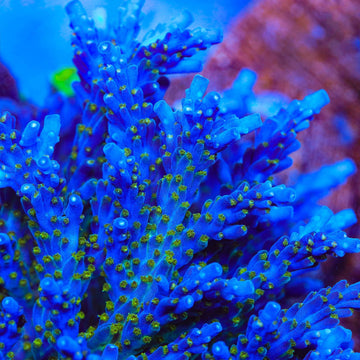
TSA Colt 45 Acropora Coral
Overview
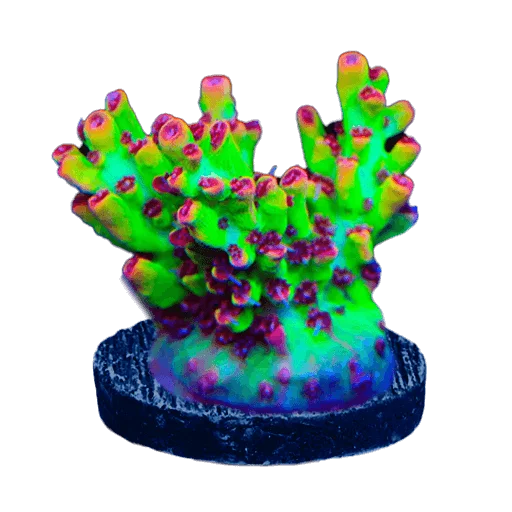
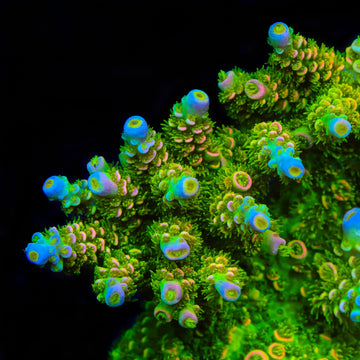
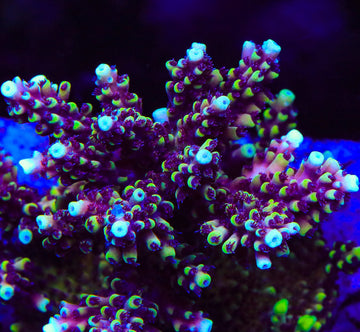
Colt 45 Acropora Coral shows dense, upright branching with small axial tips. Classified as Acropora sp., it is a fast-growing, branching stony coral that prefers strong lighting and high, turbulent water flow. Primarily photosynthetic via symbiotic algae, it may also take fine planktonic foods, which can support growth and maintain color. Place high on stable rockwork with ample space from aggressive corals, and avoid sudden changes in water chemistry.
Quick Facts
Care
Difficult
Lighting
High
Flow
High
Placement
High
Temperament
Peaceful (3–4 inches spacing)
Recommended Parameters
Temp
76–80°F
pH
8.1–8.4
Salinity
1.025–1.026
Calcium
400–450 ppm
AlkAlkalinity
7.5–9 dKH
Magnesium
1280–1350 ppm
Feeding
photosynthetic, microzooplankton, rotifers, copepod nauplii, oyster eggs, coral-specific powdered foods (e.g., Reef-Roids), amino acids
Care & Placement
FAQ
Frequently Asked Questions
About the TSA Colt 45 Acropora Coral
-
How does Colt 45 Acropora (Acropora sp.) tend to grow, and where should I mount it for best results?
It typically plates or encrusts a base, then sends up dense, smooth branches that can shade neighbors. Mount high with strong, random flow and unobstructed light, on a stable plug or small rock “island” you can move. Avoid sand-level placement and crevices that trap detritus. Leave room around the base so new tissue can spread without contacting aggressive corals or sponges. -
My Colt 45 is paling or browning—how do I dial in color without shocking it?
Target PAR around 250–350 with strong blue (420–470 nm) and moderate violet/UV. Ramp intensity over 2–3 weeks to prevent photoinhibition. Keep Alk 7.5–8.5 dKH with minimal swing, NO3 ~2–10 ppm, PO4 ~0.03–0.10 ppm. Avoid ultra-low nutrients. Improve flow before adding trace elements; if you do, keep them low and test-driven. Consistent spectrum matters more than frequent tweaks. -
Polyp extension is weak—how can I tell if it’s stress or pests like red bugs or AEFW?
First rule out nippers (angels, some butterflies) and low flow. Under white light, look for tiny orange dots (red bugs) or bite marks/oval eggs on the underside (AEFW). Blast branches with a baster; flatworms dislodge as tan ovals. If found, isolate, perform sequential dips per product guidance, and increase flow. Stabilize Alk and reduce light slightly during recovery. -
How should I respond to sudden tissue loss (RTN/STN) on this coral?
Immediately frag well ahead of the dying edge and move survivors to strong flow with slightly reduced light. Run fresh carbon, verify temperature stability, and check Alk for recent spikes. Inspect for pests and detritus at the base. An iodine-based bath can help with bacterial stress. If losses persist, test for contaminants (rusting magnets, metals) and correct before reintroducing frags.