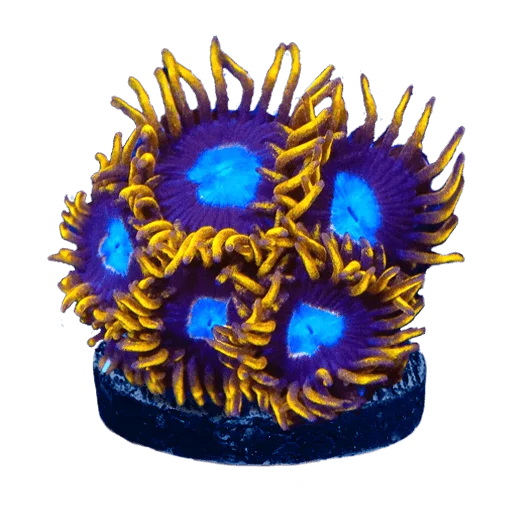
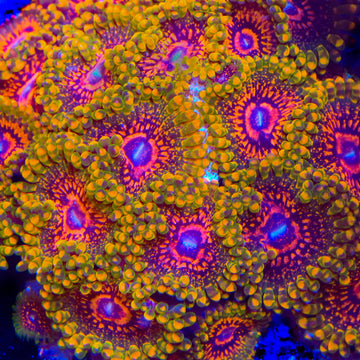
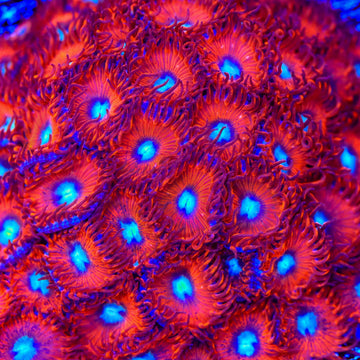
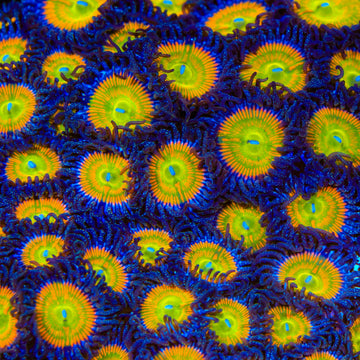
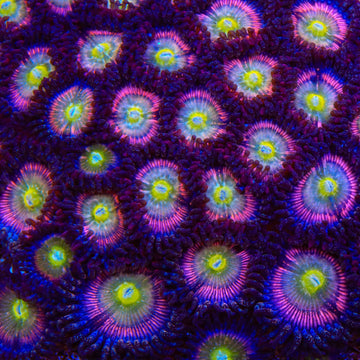
TSA Chiquita Zoanthids Coral
Overview
Chiquita Zoanthids Coral shows small button-like polyps with bright contrasting centers and skirts. Zoanthus sp. Coral is a colonial soft coral forming matting clusters; it prefers moderate light and low to moderate, varied flow. It is photosynthetic with symbiotic algae but will take occasional small meaty foods or coral foods to support growth and color. Give it space to spread and avoid placing it near aggressive stinging corals; monitor for rapid growth that can overrun nearby frags.
Quick Facts
Care
Easy
Lighting
Low–Moderate
Flow
Moderate
Placement
Low–Mid
Temperament
Semi-aggressive (2–3 inches spacing)
Recommended Parameters
Temp
76–82°F
pH
8.1–8.4
Salinity
1.025–1.026
Calcium
400–450 ppm
AlkAlkalinity
8–10 dKH
Magnesium
1250–1350 ppm
Feeding
photosynthetic (primary), microplankton, phytoplankton, zooplankton, rotifers, copepods, cyclops, finely minced meaty foods, powdered coral foods
Care & Placement
FAQ
Frequently Asked Questions
About the TSA Chiquita Zoanthids Coral
-
How do I keep the signature yellow-green “Chiquita” speckling from fading in Zoanthus sp.?
Maintain moderate PAR (120–200) with strong blue spectrum but avoid blasting with peak intensity; acclimate over 2–3 weeks. Keep nutrients non-zero (nitrate 5–15 ppm, phosphate 0.03–0.10 ppm). Ultra-low nutrients wash out yellows; high nutrients mute contrast. Stable alkalinity and iodine at natural seawater levels support pigment. Good flow prevents film algae from dulling polyps. -
My Chiquita Zoanthids are “melting” after looking fine for weeks—what’s the likely cause and fix?
Sudden instability (alk swings, temp spikes) or bacterial issues trigger collapse. Increase turbulent flow around the colony, siphon detritus, and perform an iodine dip. If you see tiny white pustules (zoa pox), use Furan-2 dips per label. Frag healthy polyps away from necrotic tissue, stabilize parameters, and run fresh carbon to reduce stress compounds. -
What pests target Chiquita Zoanthids, and how do I confirm and treat them?
Look for zoa-eating nudibranchs (match the polyp’s colors), sundial snails (banded cone-shaped shells), and zoa spiders. Inspect after lights out with a flashlight. Manually remove adults, scrape egg spirals, and use targeted dips (iodine or low-strength peroxide). Repeat every few days to break life cycles. A Halichoeres wrasse can help control stragglers. -
Why are my Chiquita Zoanthids staying small with short skirts despite good parameters?
Two common factors: flow and crowding. Increase indirect, random flow; stagnant zones shorten skirts and limit feeding. Space colonies—chemical cues from nearby soft corals (especially leathers) suppress extension. Run fresh carbon and change it regularly. If light is very high, lower intensity slightly; many Zoanthus show better extension at mid-range PAR.