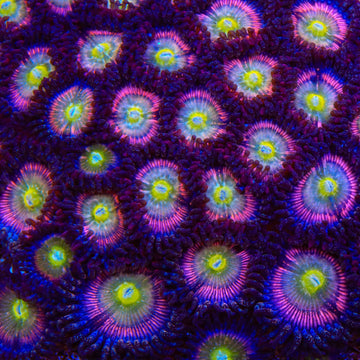
TSA Chemically Altered Zoanthids Coral
Overview
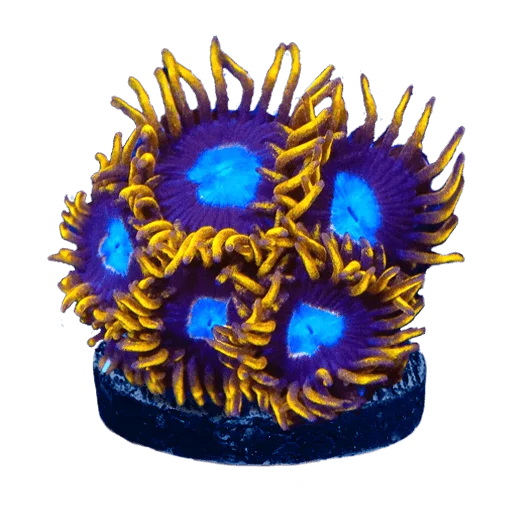
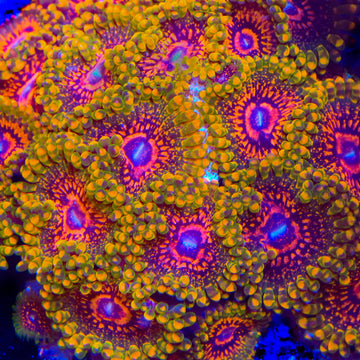
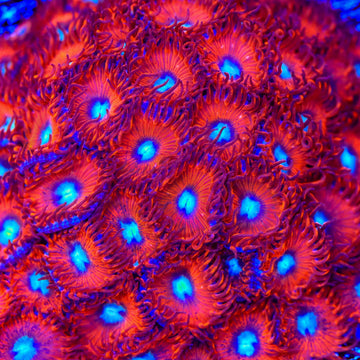
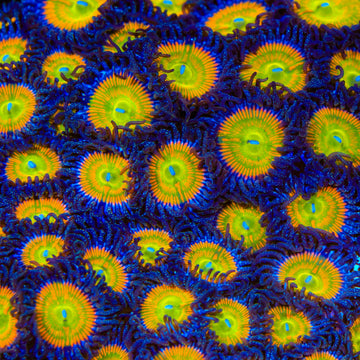
Chemically Altered Zoanthids Coral shows tightly packed polyps with short skirts and brightly contrasting centers. Zoanthus sp. is a soft colonial polyp coral; it prefers moderate light and low to moderate, steady water flow. It is photosynthetic through symbiotic algae, but small particle foods can be accepted and may support faster growth and stronger color. Place on isolated rock to control spreading and keep space from aggressive neighbors.
Quick Facts
Care
Easy
Lighting
Low–Moderate
Flow
Moderate-High
Placement
Low–Mid
Temperament
Peaceful to semi-aggressive (2–3 inches spacing)
Recommended Parameters
Temp
76–82°F
pH
8.1–8.4
Salinity
1.025–1.026
Calcium
380–430 ppm
AlkAlkalinity
8–10 dKH
Magnesium
1250–1350 ppm
Feeding
photosynthetic (primary), microplankton, rotifers, copepod nauplii, cyclops, phytoplankton, powdered coral foods, marine snow, amino acids
Care & Placement
FAQ
Frequently Asked Questions
About the TSA Chemically Altered Zoanthids Coral
-
Why do my Chemically Altered Zoanthids shift colors after a few weeks in my tank?
Color shifts often reflect changes in spectrum, nutrients, and trace elements rather than a fixed pigment. Blue-heavy light (420–470 nm) and stable, non-zero nutrients (NO3 5–15 ppm, PO4 0.03–0.1 ppm) encourage fluorescence. Iodine/iron balance and reduced yellowing compounds (use carbon) help clarity and color pop. Avoid chasing color with aggressive dosing; stabilize parameters and adjust spectrum slowly. -
My colony keeps “melting” from the edges inward—what’s the likely culprit beyond basic water quality?
Edge melt in Zoanthus commonly points to bacterial issues or detritus trapping at the mat. Increase varied flow to keep skirts clean, turkey-baste debris, and consider a Lugol’s or diluted hydrogen peroxide dip for biofilm. If lesions appear (zoa pox), a Furan-2 bath is effective. Check for rusting magnets and vermetid snails; both trigger chronic irritation. -
How can I encourage fast, tidy mat growth without them overrunning nearby coral?
Provide a low-profile “runway” of clean rock or a tile to direct the mat, with moderate crossflow to prevent detritus. Feed sparingly with fine particles at lights-off to boost growth without sprawl. Create a sand or bare-rock moat as a break line. Periodically trim with a scalpel and peel the mat back, gluing edges to frag plugs to control spread. -
Are there unique compatibility concerns with soft corals and these Zoanthus morphs?
They’re sensitive to terpene release from leathers and allelopathic tanks. Run fresh carbon, increase skimming, and maintain regular water changes when mixing with big leathers or xenia. Keep a few inches of space; while Zoanthus lack long sweepers, persistent contact leads to closed polyps and recession. If persistent irritation occurs, relocate them to moderate flow up-current.