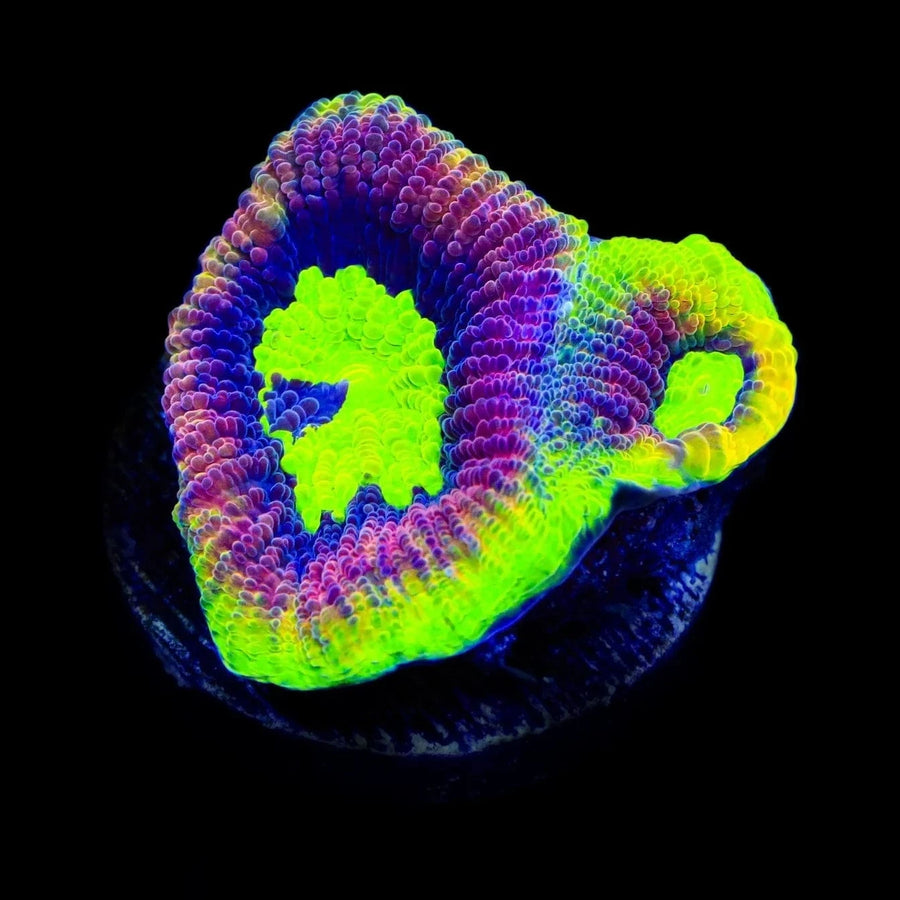
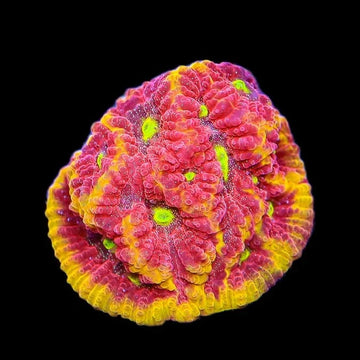
TSA Chemical Warfare Favia Coral
Overview
Chemical Warfare Favia Coral shows polygonal, closely packed corallites with thick walls and contrasting mouths. Favites pentagona is a stony, encrusting to mound-forming coral that does well under moderate light and moderate water flow. It relies on symbiotic algae for energy but benefits from occasional small meaty foods at night, which can support growth and maintain color. Give it space from neighbors due to long nocturnal sweeper tentacles and place on stable rock to prevent shading of slower corals.
Quick Facts
Care
Moderate
Lighting
Low–Moderate
Flow
Moderate
Placement
Low–Mid
Temperament
Aggressive (6–8 inches spacing)
Recommended Parameters
Temp
76–80°F
pH
8.1–8.4
Salinity
1.025–1.026
Calcium
400–450 ppm
AlkAlkalinity
8–9 dKH
Magnesium
1280–1350 ppm
Feeding
photosynthetic, microplankton, zooplankton, mysis shrimp, enriched brine shrimp, finely chopped seafood, coral-specific powdered foods (e.g., Reef Roids), marine snow
Care & Placement
FAQ
Frequently Asked Questions
About the TSA Chemical Warfare Favia Coral
-
Why is it nicknamed “Chemical Warfare Favia,” and how do I manage its aggression?
Favites pentagona releases allelopathic compounds and extends stout nocturnal sweepers that can sting neighbors. Give 3–6 inches of buffer, aim flow to carry exudates away from sensitive corals, run fresh high‑quality carbon and strong skimming, and perform consistent water changes. Watch for soft coral mixes (e.g., leathers) that amplify chemical stress and rotate carbon monthly. -
How far can its sweepers reach, and what triggers longer extension?
Expect 1–3 inch sweepers after lights out, occasionally longer when sensing nearby rivals or during heavy target feeding. Higher, chaotic flow and richer food cues can prime longer reach. If clashes occur, reduce feeding right before lights off, redirect flow away from competitors, and increase spacing. Nighttime red light helps you monitor extension without startling it. -
My colony browned and lost pop under strong LEDs. How can I restore color?
F. pentagona from turbid zones prefers moderate PAR (80–150) with strong blue. If bleached or dulled, lower PAR 20–30% and shift spectrum toward 420–470 nm. Stabilize alk 8–9 dKH, nitrate 5–15 ppm, phosphate 0.03–0.1 ppm. Target feed small meaty foods twice weekly at night. Fresh carbon can remove soft coral compounds that mute fluorescence. -
How do I handle sudden tissue recession or brown jelly on this species?
First, stabilize parameters and increase cross‑flow to prevent detritus pockets. Siphon jelly immediately, perform an iodine or chlorhexidine coral dip, and cut back to clean, living tissue if necrosis creeps. Replace carbon, check for vermetid snails or stinging neighbors, and avoid heavy night feeding for a week. Maintain stable temp and alk to prevent relapse.