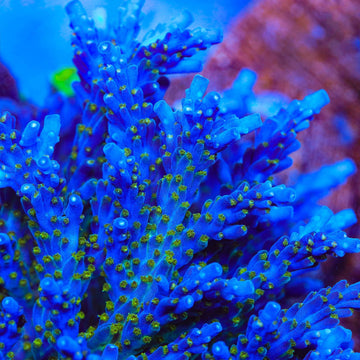
TSA Captain Planet Acropora Tenuis Coral
Overview
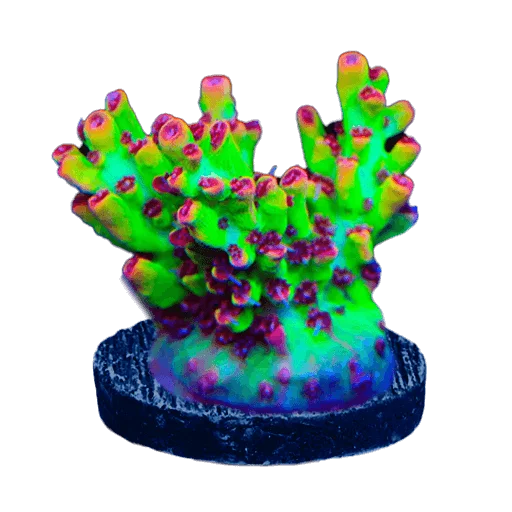
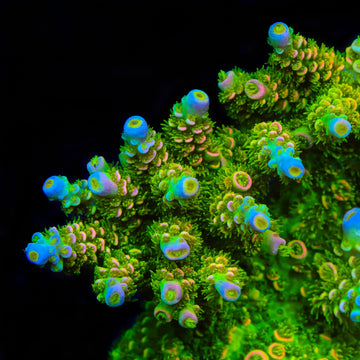
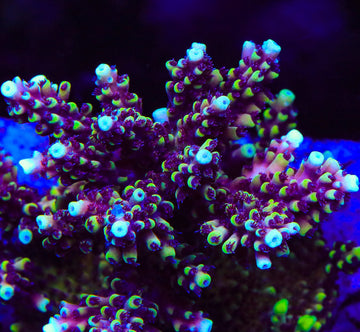
Captain Planet Acropora Tenuis Coral shows blue to green branching tips with tight axial corallites. Acropora tenuis is a small-polyp stony branching coral that prefers strong light and high, turbulent water flow. It is primarily photosynthetic via symbiotic algae, but can take occasional fine particulate foods, which can support growth and maintain color. Place high on stable rockwork with room for upward growth, and keep distance from aggressive or stinging neighbors.
Quick Facts
Care
Difficult
Lighting
High
Flow
High
Placement
High
Temperament
Semi-aggressive (2–3 inches spacing)
Recommended Parameters
Temp
77–80°F
pH
8.1–8.4
Salinity
1.025–1.026
Calcium
420–450 ppm
AlkAlkalinity
8–9 dKH
Magnesium
1280–1350 ppm
Feeding
photosynthetic (primary), microzooplankton, rotifers, copepod nauplii, oyster eggs, coral-specific powdered foods (e.g., Reef-Roids), amino acid supplements
Care & Placement
FAQ
Frequently Asked Questions
About the TSA Captain Planet Acropora Tenuis Coral
-
Why does my Captain Planet Acropora Tenuis lose its vivid blue/green tips over time?
Color shifts often track nutrient balance and spectrum. Aim for moderate nutrients (e.g., detectable NO3 5–15 ppm, PO4 0.03–0.08 ppm) with stable alkalinity 7.5–8.5 dKH. Too-high alk in lean systems causes pale or “burnt” tips. Favor strong blue-violet spectrum with PAR 300–400 at the tips. Increase light gradually and maintain high, random flow to prevent shading and tissue stagnation. -
How can I identify and manage pests specific to Acropora tenuis, like AEFW or red bugs?
Look for crescent bite marks on growing edges, sand-like flatworm eggs under branches, or reduced polyp extension. Blast colonies with a baster to dislodge worms and inspect the rinse. Treat frags in proven dips, repeat weekly to break egg cycles, and consider quarantining. Aefw-resistant wrasses can help, but won’t replace treatment. For red bugs, targeted medication in a separate system is safest; always protect biofiltration. -
What mounting and flow strategy promotes dense branching instead of spindly growth?
Place the frag vertically with the axial tip facing the dominant flow, and allow an encrusted base on the rock before vertical growth. Use intersecting, high-energy, randomized flow to keep polyps moving without tissue lift. Avoid fixed laminar streams that erode tips. Angle the colony slightly to minimize self-shading as branches thicken. Periodically rotate the piece a quarter-turn to even light exposure and maintain symmetrical branching. -
My tenuis browned after a lighting upgrade—how can I recover color without stressing it?
Brown indicates elevated zoox density from excess light or nutrients. Reduce intensity 20–30% and ramp 5–10% weekly. Extend blue/actinic photoperiod while trimming white/red channels. Stabilize nutrients in the target range rather than driving to zero. Verify low dissolved organics with fresh carbon and good skimming. Keep temperature stable and avoid big alk swings; color typically rebounds over 2–6 weeks as pigments re-balance.