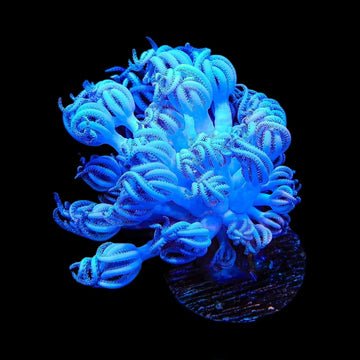
TSA Captain Jack Rhodactis Mushroom Coral
Overview
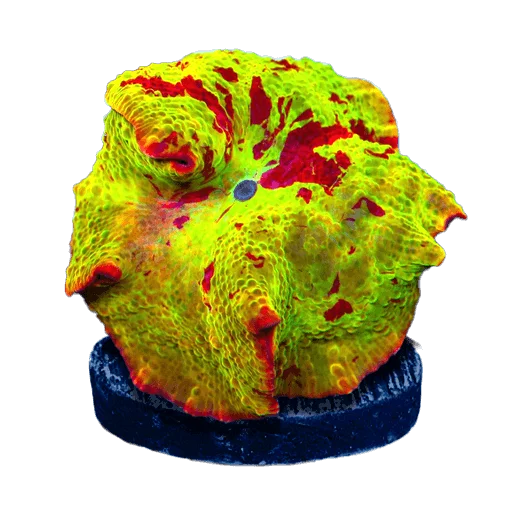
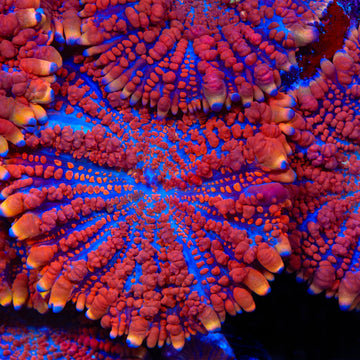
Captain Jack Rhodactis Mushroom Coral shows broad, textured oral discs with short, knobby vesicles. Rhodactis indosinensis is a soft, mushroom-type corallimorph that prefers low to moderate light and gentle to moderate, indirect flow. It is photosynthetic via symbiotic algae but will accept small meaty foods, which can speed growth and deepen coloration. Place on rock with space around it, as it can expand and irritate nearby corals when touched or shaded.
Quick Facts
Care
Easy
Lighting
Low–Moderate
Flow
Low–Moderate
Placement
Low–Mid
Temperament
Semi-aggressive (keep 3–6 inches spacing)
Recommended Parameters
Temp
76–80°F
pH
8.1–8.4
Salinity
1.025–1.026
Calcium
380–430 ppm
AlkAlkalinity
8–10 dKH
Magnesium
1250–1350 ppm
Feeding
photosynthetic, mysis shrimp, brine shrimp, finely chopped seafood (shrimp, krill, fish), zooplankton, microplankton/marine snow, coral-specific powdered foods
Care & Placement
FAQ
Frequently Asked Questions
About the TSA Captain Jack Rhodactis Mushroom Coral
-
Why does my Captain Jack Rhodactis Mushroom Coral inflate and deflate throughout the day?
Rhodactis indosinensis regulates water content to manage light and nutrient uptake. In brighter zones it may flatten to shed light; in lower light or higher nutrients it may balloon. Occasional deflation is normal, but persistent collapse suggests irritation, excessive flow, or unstable alkalinity. Check for nearby stingers, reduce direct laminar flow, confirm alk 8–9 dKH, and run fresh carbon to remove irritants. -
How can I keep its blues and greens from browning out over time?
This species hails from turbid, nutrient-moderate lagoons, so it colors best under blue-heavy spectrum with moderate PAR (60–120). Maintain low but detectable nutrients (NO3 5–15 ppm, PO4 0.03–0.08), avoid white-heavy lighting, and keep iron/iodine within normal reef ranges via regular water changes. If it browns, reduce intensity 15–20%, increase blue channels, and stabilize nutrients for 2–3 weeks before reassessing. -
My Rhodactis is shadowing nearby zoas. How do I control spread without hurting the colony?
Isolate it on its own “island” rock with a sand moat, then trim the mat edge with a scalpel. Any fragments can regrow, so remove loose pieces with tweezers and place them in a frag cup. If it’s already encroaching, gently peel the foot during a deflation cycle. Maintain moderate, indirect flow so detached pieces don’t raft into other corals. -
It looks healthy but refuses food—should I worry?
Many Rhodactis meet most energy needs via symbionts and dissolved organics. If parameters are stable and growth continues, refusal isn’t a problem. Try tiny, occasional offerings of mysis or pellet dust at dusk with pumps off; avoid oversized food that triggers a “spit out.” If it consistently rejects food and shrinks, test for salinity drift, high phosphate binding (from media), or bacterial stress and adjust.