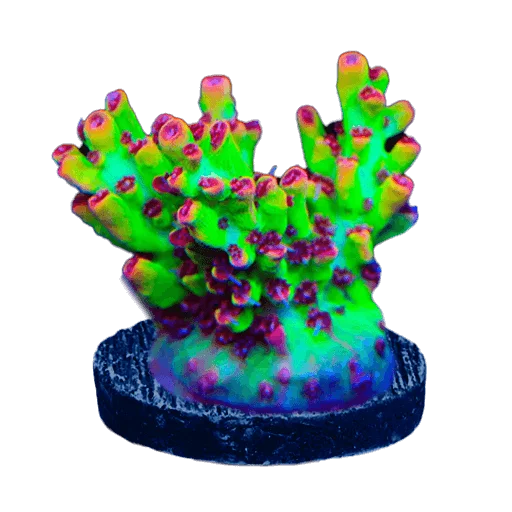
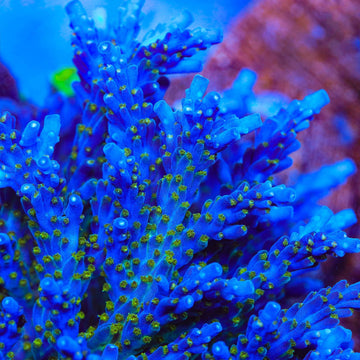
TSA Candlelight Acropora Coral
Overview
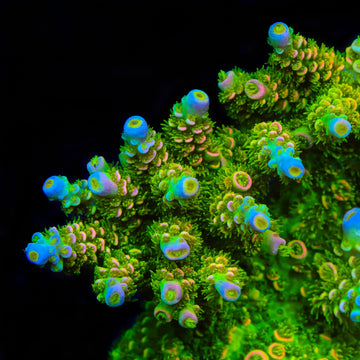
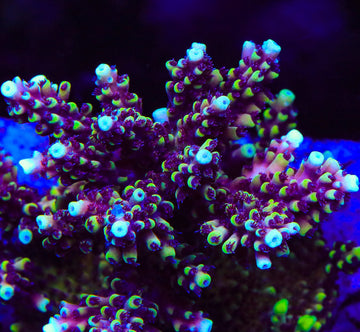
Candlelight Acropora Coral shows branching, candle-like tips with contrasting polyp color. Acropora tenuis is a small-polyp stony branching coral that prefers strong light and high, turbulent flow. It relies mainly on symbiotic algae for energy but can take fine particulate foods, which may support growth and color. Place high on stable rock with space from aggressive neighbors, and keep alkalinity steady with low nutrients.
Quick Facts
Care
Difficult
Lighting
High
Flow
High, turbulent
Placement
High
Temperament
Peaceful (3–6 inches spacing)
Recommended Parameters
Temp
76–80°F
pH
8.1–8.4
Salinity
1.025–1.026
Calcium
420–460 ppm
AlkAlkalinity
8–9 dKH
Magnesium
1280–1350 ppm
Feeding
photosynthetic (primary), microplankton, rotifers, copepod nauplii, oyster eggs, coral-specific powdered foods (e.g., Reef-Roids), marine snow
Care & Placement
FAQ
Frequently Asked Questions
About the TSA Candlelight Acropora Coral
-
Why does my Candlelight Acropora (Acropora tenuis) lose its yellow body or blue tips over time?
Color shifts often trace to light spectrum, nutrients, and trace balance. Aim for 250–400 PAR with strong blue spectrum, stable alk 8–9 dKH, nitrate 5–15 ppm, phosphate 0.03–0.08 ppm. If it browns, nutrients or organics are usually high; if it pales, nutrients or iron/potassium may be too low. Regular small water changes and activated carbon help clarity and color. -
My tenuis has great polyp extension at night but recedes by day—normal or a warning sign?
Night-peaking extension is typical, but full daytime retraction can flag high PAR hotspots, laminar (not random) flow, or fish/nipper irritation. Add cross-flow for turbulent movement, reduce point-source intensity or raise the coral slightly, and watch for angels/wrasses picking. Check for AEFW bite marks; retracted polyps plus crescent bites suggests pests. -
I’m getting slow tissue loss from the base (STN). What should I check first for this species?
Start with stability: verify alk drift over 24–72 hours, then inspect shaded bases—tenuis hates prolonged shadowing. Increase random flow under the colony, trim self-shading branches, and confirm nutrients aren’t near-zero. Rule out AEFW with a flashlight and turkey baster blast; consider a gentle, two-step dip and swap any older carbon to reduce chemical warfare from nearby soft corals. -
Do wild and aquacultured Candlelight tenuis adapt differently in a tank?
Yes. Aquacultured pieces generally tolerate brighter light and variable nutrients sooner. Wild colonies acclimate better under reduced PAR (150–200) for 2–3 weeks, then ramp 10–15% weekly. Maintain higher dissolved oxygen and brisk flow, keep temperature steady (24–26°C/75–79°F), and delay aggressive nutrient reduction until polyp extension and base encrustment look strong.