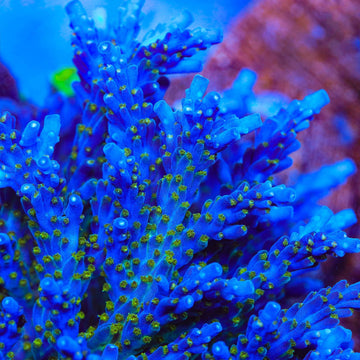
TSA Candle Light Stag Acropora Coral
Overview
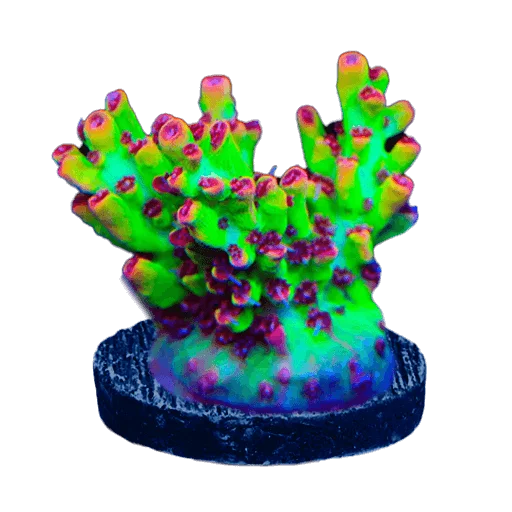
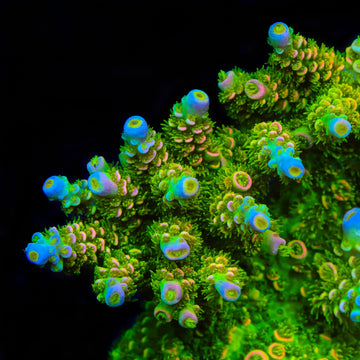
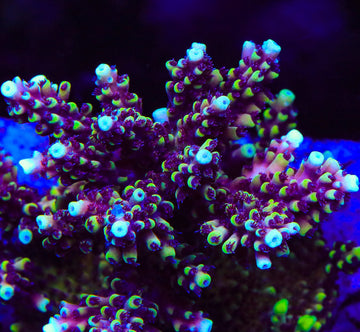
Candle Light Stag Acropora Coral shows branching, stag-horn growth with slim, upward-pointing tips. Acropora sp. is a small polyp stony branching coral that does best with strong lighting and high, turbulent water flow. It is photosynthetic with symbiotic algae, and occasional fine particulate foods can support growth and color. Place high on stable rock with room for upward growth, and keep distance from aggressive corals to avoid stings.
Quick Facts
Care
Difficult
Lighting
High
Flow
High
Placement
High
Temperament
Peaceful (2–4 inches spacing)
Recommended Parameters
Temp
76–80°F
pH
8.1–8.4
Salinity
1.025–1.026
Calcium
400–450 ppm
AlkAlkalinity
7–9 dKH
Magnesium
1280–1350 ppm
Feeding
photosynthetic (primary), microplankton, very fine zooplankton, rotifers, copepod nauplii, coral-specific powdered foods (e.g., Reef-Roids), amino acid supplements
Care & Placement
FAQ
Frequently Asked Questions
About the TSA Candle Light Stag Acropora Coral
-
How do I keep the “candle light” yellow tone from fading to green or brown?
Maintain high, stable PAR (300–400) with strong blue/UV plus some white to prevent excessive chlorophyll. Keep nutrients low but not zero (NO3 ~2–10 ppm, PO4 0.03–0.08 ppm). Stable alkalinity (8–9 dKH) is key; swings push it brown or pastel. Trace balance matters—potassium, iron, and iodine support yellow hues. Avoid shading from neighboring branches. -
Why is the base encrustment stalling or showing slow tissue loss?
Stags often stall at the base if flow is laminar or too weak there. Increase random, cross-current flow to the lower skeleton. Check for shading and detritus accumulation. Verify alk stability and phosphate not bottoming out. Inspect for pests; early Acropora-eating flatworm activity often starts low. Improve stability first, then consider targeted dips if pests are confirmed. -
How should I place it to avoid “shadow die-off” as branches thicken?
Mount vertically with space for outward growth and angle the colony so light and flow reach interior branches. Use alternating pumps to sweep between branches. Trim or reposition neighboring corals that cast shade. Periodically rotate the frag plug/rock a few degrees during growth to even exposure, then stop once it’s encrusted and stable. -
Why are tips burning while the rest looks fine?
Tip burn often follows an alkalinity spike combined with high PAR. Verify test accuracy and reduce swings (dose smaller, more frequent increments). Ensure phosphate isn’t near zero; ultra-low PO4 with strong light makes tips vulnerable. Increase flow across tips to dissipate oxygen radicals. If needed, slightly reduce peak intensity or shorten the photoperiod for a week.