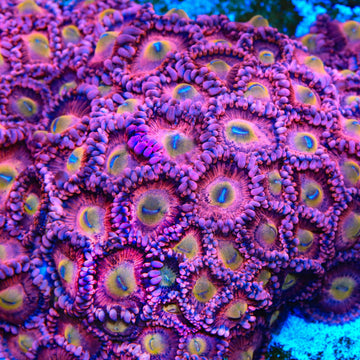
TSA Bozos Revenge Bounce Mushroom Coral
Overview
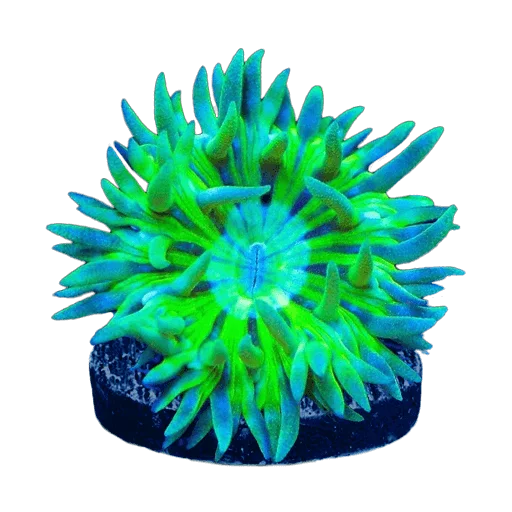
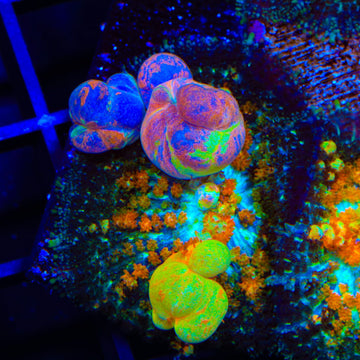
Bozos Revenge Bounce Mushroom Coral shows large, inflated vesicles on a fleshy disk with varied coloration. Classified as Rhodactis sp. Coral, it is a soft mushroom-type coral that prefers low to moderate light and gentle, indirect water flow. It relies on symbiotic algae for most nutrition but accepts occasional small meaty foods, which can support faster growth and fuller bubbles. Place it on rock with space around it, as it can expand and may sting or overgrow nearby corals.
Quick Facts
Care
Easy
Lighting
Low–Moderate
Flow
Low–Moderate
Placement
Low–Mid
Temperament
Semi-aggressive (3–6 inches spacing)
Recommended Parameters
Temp
76–80°F
pH
8.1–8.4
Salinity
1.025–1.026
Calcium
400–440 ppm
AlkAlkalinity
8–10 dKH
Magnesium
1250–1350 ppm
Feeding
photosynthetic, mysis shrimp, enriched brine shrimp, copepods, zooplankton, microplankton, powdered coral foods (e.g., Reef-Roids), finely chopped seafood, marine snow
Care & Placement
FAQ
Frequently Asked Questions
About the TSA Bozos Revenge Bounce Mushroom Coral
-
Why did my Bozos Revenge Bounce vesicles deflate or flatten after looking puffy for weeks?
Bounce vesicles often react to light, flow, and nutrients. Aim for 80–150 PAR with a blue-heavy spectrum and low–moderate, indirect flow. Keep nitrate 5–15 ppm and phosphate 0.05–0.15 ppm. Sudden increases in PAR, strong direct flow, or nutrient stripping can flatten bubbles. Check stability (temp/alk) and avoid aggressive dipping; mild iodine-only dips if needed. -
How can I keep the signature neon colors from washing out or browning?
Prioritize blues/violet (420–470 nm) over strong white; ramp PAR gradually. Maintain stable alkalinity (8–9 dKH), potassium ~390–420 ppm, and adequate nutrients (not ULN). Run activated carbon if nearby soft corals shed chemicals. If colors mute, lower whites, reduce PAR slightly, and stabilize nutrients rather than chasing frequent spectrum changes. -
What’s the best way to feed this coral without causing slime-outs or recession?
Target feed sparingly 1–2 times monthly with small mysis, fine reef foods, or tiny pellets. Turn off flow, let the oral disc grab food, then restore gentle flow after 10–15 minutes. Avoid large chunks or daily feeding, which can trigger excessive mucus and bacterial issues. Visible, steady inflation and slow growth beat fast, stressed gains. -
Why is it wandering and can it harm nearby tankmates?
Rhodactis roam when unhappy with light/flow or surface texture. Place on a rubble “island” to contain movement and encourage pedal babies. Give 3–4 inches clearance; their sting can irritate LPS/zoas and large individuals have opportunistically trapped tiny fish. Use pump guards, manage flow to avoid lift, and run carbon to reduce chemical skirmishes.