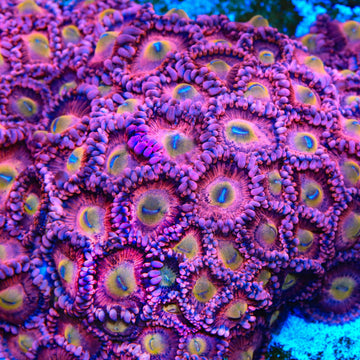
TSA Booberry Duncan Coral
Overview
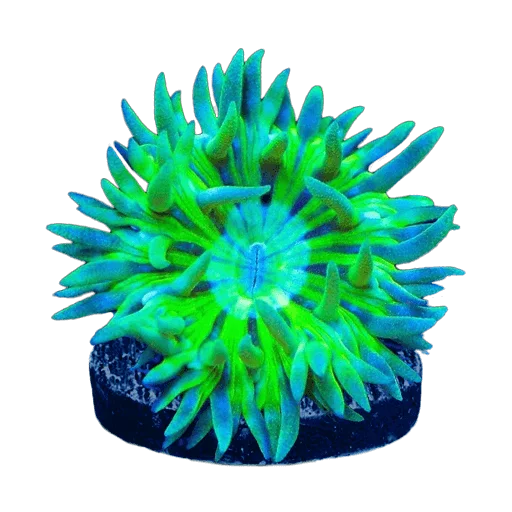
Booberry Duncan Coral shows round, fleshy polyps with long, tubular tentacles on branching heads. Scientifically Duncanopsammia axifuga, it is a large-polyp stony coral with a branching skeleton that prefers moderate light and low to moderate flow. It hosts symbiotic algae for most nutrition but benefits from occasional small meaty feedings to support growth and color. Place on a stable rock with room to expand, and avoid strong flow or aggressive neighbors that may trigger stinging.
Quick Facts
Care
Easy
Lighting
Moderate
Flow
Moderate
Placement
Low–Mid
Temperament
Peaceful (short sweepers; 2–3 inches spacing)
Recommended Parameters
Temp
76–80°F
pH
8.1–8.4
Salinity
1.025–1.026
Calcium
400–450 ppm
AlkAlkalinity
8–10 dKH
Magnesium
1280–1350 ppm
Feeding
photosynthetic, mysis shrimp, enriched brine shrimp, chopped krill, copepods, zooplankton, microplankton, coral-specific foods, finely minced seafood
Care & Placement
FAQ
Frequently Asked Questions
About the TSA Booberry Duncan Coral
-
Why does my Booberry Duncan Coral stay closed for days after a move?
Duncanopsammia axifuga often sulks after shipping or rapid parameter shifts. Dim the lights 20–30% and increase gradually, aim for moderate, indirect flow, and keep alk/calcium stable. Check for vermetid snails irritating polyps and siphon any detritus from the cups. Offer small mysis once polyps peek out. If tissue sloughs or smells foul, perform an iodine dip and increase aeration to head off brown jelly. -
Do Booberry Duncans need high PAR to keep their blue/purple tones?
No. Moderate PAR (80–150) with a blue-leaning spectrum supports fluorescence without bleaching or retraction. Keep nutrients non-zero (NO3 ~5–15 ppm, PO4 ~0.03–0.10 ppm); ultra-low nutrients often dull color and slow growth. Maintain stable alkalinity 8–9 dKH. Sudden jumps in intensity can cause tight retraction—use a light acclimation schedule and watch for lighter skirts as an early warning. -
My colony grows tall and shades lower heads—how can I guide the shape?
Trim topmost branches periodically and rotate the colony weekly to balance light exposure. Angle cross-flow so it wraps around the colony, clearing detritus from inner cups. Target feed shaded heads to encourage splitting lower on the skeleton. Mount on a ledge or island so branches can expand radially rather than stacking upward, reducing self-shading while keeping the base ventilated. -
Are clowns or nearby corals a problem for Booberry Duncans?
Short sweepers limit reach, but the sting can irritate softies; leave 2–3 inches of space. Avoid placement near aggressive LPS (e.g., galaxea, torches) that can outcompete it. Persistent clownfish hosting may keep polyps retracted and lead to recession; redirect clowns with a surrogate (e.g., large toadstool) or move the Duncan. Watch for vermetid webs and relocate if filament nets settle on the polyps.