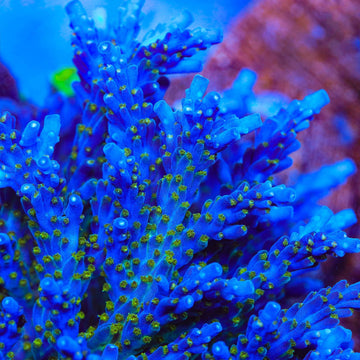
TSA Bo Katan Acropora Coral
Overview
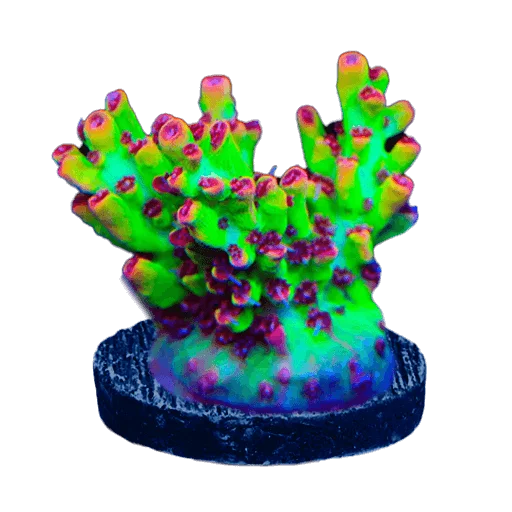
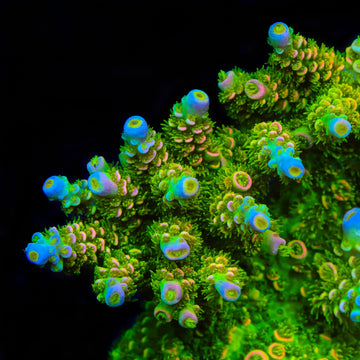
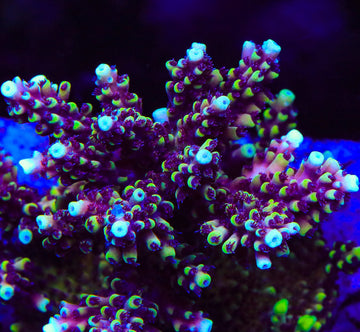
Bo Katan Acropora Coral shows tightly spaced, upward-branching tips with contrasting polyps. Acropora tenuis is a small-polyp stony branching coral that prefers strong light and high, turbulent water flow. It is primarily photosynthetic via symbiotic algae, but occasional small plankton or coral foods can support growth and color. Position high on stable rockwork and leave space from stinging corals to prevent tissue damage.
Quick Facts
Care
Difficult
Lighting
High
Flow
High, turbulent
Placement
High
Temperament
Peaceful (3–6 inches spacing)
Recommended Parameters
Temp
76–80°F
pH
8.1–8.4
Salinity
1.025–1.026
Calcium
420–450 ppm
AlkAlkalinity
7.5–9 dKH
Magnesium
1280–1350 ppm
Feeding
photosynthetic (primary), phytoplankton, zooplankton, rotifers, copepod nauplii, microplankton, oyster eggs, reef-specific powdered foods (e.g., Reef-Roids), dissolved amino acids
Care & Placement
FAQ
Frequently Asked Questions
About the TSA Bo Katan Acropora Coral
-
Why does my Bo Katan Acropora Coral fade or brown despite high PAR?
Acropora tenuis colors are spectrum- and nutrient-sensitive. Strong blue-violet (420–460 nm) brings fluorescence, but overly white-heavy light can wash pigments. If nutrients sit at near-zero nitrate/phosphate, it may pale; if they’re high, it may brown. Aim for low-but-detectable nutrients, stable alkalinity (8–9 dKH), and turbulent flow. Diffuse lighting helps avoid hotspots and tip burn while keeping saturation. -
How can I prevent base recession on my Acropora tenuis colonies?
Base recession often stems from shading, detritus accumulation, or unseen pests. Keep vigorous cross-flow so detritus doesn’t settle under the corymb. Periodically rotate or trim neighboring branches to reduce self-shading. Inspect at night for Acropora-eating flatworms; look for oval bite marks and eggs on skeleton. Use a turkey baster to blast the base weekly and maintain stable parameters to avoid stress-triggered STN. -
My tenuis shows “burnt tips” while the base looks fine. What’s causing this?
Tip necrosis usually reflects a mismatch: high alkalinity and intense light with ultra-low nutrients. Rapid calcification outpaces tissue growth. Bring alkalinity to a steady 8–9 dKH, raise nutrients to modest levels (e.g., nitrate 2–10 ppm, phosphate 0.03–0.08 ppm), and add light diffusion or slightly reduce peak intensity. Avoid abrupt changes; adjust over several days to stabilize calcification and tissue. -
Are there feeding strategies that meaningfully benefit Acropora tenuis without fueling algae?
Focus on water column health rather than heavy broadcast food. Maintain modest nutrients, then supplement 1–2x weekly with fine particulate foods after lights out when polyps extend. Dose amino acids sparingly and observe polyp response; discontinue if film algae rises. Strong, pulsed flow helps capture and clear particulates, improving tissue thickness and color without driving nuisance growth.