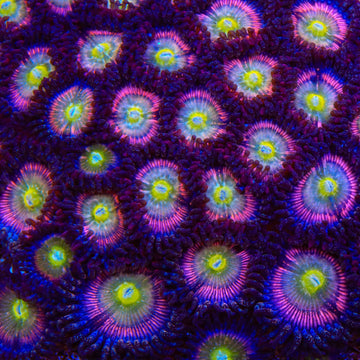
TSA Blueberry Zoanthids Coral
Overview
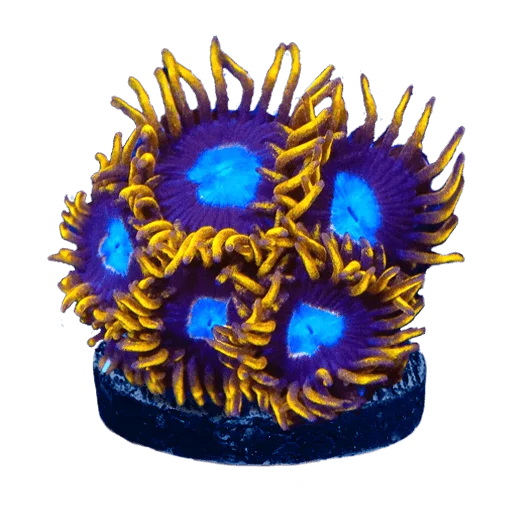
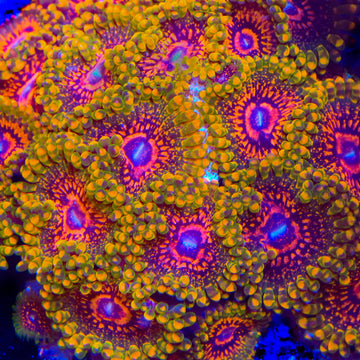
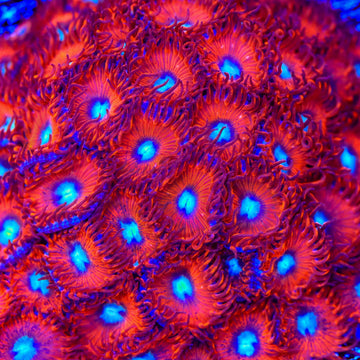
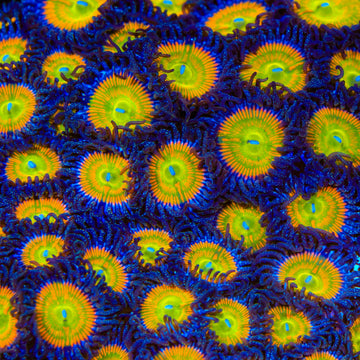
Blueberry Zoanthids Coral are small button polyps with blue to purple disks and contrasting mouths. Zoanthus sp., a soft colonial polyp, prefers moderate light and moderate to low, varied water flow. It is primarily photosynthetic with symbiotic algae, but occasional small meaty foods or fine particulate foods can boost growth and color. Place on isolated rock to control spreading, and keep distance from aggressive stingers.
Quick Facts
Care
Easy
Lighting
Moderate
Flow
Moderate
Placement
Low–Mid
Temperament
Semi-aggressive (fast-spreading; allow 2–3 inches spacing)
Recommended Parameters
Temp
76–82°F
pH
8.1–8.4
Salinity
1.025–1.026
Calcium
400–450 ppm
AlkAlkalinity
8–10 dKH
Magnesium
1250–1350 ppm
Feeding
photosynthetic (primary), microplankton, phytoplankton, rotifers, cyclops, baby brine shrimp nauplii, powdered coral foods, marine snow
Care & Placement
FAQ
Frequently Asked Questions
About the TSA Blueberry Zoanthids Coral
-
Why do my Blueberry Zoanthids lose their deep blue tones and look dull under some lights?
Blue morphs are sensitive to spectrum balance. Too much white/green can wash pigments; too little nutrient availability can also mute color. Aim for strong blue/actinic channels with moderate PAR (80–150 at the colony), keep nitrate 5–15 ppm and phosphate 0.03–0.1 ppm, and avoid sudden light changes. Gradual acclimation over 1–2 weeks helps maintain saturation. -
My colony grows a mat but stalls after a few polyps—what’s the bottleneck?
Stalled mats often signal borderline nutrients, unstable alkalinity, or detritus collecting at the base. Keep alk steady (7.5–9 dKH), maintain measurable N and P, and provide moderate, random flow so skirts sway and debris can’t settle. Periodic target feeds with fine meaty foods can kickstart growth, but avoid overfeeding that fuels film algae on the mat. -
Can Blueberry Zoanthids coexist with other zoas and palys without chemical issues?
They’re generally tolerant, but allelopathy does occur, especially near palythoa and some soft corals. Run fresh carbon, change it monthly, and space colonies so skirts don’t touch. If polyps stay small or fail to open near neighbors, increase distance or redirect flow. Regular water changes dilute metabolites that can suppress polyp extension and color. -
How do I troubleshoot a “closed colony” that’s been shut for days without visible pests?
Check for shaded light from new growth or equipment, then verify parameters: salinity drift, cold/hot spots, and alk swings often trigger shutdowns. Increase flow slightly, perform an iodine dip, and inspect at night for nudibranchs or sundial snails. If all is clear, raise nutrients slightly and reduce light intensity 10–20% for a week to relieve stress.