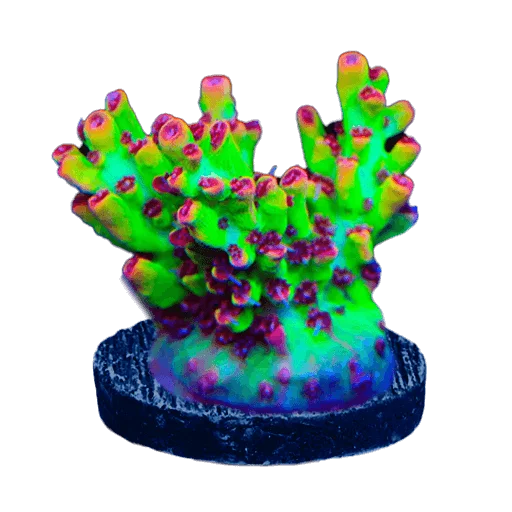
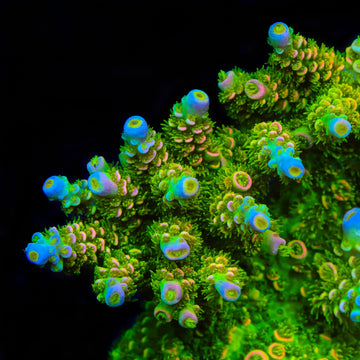
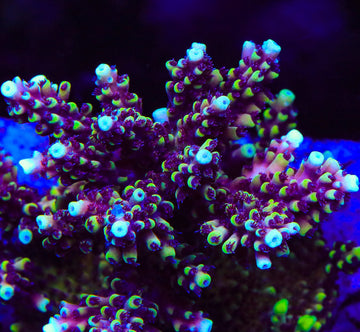
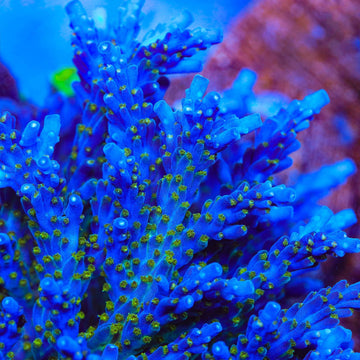
TSA Blueberry Mai Tai Tenuis Acropora Coral
Overview
Blueberry Mai Tai Tenuis Acropora Coral forms compact branching clusters with colored tips and small, tightly packed polyps. Acropora tenuis is a small-polyp stony branching coral that prefers strong light and high, turbulent water flow. It is primarily photosynthetic via symbiotic algae but can benefit from occasional fine particulate foods to support growth and coloration. Place high on stable rockwork with space from aggressive neighbors, and maintain stable alkalinity, calcium, and low nutrients.
Quick Facts
Care
Difficult
Lighting
High
Flow
High
Placement
High
Temperament
Semi-aggressive (2–3 inches spacing)
Recommended Parameters
Temp
77–80°F
pH
8.1–8.4
Salinity
1.025–1.026
Calcium
420–450 ppm
AlkAlkalinity
8–9 dKH
Magnesium
1280–1350 ppm
Feeding
photosynthetic (primary), microplankton, rotifers, copepod nauplii, reef plankton, coral-specific powdered foods (e.g., Reef Roids), oyster eggs, amino acid supplements
Care & Placement
FAQ
Frequently Asked Questions
About the TSA Blueberry Mai Tai Tenuis Acropora Coral
-
How do I keep the Blueberry Mai Tai Tenuis’ colors from washing out or browning?
Aim for 250–350 PAR with strong blue/UV (400–470 nm) while avoiding excessive white. Keep alkalinity stable (7.8–8.6 dKH), nitrate 5–15 ppm, phosphate 0.03–0.10 ppm. Too “clean” can pale it; too “dirty” mutes blues. Moderate–strong, varied flow prevents film buildup. Feed small-particle foods lightly 2–3x weekly to support pigment without driving algae. -
Why does my Acropora tenuis show great color but slow growth compared to other Acros?
Tenuis prefers stability over speed. If color is strong but growth lags, check that alkalinity swing is <0.3 dKH/day, temperature stable within 0.5°F, and trace elements (iodine, iron, manganese) aren’t depleted. Slightly higher nutrients often speed encrustment. Avoid shadowing: trim nearby branches or adjust angle so axial tips get direct light and crossflow. -
What pests target tenuis, and how can I spot issues early?
AEFW and “red bugs” are top risks. For AEFW, look for crescent bite marks, patchy tissue, and tan egg clusters on undersides; for red bugs, watch for reduced polyp extension and tiny orange specks on polyps. Do a weekly night inspection with a flashlight, turkey-baste to dislodge worms, and quarantine with sequential dips (e.g., Bayer/iodine) before display re-entry. -
How do I respond to sudden tissue loss (RTN/STN) in this morph?
First, stabilize parameters—check temp, salinity, and alkalinity for recent spikes. Increase turbulent flow, reduce light by 10–20% temporarily, and perform an iodine dip. If recession advances, cut 5–10 mm into healthy tissue and remount salvaged pieces. Run fresh carbon, verify no rusting magnets, and hold nutrients in the mid range to support recovery.