TSA Blueberry Glitter Goniopora Coral
Overview
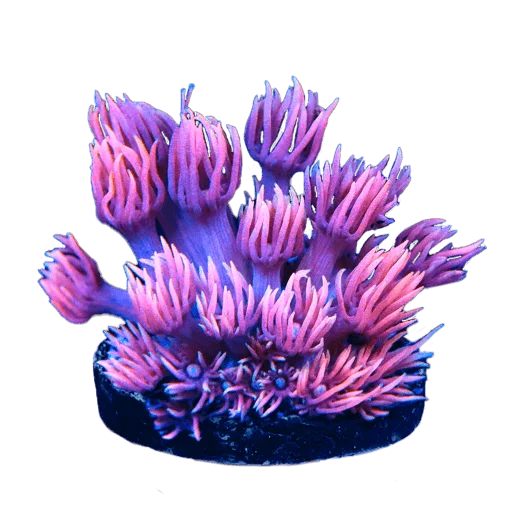
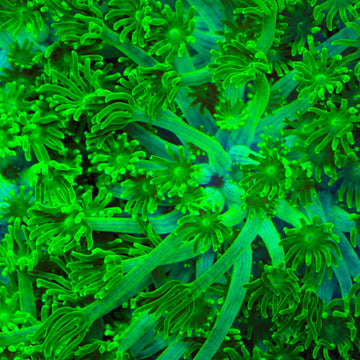
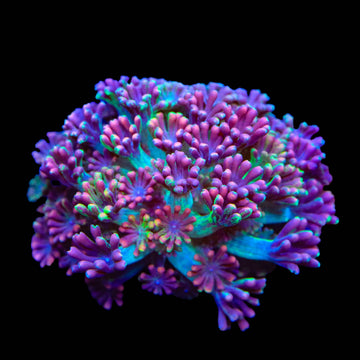
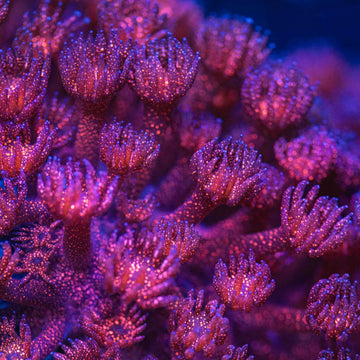
Blueberry Glitter Goniopora Coral displays dense, long daisy-like polyps with blue to purple tips. Goniopora sp. is a large-polyp stony coral that prefers moderate light and gentle to moderate, indirect flow. It is photosynthetic through symbiotic algae but benefits from small-particle feedings, which support growth and fuller polyp extension. Place on a stable, open area with space for full extension and keep clear of aggressive corals to avoid contact stings.
Quick Facts
Care
Difficult
Lighting
Moderate
Flow
Moderate, indirect
Placement
Low–Mid
Temperament
Semi-aggressive (allow 4–6 inches spacing due to sweeper tentacles)
Recommended Parameters
Temp
76–80°F
pH
8.1–8.4
Salinity
1.025–1.026
Calcium
400–450 ppm
AlkAlkalinity
8–9 dKH
Magnesium
1280–1350 ppm
Feeding
photosynthetic, phytoplankton, zooplankton, rotifers, baby brine shrimp, cyclops/Calanus, oyster eggs, reef roids (powdered coral foods), marine snow, microplankton
Care & Placement
FAQ
Frequently Asked Questions
About the TSA Blueberry Glitter Goniopora Coral
-
Why does my Blueberry Glitter Goniopora lose its blue sparkle over time?
Color fade often comes from excess white light, ultra-low nutrients, or depleted trace metals. Aim for a bluer spectrum (420–460 nm), modest but detectable NO3/PO4, and steady alkalinity (7.5–8.5 dKH). Dose iron/manganese conservatively if your system is very lean, and feed fine particulate foods 2–3× weekly. Acclimate lighting slowly to avoid bleaching. -
My Goniopora’s polyps stay retracted for days—what should I check first?
Rule out irritation: too much flow, sand abrasion, vermetid snails, nipping fish, or crabs walking over it. Verify stability (temp, salinity, alkalinity) and ensure nutrients aren’t bottomed out. If tissue looks jelly-like, isolate, siphon, and do an iodine dip. Improve gentle, alternating flow and resume small, frequent feedings once it perks up. -
What growth pattern should I expect, and how can I encourage healthy expansion?
This coral typically forms a dome or encrusting mound with long, daisy-like polyps. Provide moderate, indirect flow to prevent detritus buildup without blasting tentacles. Keep it off shifting sand; a stable rock ledge is ideal. Regular micro-food feedings and consistent parameters drive steady base calcification and fuller extension rather than lanky, starvation-driven polyp stretch. -
Do clowns or other fish interact poorly with this coral?
Some clowns may “host” in large-polyp gonis, causing chronic irritation and recession. Dartfish and wrasses can also spook constant retraction if they buzz the polyps. Provide personal space and avoid placing it where fish frequently perch. Keep at least a few inches from neighbors to prevent mucus warfare and accidental stinging during night swells.