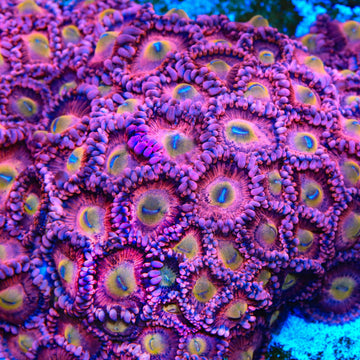
TSA Blueberry Duncan Coral
Overview
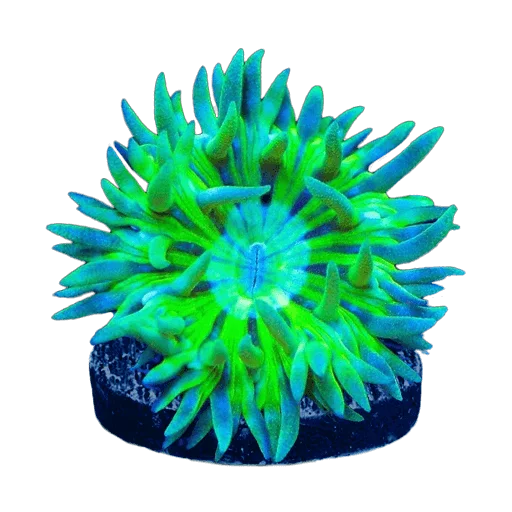
Blueberry Duncan Coral has fleshy, round polyps with short, ringed tentacles and a green to blue center. Duncanopsammia axifuga is a branching large-polyp stony coral; it prefers low to moderate light and gentle to moderate water flow. It hosts symbiotic algae for energy and readily accepts small meaty foods, with regular feeding promoting faster growth and fuller polyp extension. Place it on stable rockwork or sand with some space from aggressive neighbors, and avoid strong, direct flow that keeps the polyps from opening.
Quick Facts
Care
Easy
Lighting
Low–Moderate
Flow
Moderate, indirect
Placement
Low–Mid
Temperament
Peaceful to semi-aggressive (3–4 inches spacing)
Recommended Parameters
Temp
76–80°F
pH
8.1–8.4
Salinity
1.025–1.026
Calcium
400–450 ppm
AlkAlkalinity
8–10 dKH
Magnesium
1250–1350 ppm
Feeding
photosynthetic, mysis shrimp, enriched brine shrimp, chopped krill, copepods, finely chopped seafood, microplankton, zooplankton, coral-specific powdered foods, marine snow
Care & Placement
FAQ
Frequently Asked Questions
About the TSA Blueberry Duncan Coral
-
Why does my “Blueberry Duncan” look plain green or brown in daylight?
The blue/purple look is mostly fluorescence under strong blue/actinic channels. Under whiter spectra, zooxanthellae pigment and tissue color dominate, so it appears greener or browner. Increase blue/violet channels for pop, but keep PAR moderate (80–150). If it’s dull even under blues, check nutrients (NO3 5–15 ppm, PO4 0.03–0.1) and avoid over-filtration that strips color. Don’t chase color by blasting light. -
My Duncan stays retracted for days—what hidden issues should I check?
Beyond parameters, look for irritants: vermetid snails (mucus webs), bristleworms picking at food, amphipod swarms, or a gall crab in the skeleton. Also check for direct, laminar flow hitting the oral disc and micro-shading from overgrown frags nearby. Glue over vermetid tubes, adjust to indirect, pulsing flow, and baste detritus from the base. A brief iodine dip helps after physical irritation. -
How do I push multi-head growth without stressing the colony?
Stability grows heads. Keep alkalinity 8–9 dKH, calcium 420–450 ppm, magnesium ~1350. Feed small, frequent portions (mysis, enriched brine, pellet) 2–3 times weekly; oversize prey slows recovery. Aim for moderate PAR and low-moderate, chaotic flow. Avoid rapid nutrient swings; zeros stall growth. Once branching is visible, frag between heads at the skeleton, not through tissue, and do an iodine dip. -
The base is receding while tops look fine—what causes “bottom-up” loss?
Shaded skirts plus trapped detritus invite bacteria and sponges. Increase crossflow around the base, raise the colony slightly, and turkey-baste weekly. Keep NO3/PO4 non-zero to support tissue. If you see brown jelly (stringy, foul tissue), immediately siphon, iodine dip, and cut away healthy heads above the rot. Monitor alk stability—daily swings often show first at the base.