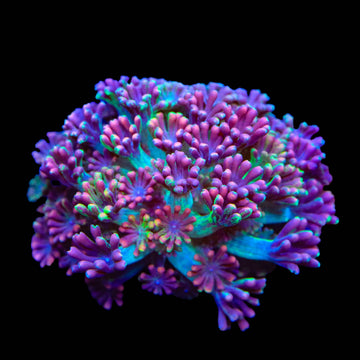
TSA Blue Pearl Alveopora Coral
Overview
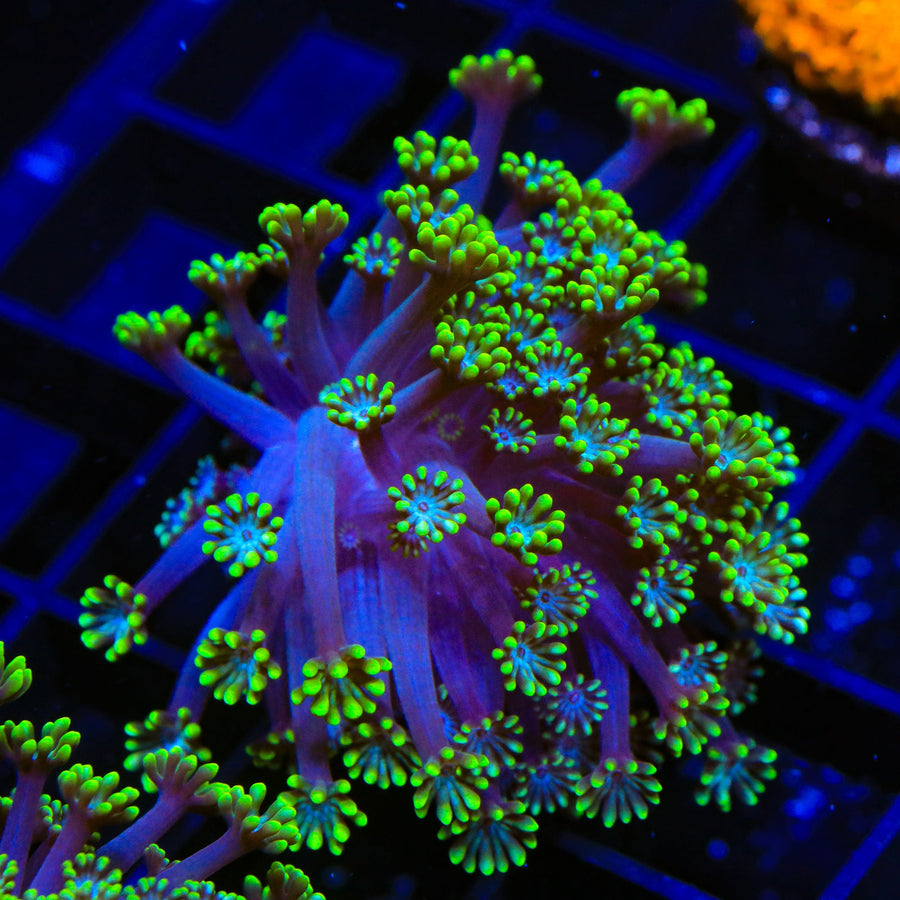
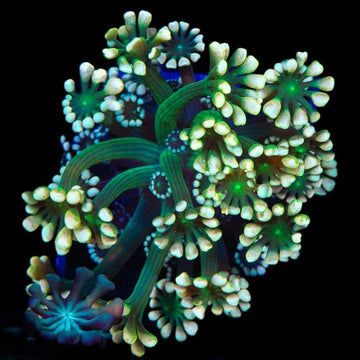
Blue Pearl Alveopora Coral shows branching heads with long, daisy-like polyps and pearly blue tips. Alveopora sp. is a large-polyp stony coral with a light, branching skeleton; it prefers moderate light and gentle, varied water flow. It hosts symbiotic algae for most energy, but accepts fine meaty foods or coral foods, which can improve growth and polyp color. Place on stable rock with room for extension and keep clear of aggressive neighbors, as its tissue can be damaged and it may sting nearby corals.
Quick Facts
Care
Moderate
Lighting
Low–Moderate
Flow
Moderate, indirect
Placement
Low–Mid
Temperament
Peaceful to semi-aggressive (2–3 inch sweepers; provide spacing)
Recommended Parameters
Temp
76–80°F
pH
8.1–8.4
Salinity
1.025–1.026
Calcium
400–450 ppm
AlkAlkalinity
8–9 dKH
Magnesium
1250–1350 ppm
Feeding
photosynthetic, phytoplankton, microplankton, rotifers, oyster eggs, reef roids/powdered coral foods, copepods, baby brine shrimp (nauplii), finely minced mysis
Care & Placement
FAQ
Frequently Asked Questions
About the TSA Blue Pearl Alveopora Coral
-
How can I keep the “blue pearl” coloration from washing out in Alveopora sp.?
Maintain moderate PAR (80–150) with a blue-leaning spectrum, stable nutrients (nitrate 5–15 ppm, phosphate 0.03–0.08), and steady alkalinity. Sudden increases in white intensity often fade blues. Place the coral where polyps fully extend but aren’t blasted by flow. Regular small feedings of fine particulate foods and consistent trace elements (notably iron and manganese) help color retention without pushing rapid, pale growth. -
My Blue Pearl Alveopora retracts when flow is increased—how do I balance detritus control with extension?
Aim for indirect, alternating flow that ripples tentacles without folding them. Point powerheads past or above the colony to create a gentle sway. Use brief higher-flow “cleaning intervals” a few times daily to lift debris, then return to moderate. Position slightly off the sand to reduce grit in the polyps, and keep nearby rockwork from creating harsh eddies. -
Why does my Alveopora look great for weeks, then suddenly decline despite “good” test results?
These corals react to swings more than absolute numbers. Check for silent shifts: fresh carbon after a long break, rapid nitrate/phosphate drops, newly aggressive neighbors, or spectrum changes after cleaning lenses. Watch for early signs of brown jelly; if seen, frag away affected heads and iodine dip. Maintain modest, stable nutrients and avoid hard resets like large media swaps. -
Can clownfish or shrimp hosting stress a Blue Pearl Alveopora?
Yes. Persistent nuzzling compresses tissues and can trigger recession, especially on smaller colonies. Encourage alternative hosts (e.g., a hardy Euphyllia or anemone if appropriate) and adjust flow or placement to make the Alveopora less attractive. If contact continues, use a mesh guard while the coral recovers and grows, then gradually remove it once polyp extension is robust.